





 4.6/5
4.6/5 天下大同 999
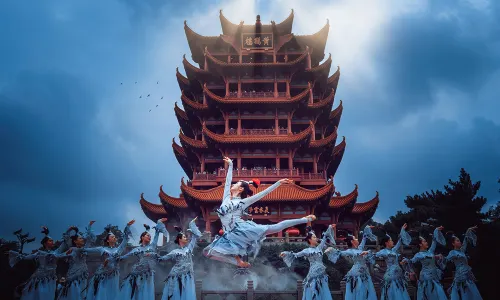
It's worth going in for a stroll. The Four Seasons Archway gives you a sense of traveling back in time. The statue of Yue Fei is solemn and dignified, exuding a righteous spirit. Climbing the Yellow Crane Tower allows you to feel the presence of our ancestors from that era...
 4.9/5
4.9/5 Rubyyy-
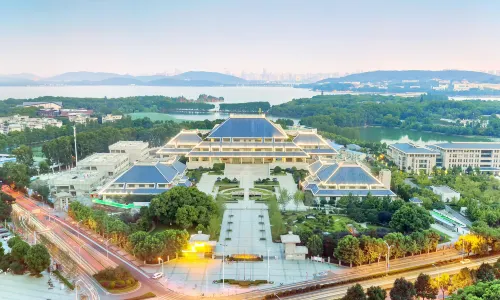
The museum is free, just need to make a reservation. We arrived an hour before closing time, so it was very rushed, but the advantage was that we didn't have to queue to see the Sword of Goujian, King of Yue; we could just walk in. Unfortunately, we missed the chime bell performance. The gold artifacts of King Liangzhuang were absolutely stunning. We also managed to buy the souvenirs we wanted before closing time!
 4.6/5
4.6/5 Anonymous user
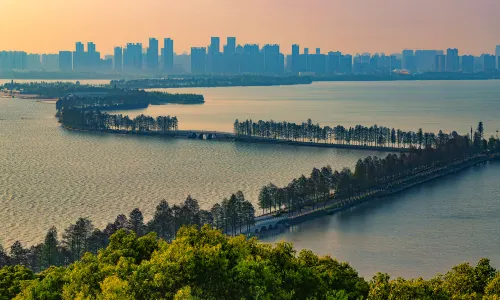
This was my first time visiting this place. I've been to the city many times before. The transportation is convenient, the scenery is beautiful, and there were many cyclists. The foreign guys were so handsome! Riding the sightseeing bus was so pleasant. There were many people, but it wasn't crowded. The water was very clean. It was a pity that the tunnel was closed. I will definitely go again next time I have the chance.
 44.5/5
 小金犇
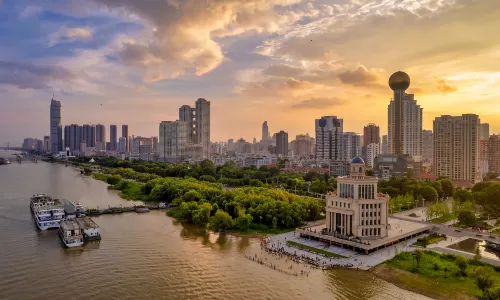
小金犇A gentle evening breeze, carrying the unique moisture of the Yangtze River, brushed against the gunwale as the cruise ship slowly departed the dock, gradually unfolding the night of Wuhan. On the river, shimmering waves meandered along the wake of the ship, like scattered diamonds, reflecting the lights that lit up one after another on both banks—the eaves of the Yellow Crane Tower were adorned with a warm yellow halo, like a jade palace floating in the night; the neon lights along the riverbank stretched along the shoreline, intertwining with the lights of the rows of buildings on the opposite bank, weaving a flowing galaxy of light and shadow.
 54.9/5
 M34***77
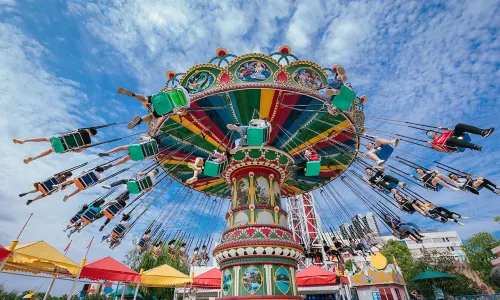
It was very exciting! The parade girls were very pretty. It was thrilling and I had a lot of fun. Except for the wooden dragon ride which hurt my neck, everything else was great. I recommend it! The scenery was also quite beautiful. It was very interesting and I had a lot of fun. I'll definitely come again next time!
 64.7/5Anonymous user
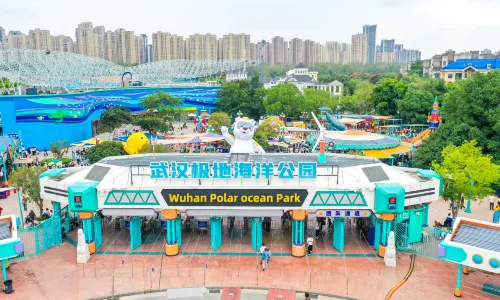
Overall, it was alright! The kids had a good time! The only downside was that the ticket had to be verified at Gokurakuyu first, which was a bit of a hassle and inconvenient! You had to make a trip there, and I didn't know that at first. I only realized it when I got to the park's ticket checkpoint, so I had to go back to Gokurakuyu!
 74.1/5
 水牛小贾
水牛小贾The park truly lives up to its name as a garden-style park. A clockwise loop takes about 2-3 hours; you can follow the signs to explore. Parking is available in Parking Lot 3, which is a bit of a walk but avoids traffic congestion.
 84.4/5
 麋鹿布迷路
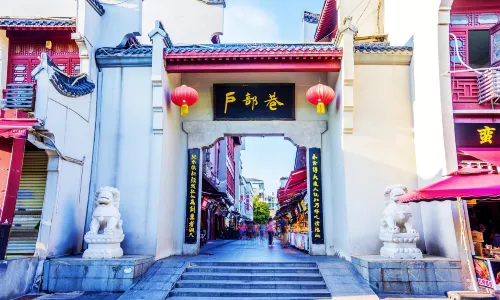
麋鹿布迷路Rich and Diverse Cuisine: Known as the "No. 1 Lane for Han-style Snacks," it features classic Wuhan delicacies like Cailinji Hot Dry Noodles, Sijimei Soup Dumplings, and Laoqianji Bean Silk, as well as national specialties like Nanjing Duck Blood Vermicelli Soup and Changsha Stinky Tofu, catering to diverse tastes. A Long History and Culture: Founded in the Ming Dynasty, it boasts a history of at least 400 years. Named for its proximity to the Fantai Yamen, a branch of the Ministry of Revenue, it has historically been a bustling hub and a symbol of Wuhan's urban memory. Unique Architectural Style: Renovated in 2003, the buildings now reflect the Ming and Qing dynasty styles, featuring grey tiles, white walls, and wooden doors and windows, imbued with a rich, rustic charm. Strolling through the streets allows visitors to immerse themselves in the charm of old Wuhan. Experience Urban Life: The bustling atmosphere of the city, bustling with people and the aroma of local snacks, allows visitors to experience the local lifestyle and everyday life of Wuhan firsthand. Crowd Size Hubu Lane sees significant traffic, averaging approximately 80,000 visitors per day on weekdays and surging to 130,000 on weekends. During peak tourist season, the crowds are even higher, creating a bustling atmosphere. The best time to visit is during the early morning or evening hours on weekdays in spring and autumn, when the weather is comfortable and the crowds are moderate. This allows for a deep experience of the "Guo Zao" (early morning snack) culture and nightscape while avoiding the crowds. If visiting during holidays or peak season, it's recommended to plan your itinerary in advance, prioritizing the local snacks and balancing visits with nearby attractions.
 94.5/5
 M2b***um
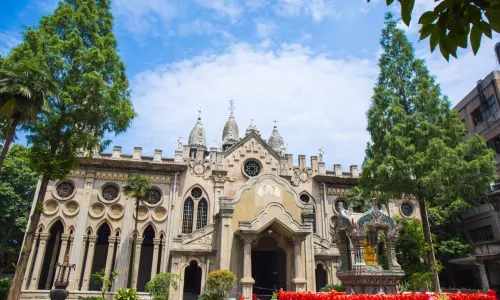
Gude Temple, located at No. 74, Landslide, Huangpu Road, Hankou, Wuhan, Hubei Province, was founded by Long Xi in 1877, originally named Gude Thatched Hut. Between 1914 and 1919, the temple was expanded twice by its abbot, Chang Hong, and renamed Gude Temple, which means "to cherish the ancients and to save all with virtue." The name was inscribed on a plaque by Li Yuanhong himself. The temple covers nearly 30,000 square meters, with a building area of nearly 8,000 square meters. It blends European and Asian religious architectural features, integrating the three major Buddhist schools of Mahayana, Hinayana, and Tibetan Buddhism. This is a rare sight among Chinese Buddhist temples, and is considered "a great wonder of Buddhist sites" and "the greatest wonder of Chinese Buddhist temples." It holds high architectural, cultural, and historical research value. Along with Guiyuan Temple, Baotong Temple, and Lianxi Temple, it is considered one of the four great Buddhist monasteries in Wuhan.
 104.7/5
 uncolour
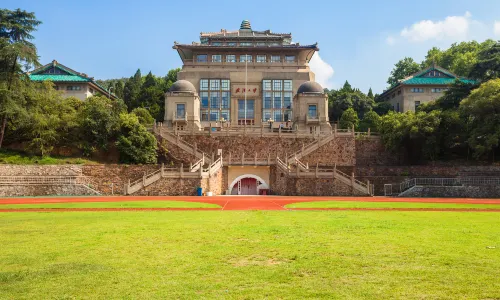
Autumn at Wuhan University is a grand yet serene feast of colors on Luojia Mountain. As the autumn breeze sweeps across the campus, Luojia Mountain quietly dons its magnificent attire of "layers of vibrant hues." The layered colors are evident in the mountain's undulating terrain: from afar to near, the hues are richly layered, with deep green, bright yellow, orange-red, and ochre interwoven and blending, like a vast natural oil painting. The vibrant colors are hidden in every corner—in front of the ancient administration building, the ginkgo avenue is a sea of gold, with fallen leaves fluttering like butterflies; the fiery red leaves of the maple garden contrast beautifully with the gray walls and green tiles of the Republican-era buildings; the plane trees, tallow trees, and other trees each display different warm tones, creating dappled light and shadow under the clear autumn sun, a breathtaking sight. This is not merely a visual feast, but also a unique romance of a university. Strolling through the campus, the ancient buildings with their upturned eaves, nestled amidst vibrant foliage, exude a serene and elegant charm, making one feel as if they have entered a poetic temple of knowledge. Wuhan University's autumn scenery is thus renowned as one of the most beautiful university landscapes in China, a perfect example of the harmonious blend of nature and culture. Now, no appointment is needed to enter Wuhan University; simply swipe your ID card to enter. Do not use scalpers.
 Yellow Crane Tower Winter Garden Party Begins | Dec 12, 2025-Dec 26, 2025
 Achieved a 3-year streak on the annual lists
