Yanjin

Things to do in Yanjin

Search attractions or local attractions & tours
Search

Explore top experiences

Top 10 attractions in Yanjin
View all Attractions
Dousha Gate Ancient Town

Dousha Gate Ancient Town

4.8
4.1/5
115 reviews

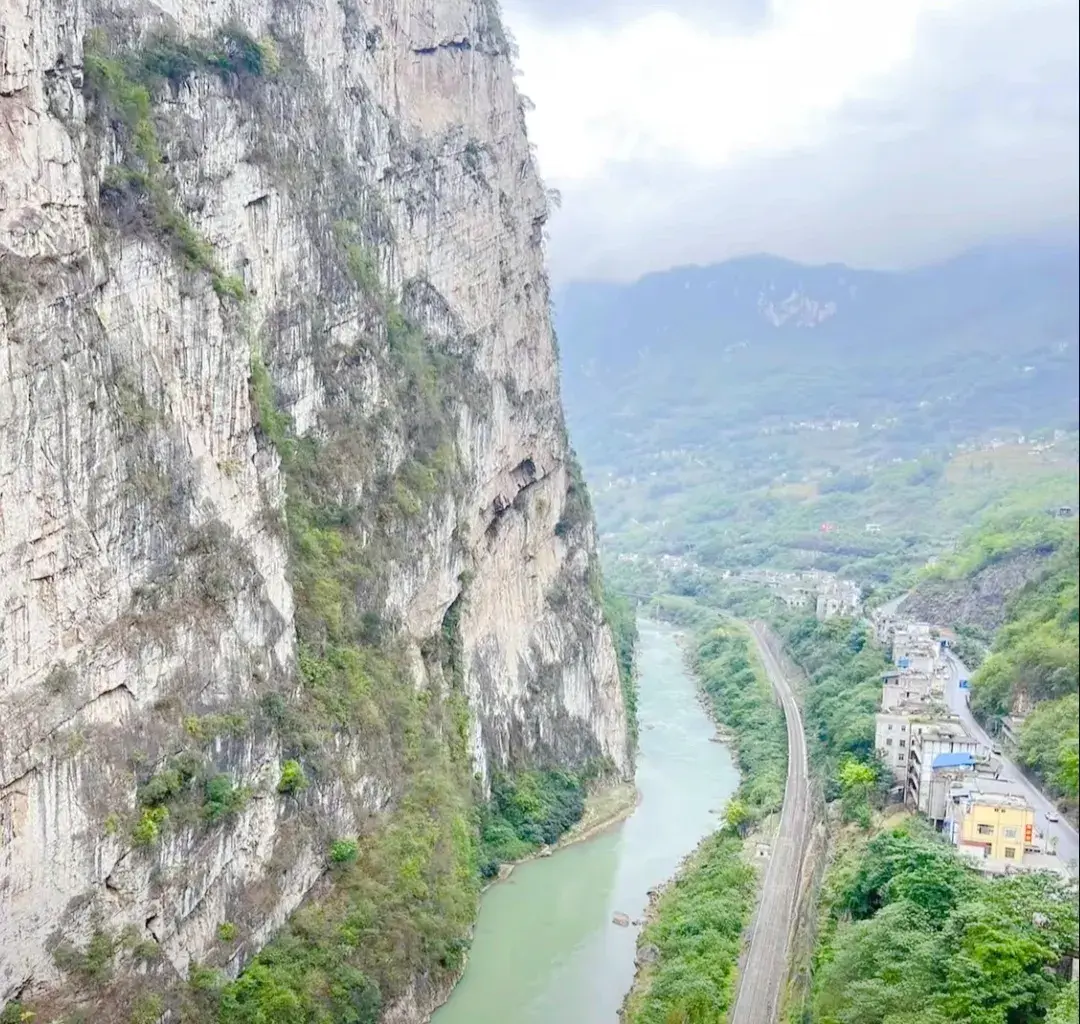
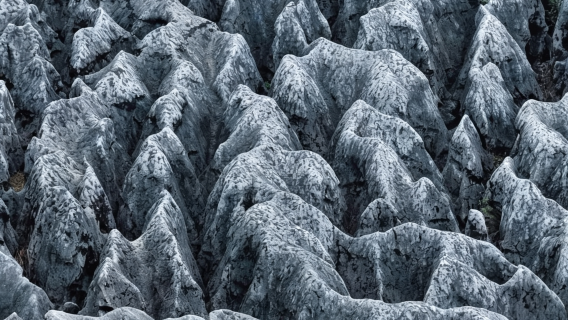
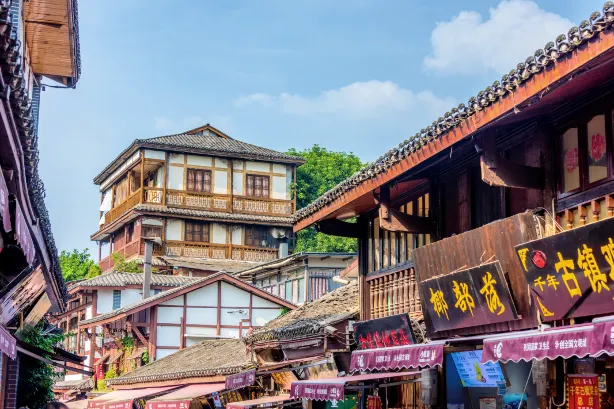
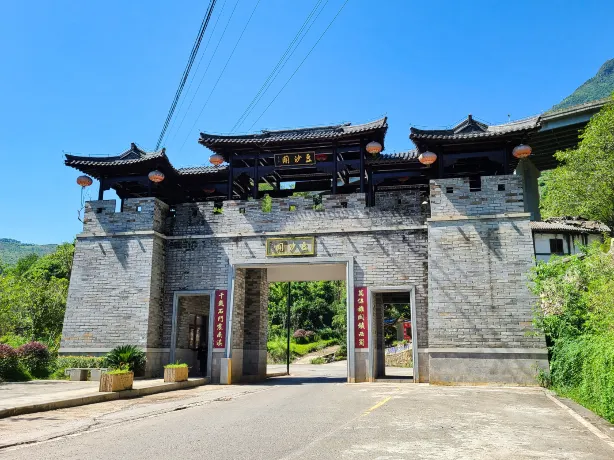
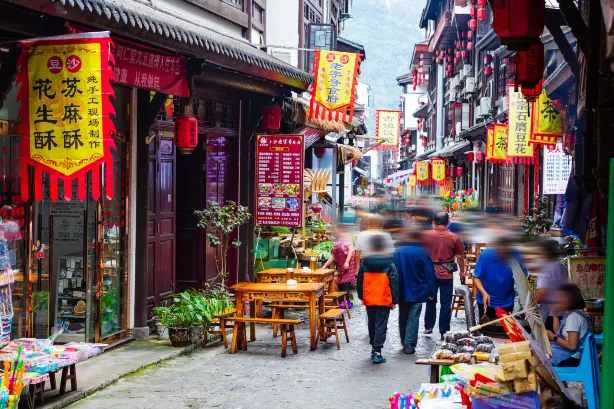
Doushaguan Scenic Area is located 22 kilometers southwest of Yanjin County. It consists of 60 scenic spots in four areas, including Doushaguan, Sangushui, Lianhuadong and Dalishan, covering an area of ​​about 70 square kilometers. The landscape includes the majestic and dangerous ancient post road Doushaguan, the gorgeous scenery of Laoli Mountain, the round hills and peaks with stars holding the moon, the dreamy and blurred natural maze, the precious flowers all over the mountains, the towering ancient trees, the picturesque Sangushui waterfall, and the rich and ancient cultural relics. It is a tourist attraction in northeastern Yunnan on the way to Sichuan and the northwest. Doushaguan was formerly known as Shimenguan. It was the first dangerous pass for the ancients to enter Yunnan from Shu. The turbulent Guanhe River split the steep stone mountain into two like a sharp sword, forming a huge stone gate, locking the ancient Sichuan-Yunnan road. The rock wall on the west bank is engraved with large characters such as "Southern Yunnan Hub" and "Its Danger is Like This", and it is known as the "First Pass in Southern Yunnan". Doushaguan has the famous "Five-foot Road" ruins. The Five-foot Road was first built in the Qin Dynasty. It is now about 350 meters long and five feet wide. Each stone step is different in width and height. There are dozens of horse hoof prints on the road. It is an important passage from Sichuan to Yunnan, to Myanmar and India, the "Shu-Shendu Road" (ancient Southwest Silk Road). Doushaguan has a Tang stele pavilion, and on the rock wall inside the pavilion is the famous Tang Yuanzi Moyan. Yuan Zi was the imperial envoy Zhongcheng of the Tang Dynasty and a famous calligrapher. This Moyan was carved by Yuan Zi when he passed by Shimenguan when he was on a diplomatic mission to Yunnan in 794 AD (the 10th year of Zhenyuan in the Tang Dynasty). It has now been listed as a national key cultural relic. On the Dongyan rock wall facing the Moyan, you can see the mysterious ancient "Bai people hanging coffin" burial. There are 5 ancient Bai people hanging coffins in existence, which are of great value for studying the rise and fall of the Bai people and are precious cultural relics.

Yanjin · 13.8km from downtown
Daliang Mountain

Daliang Mountain

4.3

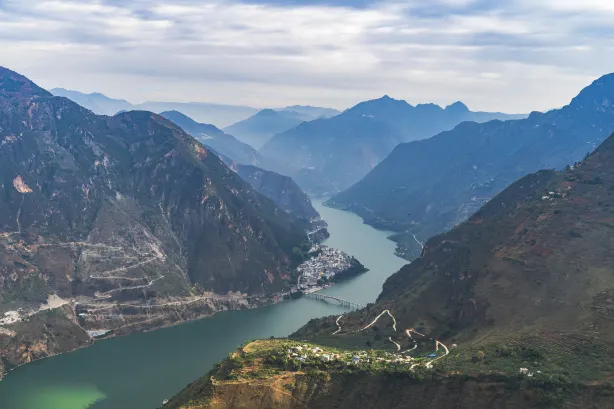
Daliang Mountain is located in Yanjin County, at the border of Yunnan and Sichuan in northeastern Yunnan, and is a natural mountain within the Wumeng Mountains. This area is in the transition zone where the Sichuan Basin rises to the Yunnan-Guizhou Plateau, with continuous mountains and crisscrossing ravines. Rivers such as the Guan River and Baishui River have carved deep, long canyons within the county. The local area has a three-dimensional monsoon climate where the central subtropical and temperate zones coexist; the river valleys are warm and humid, while the mountains are cool. Vegetation and scenery change with the altitude. Sightseeing mainly consists of hiking and mountain climbing. As you go up the mountain road, the forest becomes denser and the view opens up. Climbing higher, you can overlook the layered mountains and the river valley towns below. The climate here is humid, and the mountains are often shrouded in clouds and mist. The mountain scenery is particularly fresh and moist after rain, making it suitable for travelers who want to avoid crowds and get close to nature. It is worth noting that this Daliang Mountain shares the same name but is a different location from the Daliang Mountain in the Liangshan Yi Autonomous Prefecture of Sichuan. When planning your itinerary, do not mistake it for the Liangshan mountain area in western Sichuan. The weather in the mountainous areas of northeastern Yunnan is changeable. It is recommended to check the weather conditions before setting off. Mountain roads are slippery on rainy days, so be sure to prepare non-slip shoes. If you have enough time, you can also include the "canyon-like" streetscape of Yanjin County, which is built along the canyon, and the historical sites of the Wuchidao Scenic Area in Dousha Gate Ancient Town in your itinerary, and take the opportunity to experience the landscape and ancient road charm of this small town at the gateway between Yunnan and Sichuan.

Yanjin · 29.5km from downtown
Free attraction
Chengdu Research Base of Giant Panda Breeding
2027 Global 100 - Best Things to Do

Chengdu Research Base of Giant Panda Breeding

9.4
4.6/5
116.4k reviews

The Chengdu Research Base of Giant Panda Breeding is home to many adorable giant pandas, and you can observe these charming national treasures up close. Located in the northern suburbs of Chengdu, the Chengdu Research Base of Giant Panda Breeding is approx. 10 km from the city center, and its construction fully simulates the wild living environment of giant pandas, with lakes, streams, bamboo forests, lawns, and more. The Chengdu Research Base of Giant Panda Breeding has many "panda villas", which are enclosed leisure areas for pandas. Each features an outdoor yard and an indoor rest room. When the weather is cool, the giant pandas play in the yard, and visitors can watch the adorable pandas through the railings; when the weather is hot, the giant pandas hide in the air-conditioned rest rooms, and visitors can only watch them through the glass. You can also see pandas in the new area of the Chengdu Research Base of Giant Panda Breeding, and they are our hero pandas. The pandas' home is bigger, and their activity range is wider. Seeing pandas is the main draw, but there is plenty more to do and see. A must-visit is our landmark building — the internet-famous Panda Tower. As a new landmark of Chengdu, it stands at the highest point of the Chengdu Research Base of Giant Panda Breeding. The tower is 69.8 m tall with 11 floors. Its exterior resembles a giant bamboo shoot, while the interior is shaped like a blooming hibiscus flower. Inside, 81 platforms are distributed throughout, allowing visitors to enjoy the views of the Chengdu Research Base of Giant Panda Breeding from multiple angles. There is also the Art Museum (New Building) located in the dense forest area of the new district, which uses emerging exhibition methods such as multi-sensory interaction, lighting installations, interactive installations, and thermal sensing to create immersive exhibition scenes for visitors. The new area of the Chengdu Research Base of Giant Panda Breeding plans to set up science popularization display boards and interactive facilities with rich content and diverse forms in four major zones, so that visitors can learn about giant pandas while watching them and enhance their interactive experience. On festivals related to animal and environmental protection, themed science popularization activities will also be carried out for visitors of different age groups, such as interactive lectures, family-friendly science popularization, mystery exploration games, and other activities that combine education with entertainment. When you're tired from playing, you can also go enjoy a musical — "Panda": it vividly presents to the audience the scene of magical animals, with the giant panda as their representative, coexisting harmoniously, sharing nature, and loving life on the beautiful and fertile land of Chengdu, Sichuan. Through the form of a musical, it reflects the livable landscape of Chengdu, Sichuan, and the simple and leisurely life of the local people. In terms of total area, it has increased from the original 1,035 mu to 3,570 mu, expanding by 2.5 times. During the expansion, the original topography and landforms were fully followed and preserved, and the multi-level landscape belts of mountain valleys formed by mountain gullies and streams were utilized to create 11 giant panda venues, multiple science popularization venues, and visitor pedestrian streets and other sightseeing locations. After the expansion project is completed, it can accommodate no fewer than 180 giant pandas and companion animals such as red pandas and golden snub-nosed monkeys. As of now, multiple giant pandas and red pandas have moved into the "new homes" in the expansion area, and rare animals such as golden snub-nosed monkeys will also be waiting to welcome everyone in the future. In terms of design, the new area is equipped with ample visitor facilities in accordance with 5A attraction standards. It not only provides basic facilities such as sightseeing vehicles and tourist restrooms, but also equips the hill commercial street, the exit commercial street, and scattered commercial complexes in various zones with a large number of tourism service facilities. The planned business formats include dining, souvenir sales, postal services, cinemas, theaters, and experiential education, among others, and the quantity is sufficient to meet visitor demand. After nearly a year of operation, in response to the practical issues of the new area's large size and uneven distribution of supporting facilities, the Chengdu Research Base of Giant Panda Breeding has added multiple beverage vending machines, direct drinking water dispensers, and shared convenience facilities throughout the new area to improve the visitor experience. Next, the Chengdu Research Base of Giant Panda Breeding will further supplement and improve visitor rest facilities, inquiry service facilities, and guide and navigation facilities to meet visitor needs. The expanded Chengdu Research Base of Giant Panda Breeding will help Chengdu build a demonstration site of harmonious coexistence between humanity and nature, improve conditions for giant panda research and conservation, protect biodiversity, fully demonstrate the brand value, cultural value, and economic value of giant pandas, and build the cultural tourism brand of "Sanxingdui, Jiuzhaigou, and Giant Pandas: A Leisurely Journey Through Sichuan." New businesses and projects such as the Panda Art Museum, IMAX Theater, and Panda Theater are now open, meeting visitors' needs for dining, entertainment, sightseeing, shopping, and leisure while they watch giant pandas.

China · Chengdu
From AED 30.35
Huangguoshu Scenic Area
2027 Asia 100 - Best Things to Do

Huangguoshu Scenic Area

9
4.6/5
40.4k reviews

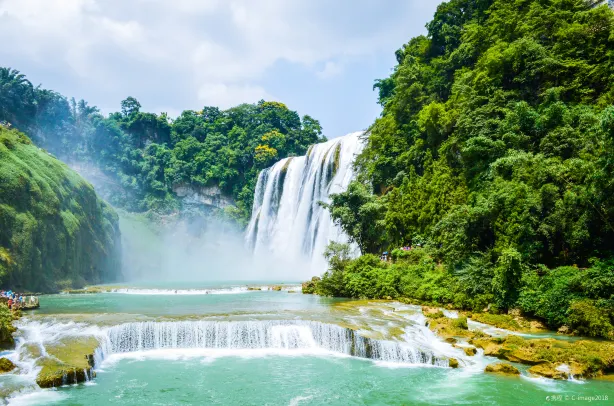
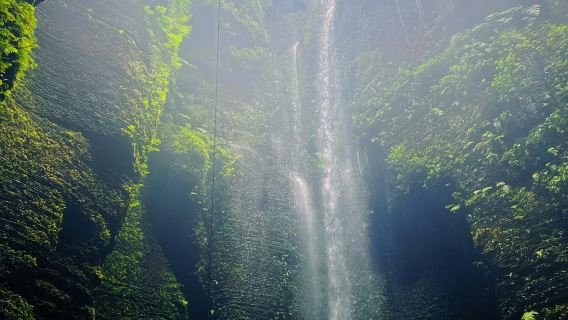
The Huangguoshu Scenic Area is located in Anshun, Guizhou, centered around the Huangguoshu Waterfall. Surrounded by deep gorges, dense vegetation, and dotted with limestone caves and stone forests, it is a typical karst landscape area. The waterfall's name originates from the locally abundant "Huangguoshu" (Ficus virens). Ming Dynasty traveler Xu Xiake visited and documented this site, contributing to its fame. The scenic area primarily consists of three main sections: the Great Waterfall, Tianxing Bridge, and Doupotang. Most travelers follow the sequence of Doupotang, Tianxing Bridge, and finally the Great Waterfall, saving the most spectacular view for last. The grand waterfall has a drop of nearly 80 m and a width of over 100 m. The Baishui River plunges from the cliff top into Rhinoceros Pool, creating a vast mist. Multiple viewing platforms around it allow visitors to experience its grandeur, wonder, steepness, and beauty from different angles—above, below, front, back, left, and right. A particularly unique experience lies behind the waterfall: a 100 m long Water Curtain Cave runs horizontally through its midsection, featuring cave windows and halls. Reaching through a window, one can touch the cascading water. The cave served as the filming location for the Water Curtain Cave in the 1986 TV series Journey to the West. Due to the heavy humidity inside, bringing a raincoat in advance is recommended. Tianxing Bridge is renowned for its harmonious blend of rocks, water, trees, and caves—where rocks rise from the water, caves hide within rocks, and trees stand beside caves. The stepping stones along the path are engraved with dates, allowing travelers to find their own "birthday stone." The attraction is divided into upper and lower sections. Many travelers turn back after completing the upper section, missing the Silver Chain Waterfall in the lower part—where water cascades like silver chains into a funnel-shaped pool, the highlight of Tianxing Bridge. The Doupotang waterfall is located approx. 1 km upstream from the grand waterfall. With a width of over 100 m at its crest, the water spreads out smoothly like a beaded curtain. During the high-water season, its deep roar earns it the nickname "roaring waterfall." The scene of the four pilgrims leading their horse across the river in the 1986 TV series Journey to the West was filmed here. In summer and fall, the waterfalls are full and powerful, while in winter and spring, the flow becomes gentler, offering different viewing experiences. Nearby, visitors can also enjoy local snacks like sticky rice, love tofu, and Anshun spring rolls.

China · Zhenning
From AED 110.32
Chengdu Du Fu Thatched Cottage Museum
2027 Asia 100 - Best Things to Do

Chengdu Du Fu Thatched Cottage Museum

8.9
4.7/5
48.3k reviews

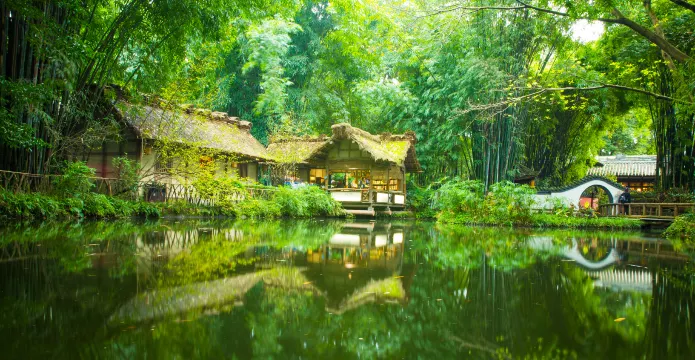
Chengdu Du Fu Thatched Cottage is the former residence of Du Fu, the Sage of Poetry, during his exile in Chengdu. In the winter of 759 AD, Du Fu came to Chengdu with his family to escape the An Lushan Rebellion. In the spring of the following year, he built a "thatched cottage" by the Huanhua Stream and lived there. Du Fu resided here for three years and nine months in total, during which he composed more than 240 poems that have been passed down to this day. Chengdu Du Fu Thatched Cottage is hailed as "the holy land of Chinese literary history." In the late Tang Dynasty, the poet Wei Zhuang located the site of the thatched cottage and rebuilt the thatched hut. Thereafter, Du Fu Thatched Cottage underwent fourteen large-scale renovations and expansions from the Song, Yuan, Ming, and Qing Dynasties to the present day. After the founding of New China, in 1952, Du Fu Thatched Cottage was fully renovated and officially opened to the public. In 1955, the Du Fu Memorial Hall was established, and in 1985 it was renamed Chengdu Du Fu Thatched Cottage Museum. It is now one of the first batch of Major Historical and Cultural Sites Protected at the National Level, a National First-Class Museum, a National Key Protection Unit for Ancient Books, and a National 4A-Level Tourist Attraction. Its area has also grown from the "one mu of cleared thatch" when Du Fu built the cottage to nearly 800 mu today, including 300 mu of cultural relic area and 500 mu of Huanhua Garden area. Chengdu Du Fu Thatched Cottage Museum is a public welfare Class II institution, and is also additionally designated as the Du Fu Thatched Cottage Poetry, Calligraphy and Painting Academy Art Museum and the Chengdu Chinese Calligraphy Museum. It currently has an authorized staffing of 123 positions and 16 internal working bodies, with its main source of funding being admission ticket revenue. Chengdu Du Fu Thatched Cottage Museum is a museum of ancient architecture, a large-scale center for the collection and display of Du Fu research materials and Du Fu poetry calligraphy and painting in China, an important platform for inheriting and promoting excellent Chinese poetry culture, a representative base of classical gardens in western Sichuan, and a protection and exhibition center for ancient architecture in western Sichuan. Its ancient buildings feature wooden column-and-tie structures, with representative buildings including the Grand Hall, the Hall of Poetry History, the Ministry of Works Hall, the Thatched Hut, and the Sutra Library; its distinctive poetic garden views include the Bonsai Garden, the Orchid Garden, and the Plum Garden.

China · Chengdu
From AED 27.59
Chengdu Wuhou Shrine Museum
No. 8 of Best Things to Do in Sichuan and Chongqing

Chengdu Wuhou Shrine Museum

8.7
4.6/5
29.9k reviews

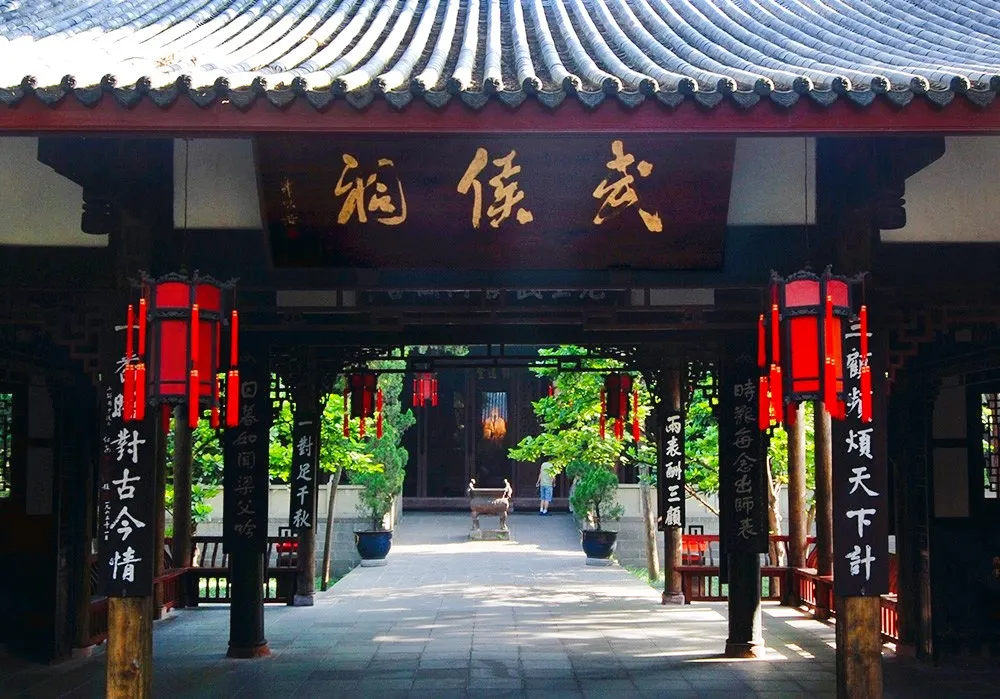
Chengdu Wuhou Shrine Museum is a shrine and temple complex commemorating Liu Bei, Zhuge Liang, and other heroes of Shu Han. It consists of Hui Ling Mausoleum, Han Zhaolie Temple, Wuhou Shrine, and Sanyi Temple, and is one of the few shrines in China where a ruler and his ministers are worshipped together. Hui Ling Mausoleum was first built in 223 AD, the third year of the Zhangwu era of Shu Han, when Liu Bei was buried. Over subsequent dynasties, additional sacrificial structures were gradually built around the mausoleum. The special shrine commemorating Zhuge Liang was approximately built during the Southern and Northern Dynasties period, located beside Hui Ling. In the 24th year of the Hongwu era of the Ming Dynasty (1391), Zhu Chun, Prince Xian of Shu, under the rationale that "sovereign and minister should be integrated as one," merged Hui Ling, the Han Zhaolie Temple, and the Wuhou Shrine into a single entity. Because Zhuge Liang had a profound influence among the common people, they customarily referred to the entire area collectively as the "Wuhou Shrine." The main structures of the existing shrine were rebuilt during the Kangxi era of the Qing Dynasty. The buildings within the shrine are arranged along the central axis from south to north, passing in sequence through the main gate, the second gate, Liu Bei Hall, the transitional hall, and on to Zhuge Liang Hall and Sanyi Temple. Liu Bei Hall enshrines a statue of Liu Bei, with the side halls on either side housing statues of Guan Yu and Zhang Fei respectively, while the east and west corridors contain dozens of statues of Shu Han civil officials and military generals. A large number of Three Kingdoms cultural steles and inscribed plaques and couplets are preserved inside and outside the halls, among which the Tang dynasty "Three Excellences Stele"—with text by Pei Du, calligraphy by Liu Gongchuo, and engraving by Lu Jian—and the "Attacking the Heart Couplet" inscribed by Zhao Fan of the Qing dynasty are particularly well known. The "red walls and bamboo shadows" within the attraction is a representative photo spot in Chengdu, featuring red walls lining the path and lush green bamboo casting shade, with outstanding light and shadow effects. The garden area on the west side of Chengdu Wuhou Shrine Museum was originally the cemetery of Liu Xiang, a general of the Sichuan army. It contains structures such as a stone memorial archway gate, a three-arch gate, a square pavilion, and Jianxin Hall, featuring the architectural style of northern cemeteries, which is relatively rare in the southwestern region. Chengdu Wuhou Shrine Museum is adjacent to Jinli Ancient Street, so visitors can easily visit both during the same trip.

China · Chengdu
From AED 27.59

Experiences you can't miss in Yanjin

Yanjin Today's weatherFoggy 11-19℃
Yanjin weather for the next 2 days11/30: 12-18℃, 12/1: 12-23℃

Free things to do in Yanjin
What travellers say about Yanjin

user-avatar
M50***419 August 2026
4.0
The Dousha Pass Five-Foot Road Scenic Area wasn't as magnificent as I'd imagined, and the core area wasn't very large either; a round trip took less than an hour. However, the hanging coffins of the Bo people on the opposite cliff were quite amazing. Although Dousha Ancient Town isn't large, it has a long history, and various shops and restaurants line both sides of the street, making it quite lively.

Dousha Gate Ancient Town

user-avatar
小灰灰_1666 October 2021
5.0
In the third century BC, after the Qin State occupied Bashu, Li Bing, the governor of Qin and Shu, built the first inland access to Yunnan, the "Bai Dao", from Baidao (today's Yibin) through Shimen Pass to Qianqingchi (Zhaotong), by piling up firewood and burning stones. It is very meaningful and worth a visit!

Wuchidao Scenic Area

user-avatar
我是夜王3 October 2025
4.0
On September 28, 2025, visit Yanjin County and ascend the Qidaguai Observation Deck to take in the sights of this nationally renowned "first-tier county"! This observation deck is free and offers a prime location with a wide view. From up high, you'll see Yanjin County, with its vibrant, colorful buildings lining the banks of the Guan River, flanked by towering mountains. It truly feels like a linear county! The walk from the Dongfeng Bridge in Yanjin County to the Qidaguai Observation Deck is uphill and takes about 30-45 minutes. It's recommended to take a taxi to save time and effort. The return trip is a leisurely downhill walk.

Yanjin Qidaguai Observation Deck

user-avatar
哈哈岛张易之5 May 2020
5.0
The Bai people's hanging coffins are located in the cracks of the cliffs on the opposite bank, 150 meters away from the Guanlou. There are 6 coffins left. From the telephoto lens, it can be seen that the hanging coffins are all carved out of whole wood and placed in the cracks of the rocks with wooden bars to avoid rain. Despite the two earthquakes in July 2006, the hanging coffins were not damaged. The hanging coffins are suspended in the cracks of the cliffs hundreds of meters above the water surface of Guanhe River. The coffin thieves are unable to climb up, and the placement of the hanging coffins is now a mystery.

Bo People Hanging Coffins

user-avatar
Weyne28 November 2026
5.0
A must-visit attraction in Chengdu, especially for panda lovers! 🐼 It was such a wonderful experience seeing the giant pandas up close, watching them eat bamboo, play and enjoy their lazy moments. The environment is beautiful and surrounded by greenery. Highly recommend visiting early in the morning when the pandas are more active. Definitely one of the highlights of my Chengdu trip!

Chengdu Research Base of Giant Panda Breeding

user-avatar
M40***2529 November 2026
5.0
Huangguoshu Scenic Area, a national key scenic spot, is located in Anshun City, Guizhou Province. Centered around the Huangguoshu Waterfall (77.8 meters high and 101 meters wide), the scenic area boasts 18 waterfalls of varying styles—majestic, unique, precipitous, and beautiful—forming a vast "family" of waterfalls. With an average altitude of 900 meters, Huangguoshu Scenic Area is situated in the mid-subtropical zone, enjoying a pleasant climate with an average annual temperature of 15.6℃. The area features diverse karst landforms, with the Huangguoshu Waterfall situated on the Baishui River, a tributary of the Dabang River. This area is characterized by rapids, dangerous shoals, numerous waterfalls, and complex hydrological conditions. It is a national 5A-level scenic area!

Huangguoshu Scenic Area

user-avatar
平蛋白质29 November 2026
5.0
Definitely worth a visit! Du Fu Thatched Cottage boasts a tranquil and elegant environment, with its gardens being particularly outstanding. Shady trees, winding streams, and pavilions and ancient buildings create a picturesque scene, brimming with poetic charm. A stroll through the cottage allows you to experience a rich historical and cultural heritage while enjoying rare peace and tranquility. With its beautiful scenery, engaging activities, and cultural experiences, the overall visit is fantastic and a must-see cultural attraction in Chengdu!

Chengdu Du Fu Thatched Cottage Museum

user-avatar
godjerrymkj28 November 2026
5.0
It was incredibly convenient. Because I was running late, I needed to get to Leidongping before 4 PM. After exiting the high-speed rail station, it was less than a five-minute walk to catch the direct high-speed bus to Leidongping. It was so convenient! It saved me the anxiety of rushing and worrying about not getting a ticket or a ride. It was truly excellent. The next day, I saw the sunrise as promised.

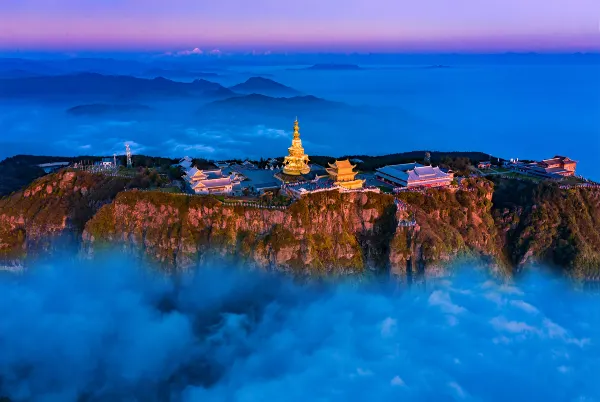
Mount Emei

user-avatar
一樽星月27 November 2026
4.0
🏯Chengdu Wuhou Shrine Museum 📍Address: No. 231 Wuhouci Street, Wuhou District, Chengdu ⏰Hours: 09:00-18:00 (Last entry at 17:00) ✨Highlights: The only shrine in China where a ruler and his ministers are worshipped together; a landmark of Three Kingdoms culture; the red walls and bamboo shadows are perfect for taking ancient-style photos; Jinli Ancient Street is right next door, so you can visit it as well. Jinli has an even better atmosphere when it's lit up at night. 🚇Transportation: Within walking distance of Wuhouci Station on Metro Line 10. 💡Visit Tips • It is recommended to allocate 2-3 hours to visit Wuhou Shrine; after visiting, walk to Jinli, and enjoy the night view there in the evening. • If you are interested in the history of the Three Kingdoms, it is recommended to rent or hire a guide, otherwise you may miss many couplets and historical anecdotes. • During holidays, the park is very crowded, so try to enter early.

Chengdu Wuhou Shrine Museum

Trip Moments in Yanjin

Popular cities near Yanjin

Frequently asked questions

You can give Yibin wine capital grand banquet · Yibin cultural performance restaurant (authentic southern Sichuan flavors + wine culture banquet + immersive dining show + staged performance) and Yibin twenty-four banquet • Immersive imperial feast (ancient music and dance performance + royal indulgence) a try. Before you go, please check their opening hours and menus online. Reservations are recommended, especially during peak hours.

When choosing a tour, start with how much time you have and the kind of experience you're looking for. Trending options right now include Yibin: Xingwen Stone Sea Private 1‑Day Tour | Hotel Pick‑up & Karst Cave Experience, 1-day tour to Xingwen Shi Hai and Southen Sichuan Bamboo Sea in Yibin, Sichuan with private charter | Chinese/English services, and 1-day private charter tour to Wuliangye Liquor Culture Museum + Hejiangmen Scenic Resort + Lizhuang in Yibin, Sichuan with bilingual service (Chinese-English). Check the real-time availability and itinerary before you book.

As of 30 November 2026, the reference price for day tours and activities in Yanjin is around AED 627.03 – AED 965.63. Rates vary by duration, group size, transport, tickets, meals, and any special admission requirements. Before you book, please confirm the billing currency and whether the price is quoted per person or per group.

Get help anytime, anywhere within 30 secondsContact customer support

Change and cancellation policies vary by attractions and tours. Please check the product details page for more information.

Ticket prices may vary between weekdays and weekends, as well as during peak and off-peak seasons. When booking with Trip.com, you can also use Trip Coins to get extra savings. For more tips on booking discounted tickets, please visit Trip.com for the latest information.