Things to do in Yangqu
Explore top experiences
Top 10 attractions in Yangqu


Taiyuan Fantawild Oriental Heritage
Taiyuan Fantawild Oriental Heritage is the second Fantawild park in Shanxi province after Datong Fantawild Adventure. This new park is themed around Chinese history and culture. It cleverly blends mythology,folk tales, and local culture to present visitors with a fantastic oriental world filled with innovation and technology. This new park adopts many cutting-edge technologies such as a flight simulation theater, panoramic AR, comprehensive tracks, 4D dynamic special effects, programmable blocks, and more.This Park combines live performance and other technology to provide visitors with an immersive experience presenting five thousand years of Chinese culture.Yangqu · 2.4km from downtown

Shanxi Museum
"Five thousand years of history can be seen in Shanxi." Located on Binhe West Road in Taiyuan, the Shanxi Museum showcases the essence of Shanxi's cultural relics. The museum consists of a main building and four corner annexes, with the main building resembling both a dipper and a ding vessel, serving as the primary venue for travelers to view the collection. The main building has four floors. The first-floor lobby features a general service desk, while the second and third floors host thematic exhibitions on history and culture. The fourth floor showcases art-themed exhibitions, which together form the permanent displays of the Shanxi Museum. After entering the first-floor lobby, proceed to the second floor via the stairs to begin the historical journey themed "Soul of Jin." The cultural and historical thematic exhibition showcases the highlights of Shanxi's five-thousand-year civilization through numerous precious artifacts, ranging from ancient human relics to the rise and fall of Shanxi merchants during the Ming and Qing dynasties over five centuries. During your visit, several exquisite artifacts are not to be missed. The bird zun, a bronze ritual vessel from the Western Zhou period, was used in the ancestral temple sacrifices of the Jin marquis. The bird zun features an exquisitely crafted design with a phoenix as its main form. On the phoenix's back rests a small bird, serving as the handle for the vessel's lid. At the tail of the phoenix, an elephant is depicted, with its long trunk perfectly balancing the phoenix's two legs to form a stable tripod base. This artifact is a representative piece among the bronze collections in the museum. In addition, you can also admire: the Houma covenant texts, which are oath documents from the Spring and Autumn period used by the ministers of the Jin state; the lacquered wooden panel paintings, a painted screen from the Northern Wei dynasty depicting colorful stories from the "Biographies of Exemplary Women"; the white marble sarcophagus, a relic from the Sui dynasty, belonging to a tomb occupant who was a member of the Central Asian Yu people, with intricate carvings both inside and outside the sarcophagus, featuring figures with deep-set eyes, high noses, and black hair, characteristic of the Mediterranean Caucasian race. In the cultural thematic exhibition, you can also learn about the origins and development of Buddhism and traditional opera in Shanxi. The fourth floor of the main hall features an art thematic exhibition area. Among them, the "Timber and earth splendor" - ancient architectural art thematic exhibition showcases Shanxi's status as a province rich in cultural relics and ancient structures. "For above-ground relics, look to Shanxi" - Shanxi is renowned as the "treasure trove of ancient Chinese architecture," boasting over half of China's above-ground ancient structures with comprehensive categories, especially in the quantity of religious buildings. If you're a fan of ancient architecture, this is a must-visit. The Shanxi Museum also hosts temporary exhibitions periodically. At the first-floor lobby service desk, services such as hiring on-site guides (Chinese and English) and renting audio guides are available. The main building also houses a restaurant and a tea house for visitors.Taiyuan · 24.8km from Yangqu

Donghu Vinegar Garden
Explore Donghu Vinegar Garden and discover the history of vinegar brewing in Shanxi. As a national AAAA-level tourist attraction, a national industrial tourism demonstration base, and a provincial research and practice education demonstration base for primary and secondary schools, Donghu Vinegar Garden covers a total construction area of approximately 16,667 square meters. Rooted in Shanxi's long-standing Yellow River farming culture, it preserves and innovates the history of the "Meiheju" vinegar workshop founded during the Hongwu period of the Ming Dynasty, the national intangible cultural heritage "Meiheju" aged vinegar brewing technique, and Shanxi's vinegar history and culture. Based on the ancient brewing process of "steaming, fermenting, smoking, filtering, and aging," it truly embodies "inheriting traditional craftsmanship and realizing a health-oriented philosophy." Since its opening in 2000, Donghu Vinegar Garden has launched distinctive "intangible cultural heritage" vinegar culture study tours, offered Shanxi aged vinegar DIY courses, added "intangible cultural heritage" vinegar-making experience programs, and developed traditional Shanxi vinegar-themed banquets. It has welcomed over 5 million visitors from home and abroad, with annual visits by minors exceeding 30,000, making it a highlight for promoting traditional Chinese agricultural culture and vinegar culture in China's condiment industry. The garden features twelve specialized exhibition halls including "Donghu Meiheju Development History Museum," "Vinegar Therapy Garden," "Vinegar Museum," "Vinegar Cellar," and "Craft Brewing Workshop," each displaying agricultural tools and vinegar-making equipment from different historical periods. Donghu Vinegar Garden showcases the unique charm of "National Intangible Cultural Heritage - Traditional Vinegar Brewing Techniques" to visitors from around the world through displays of ancient and modern utensils, vinegar product exhibitions, and hands-on experiences of intangible cultural heritage vinegar-making techniques. It opens a time tunnel for people to understand Shanxi's vinegar culture, deeply experience the intangible heritage vinegar-making process, and recognize the health benefits of Shanxi aged vinegar. Visitors can not only explore the profound history of Shanxi vinegar culture, breathe in the rich aroma of Donghu vinegar, enjoy a "Donghu vinegar sauna," and taste authentic Donghu aged vinegar, but also deeply engage with the national intangible cultural heritage of traditional vinegar brewing techniques. Visitors can also sample various vinegar-infused specialties like vinegar-soaked beans and vinegar snacks, as well as traditional Shanxi vinegar banquets, gaining a deeper understanding of Shanxi aged vinegar. Over its 20+ years of operation, Donghu Vinegar Garden has earned honors such as the "Certificate of Origin Registration," "National Silver Quality Award," and inclusion in China's "Intangible Cultural Heritage" protection list. It is highly revered by domestic and international biology experts as the "Living Fossil of Chinese Grain Vinegar Brewing" and the "Finest Vinegar in China." Praised by Europeans and Americans as the "Secret of China" and by Japanese merchants as the "Chinese Mystique," it has evolved into an immersive vinegar experience center integrating production, tourism, dining, and research, becoming a cultural landmark of Shanxi with distinct ethnic charm.Taiyuan · 21.2km from Yangqu

Taiyuan Zoo
Taiyuan Zoo is located in the northern part of Taiyuan city, making it a great place for children to visit. The zoo is filled with plants and flowers, lush trees, and numerous potted flowers. The paths within the zoo are well-connected, and after entering, visitors can follow the signs to various attractions. The main exhibition areas in the park are divided into three zones: large herbivore and carnivore viewing areas, bird and small-to-medium carnivore/omnivore viewing areas, and small-to-medium herbivore viewing areas. Each zone is further organized into different exhibits or attractions based on animal classifications. At the zoo, you can observe precious domestic animals like golden snub-nosed monkeys, Siberian tigers, and red-crowned cranes, as well as exotic species such as white rhinos, giraffes, baboons, and zebras. At the Huaguoshan Scenic Area, you can observe primates like chimpanzees, yellow baboons, squirrel monkeys, and ring-tailed lemurs playing in the Monkey Mountain. The Grassland Zone features large herbivores such as elephants and rhinos. The thrilling Natural Forest Predator Zone houses bears, lions, leopards, wolves, and tigers in dedicated enclosures. The Birds in Blue Sky area includes exhibits like the flamingo pavilion, waterfowl lake, peacock garden, songbird pavilion, and raptor house, where you can hear birds singing, watch peacocks displaying their plumage, and see various waterfowl freely swimming in the lake. The park also features various animal shows such as sea lion performances, elephant shows, and circus acts. Showtimes may vary, so please check the daily park announcements for the latest schedule. Dining services are available, offering food and beverages. Visitors with children can also visitAmusement park in the garden, play bumper cars and other visitor attractions (some activities require an additional fee).Taiyuan · 18.1km from Yangqu

Taiyuan Shanxi Merchants Museum
Taiyuan Shanxi Merchants Museum (former site of the Military Governor's Office) is located at 101 Fudong Street in Taiyuan, covering a total area of approximately 100,000 square meters with a building area of about 30,000 square meters and exhibition halls spanning roughly 18,000 square meters. Historical records indicate this site was originally the Temple of Duke Wen of Jin (Chong'er), later serving as Marshal Pan Mei's residence during the early Northern Song Dynasty, followed by provincial administrative offices. During the Jin Dynasty, it functioned as the Hedong Circuit headquarters, transformed into a provincial secretariat in the Yuan Dynasty, became the Shanxi Governor's Office in the Ming and Qing dynasties, and after the Xinhai Revolution...Shanxi Taiyuan Shanxi Merchants MuseumIt served as the Shanxi Provincial Government and Taiyuan Pacification Office. After the liberation of Taiyuan on April 24, 1949, it became the headquarters of the Taiyuan Military Control Commission. In September of the same year, following the establishment of the Shanxi Provincial Committee and Provincial People's Government, it became their office location. In the winter of 1989, the Provincial Committee relocated, and in September 2017, the Provincial People's Government moved out. The original site was then developed into the Taiyuan Shanxi Merchants Museum. In October 2019, the former Governor's Mansion was designated as part of the eighth batch of National Key Cultural Relics Protection Units by the State Council. On December 28, 2020, the Taiyuan Shanxi Merchants Museum officially opened to the public. The Taiyuan Shanxi Merchants Museum is a cultural and historical museum established on the site of the former Governor's Mansion, integrating ancient architecture, garden views, and exhibition spaces. Its permanent exhibition "The Global Shanxi Merchants" begins with the important directives from the Party Secretary during his inspection of Shanxi. Through five thematic sections—the profound foundations of the merchants' rise, their glorious dominance in domestic commerce, their miraculous financial networks spanning the world, the arduous journey of the Ten Thousand Mile Tea Road, and their patriotic spirit of benefiting society—the exhibition offers a comprehensive, multi-dimensional portrayal of Shanxi merchants during the Ming and Qing dynasties. It strives to convey historical depth, cultural richness, the value of artifacts, the authenticity of historical materials, and innovative presentation techniques.Taiyuan · 22.6km from Yangqu

Qinglong Ancient Town
Qinglong Ancient Town is located in Yangqu County, Shanxi Province. It is an ancient town with architecture from the Ming and Qing Dynasties and it has been designated as a traditional ancient village in China. The ancient town imitates the construction in the Kunming Lake area of the Summer Palace. Wenchang Temple in the east and Longwang Temple in the west form the general layout of the area, like a lively “dragon”. The buildings on the sides of the streets of Qinglong Town were built during the Ming and Qing Dynasties. The various carvings on the buildings are very beautiful and ornamental, reflecting the exquisite craftsmanship of the craftsmen at the time. It is worth a visit.Yangqu · 5km from downtown

Taiyuan Northern Qi Dynasty Mural Museum
The Taiyuan Northern Qi Dynasty Mural Museum is a specialized site museum dedicated to the in-situ preservation and exhibition of tomb murals, centered around the Xu Xianxiu Tomb. Located in Yingze District, Taiyuan City, Shanxi Province, it covers a total area of 20,000 square meters, including a 3,830-square-meter exhibition hall and a 1,525-square-meter mural conservation research center. As a museum integrating history, art, and culture, it offers visitors a window to deeply explore ancient Chinese mural art and Northern Qi Dynasty culture. Currently, there are approximately 40 Northern Dynasty mural tombs nationwide, with about 20 relatively well-preserved. Most of these are Northern Qi Dynasty mural tombs. The ancient city of Jinyang in Taiyuan, Shanxi, known as a "fusion zone of Hu and Han cultures," houses a rich collection of Northern Qi mural tombs. The Taiyuan Northern Qi Dynasty Mural Museum not only features public exhibition halls but also includes a mural restoration research center. The exhibition halls are divided into three thematic spaces: "Splendor of the Secondary Capital," "A Glimpse Through Millennia," and "Elegance in Simplicity," focusing on Northern Qi murals to interpret the era's characteristics and Jinyang's pivotal role in cultural exchange and ethnic integration from the Northern Dynasties to the Sui and Tang periods. The mural restoration research center continues its preservation work at the Xu Xianxiu Tomb site, achieving remarkable results by effectively addressing various deterioration issues and stabilizing the murals in both the burial chamber and passageway. This serves as a valuable reference for in-situ mural tomb preservation both domestically and internationally. The Taiyuan Northern Qi Dynasty Mural Museum houses murals from the Lou Rui Tomb and Xu Xianxiu Tomb in Taiyuan, as well as murals from Jiuyuangang in Xinzhou and Shuiquanliang in Shuozhou. These numerous precious Northern Qi murals are renowned for their vibrant colors and vivid depictions, showcasing the social customs, religious beliefs, and artistic achievements of the Northern Qi period. Visitors can admire these artistic treasures up close in the exhibition halls, appreciating the exquisite craftsmanship and creative wisdom of ancient artisans. Beyond static displays, the museum employs modern technologies like multimedia presentations and virtual reality to digitally recreate historical scenes from the Northern Qi era, immersing visitors in the ancient society of a thousand years ago. Regularly held cultural lectures and thematic exhibitions also provide visitors with opportunities for in-depth learning and exchange. The Taiyuan Northern Qi Dynasty Mural Museum showcases exquisite murals that narrate the early formation of China's unified multi-ethnic civilization and the evolutionary process of agricultural and nomadic cultural integration. These murals serve as irreplaceable treasures for studying steppe history and culture, as well as exemplary models of East-West civilizational exchange. Whether you're an art enthusiast, history researcher, or visitors fascinated by ancient Chinese culture, you'll find a perfect journey here exploring mural artistry and experiencing cultural charm.Taiyuan · 25.2km from Yangqu

Zhonglou Street
Zhonglou Street is an old street in Taiyuan's old town named after its bell tower. Dating back to the Song and Yuan dynasties and flourishing during the Ming and Qing dynasties, it is known as a "millennium-old street with a century of commercial legacy." In the past, Zhonglou Street was combined with the adjacent Ansi Street and Dongyang Market into a single street, with its east entrance connecting to Liuxiang Street, once known as the "Little Wangfujing." The reconstructed bell tower has been re-erected, becoming the street's landmark. The Ancha Si Archway and two old shopping centers—Dazhong Market and Kaihua Market, which evolved from former temple fairs—have returned, along with traditional businesses such asQianhexiang, Daningtang, and Kaiming Photo Studio. The secondary streets and small alleys interspersed throughout retain the texture of old courtyards and lanes. When the lights come on in the evening, the old-style building facades and the naked-eye 3D screens on the street appear in the same frame, presenting a visual interest where the old and new intertwine.Taiyuan · 23.2km from Yangqu

The Coal Museum of China
The Chinese Coal Museum is located in Taiyuan City on the west bank of Fenhe Park. Every day our lives are affected by coal. Do you know where coal comes from, how it is formed, or how it is excavated from deep beneath the surface of the earth's crust? A visit to the Chinese Coal Museum will help answer some of these questions along with many other questions you never knew you had. One of the most interesting features of the museum is the Coal Palace. The Coal Palace is a is an underground facility built to replicate a real mine at a scale that is true to life. You can put on a miner's suit and hat and go down an elevator and passageways similar to ones coal miners use to work. This experience provides a new understanding of the hardship and dangers miners face every day while working.Taiyuan · 25.8km from Yangqu

Immersive Museum Tours in Taiyuan
Walk through the hallways of ancient bronzes, letting the golden wings of Jin Hou bird statues brush your imagination. Earth-encrusted chime bells still hold performance posture, while Northern Wei Buddha's compassionate gaze pierces through millennia. When Jin Kingdom's glory resurrects through VR, history warms into tangible reality. This civilization immersion forges a profound connection to your cultural roots. Shanxi Museum: As a provincial-level comprehensive museum, it showcases Shanxi's historical relics and cultural artifacts from prehistoric times to the modern era. Its systematic exhibitions offer insights into the development and regional characteristics of Shanxi's civilization. Jinci Museum: Built around the nationally protected Jinci Temple, the museum features ancient temple architecture and sculptures from the Song and Yuan dynasties. The elegant environment blends architectural artistry, ritual culture, and garden landscapes. Taiyuan Northern Qi Dynasty Murals Museum: Focused on murals from Northern Qi tombs like Xu Xianxiu's, the museum highlights the exquisite craftsmanship and artistic style of tomb murals from this period. Technology-assisted presentations vividly recreate ancient social life and aesthetics.China · Taiyuan
Experiences you can't miss in Yangqu
Featured Day tours in Yangqu
View all Day tours
5.0/5
· 1 reviewFree cancellation
Instant confirmation
Book now for tomorrow
FromKRW 92,668

FromKRW 225,469
Free cancellation
Instant confirmation
Book now for tomorrow
FromKRW 101,389
Free cancellation
Instant confirmation
Book now for tomorrow
FromKRW 72,602
Free cancellation
Instant confirmation
FromKRW 112,735
Free cancellation
Book now for tomorrow
FromKRW 308,893

FromKRW 225,469
Free cancellation
Instant confirmation
Book now for tomorrow
FromKRW 108,135
Featured Cultural experiences in Yangqu
View all Cultural experiences
5.0/5
· 1 reviewFree cancellation
Book now for tomorrow
FromKRW 7,937
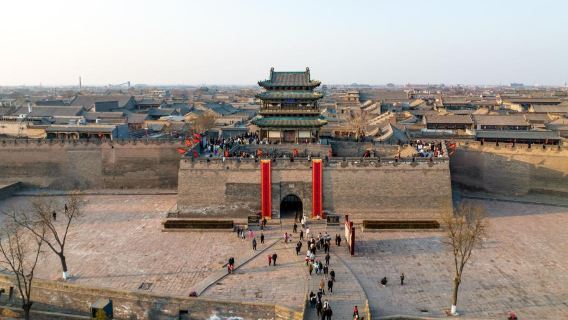
Free cancellation
Instant confirmation
Book now for tomorrow
FromKRW 54,113

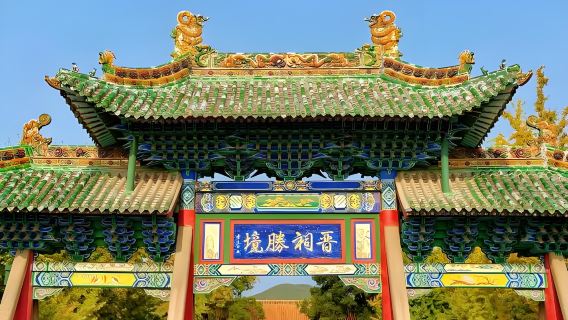
Free cancellation
Instant confirmation
Book now for tomorrow
FromKRW 209,436

FromKRW 349,477
Free things to do in Yangqu
Shanxi Museum
Taiyuan · 24.8km from YangquDonghu Vinegar Garden
Taiyuan · 21.2km from YangquQinglong Ancient Town
Yangqu · 5km from downtownZhonglou Street
Taiyuan · 23.2km from Yangqu
Liuxiang Street
Taiyuan · 22.8km from Yangqu
Shuangta Park
Taiyuan · 24.6km from Yangqu
Xinzhou Ancient City
Xinzhou · 38.4km from Yangqu
Wuyi Square
Taiyuan · 23.6km from Yangqu
Taiyuan Ancient County
Taiyuan · 40.3km from Yangqu
Chongshan Temple
Taiyuan · 22.8km from Yangqu
What travellers say about Yangqu

Anonymous user23 August 2026
5.0
The most worthwhile rides at Taiyuan Fantawild are "Flying With You," "Nuwa Mending the Sky," and "Divine Painting." They offer excellent VR experiences and are very fun. All the rides at Taiyuan Fantawild are quite good; I recommend checking them out.
Taiyuan Fantawild Oriental Heritage
Anonymous user7 October 2026
5.0
The tour guide was attentive and incredibly friendly, covering everything he needed to, and explaining things in considerable detail. With so many people during the National Day holiday, his experience helped us squeeze in every possible moment, and surprisingly, the trip wasn't crowded at all. The Yungang Buddha and the VR tour of Wutai Mountain were definitely worthwhile, and the Yanmen Pass Great Wall and Wang Family Courtyard were also very enjoyable. The driver was fantastic, incredibly experienced, and knew many shortcuts to Xiaoxitian, taking us directly to the scenic area entrance and saving us a lot of walking. The small group size meant it wasn't crowded, and the hotel arrangements were quite reasonable. The Yingxian Wooden Pagoda, the Yanmen Sunset, and the Wang Family Brick Carvings were all breathtakingly beautiful. The local tour guide was completely transparent and honest. I highly recommend this Shanxi tour; if you want to see ancient architecture but are afraid of doing research, book this tour without hesitation.
Shanxi Museum

酷姐驾到28 September 2026
4.0
The vinegar-making experience presented so far is too simplistic and crude. I hope it can be further optimized to include more scientific knowledge and engaging elements. Could you explain how the fumigation method was discovered, the detailed principles behind each process, the corresponding chemical reactions, and the role of microorganisms? And how does this compare to industrial vinegar-making processes?
Donghu Vinegar Garden
Anonymous user17 October 2026
5.0
This visit to the park was a delightful surprise! The park was lush with greenery, the air was fresh, and all the exhibits were kept very clean. It was clear the park staff took great care of the animals; the animals were in excellent spirits, and the exhibits were designed to closely resemble their natural habitats. The tour route was well-planned and clearly marked, ensuring a smooth experience. There were also zookeepers providing educational explanations, allowing visitors to both observe the animals and learn a great deal. There were plenty of rest areas, making the overall experience relaxing and therapeutic. It's perfect for a trip with friends or a family outing, and I'd definitely come back!
Taiyuan Zoo

🚲小电驴登儿 🚓10 October 2026
5.0
The Shanxi Merchants Museum is located within the old Governor's Mansion; its red walls and green tiles are very photogenic. The exhibitions mainly focus on the history of Shanxi merchants and their banks. The courtyard is exquisite, quiet, and not crowded. It's a pleasant place to stroll around; about two hours is sufficient.
Taiyuan Shanxi Merchants Museum

M39***741 August 2025
5.0
Qinglong Ancient Town is located in Houcun Township, Yangqu County, Taiyuan City, Shanxi Province, adjacent to National Highway 208. It boasts convenient transportation and is one of Shanxi Province's ten major scenic spots. Originally named "Qinghaozui," it was renamed "Qinglong Town" during the Jiaqing period of the Qing Dynasty after villager Wang Shengzhong donated one million taels of silver and was awarded a royal plaque and a blue dragon flag. Its architectural complex, modeled after the layout of Beijing's Summer Palace, forms a dragon-shaped pattern, depicting "culture in the east, military in the west, dragon in the south, and phoenix in the north." The town covers approximately 1,998 mu (approximately 1,998 mu) and is divided into agricultural and cultural areas, military and cultural areas, and commercial and service areas. Numerous Ming and Qing dynasty-style buildings are preserved within the town, including ancient residences such as Yonghe Hall and Jingguan Hall, as well as temples such as the Wenchang Temple and the Dragon King Temple. The town boasts exquisite wood and brick carvings. Historically, it was a key route for Shanxi merchants to travel westward. The Wang family produced over 130 officials of the fifth rank and above, contributing to its prosperous commercial trade. It is now open to the public free of charge, open from 8:30 to 17:30 every day, where visitors can experience ancient buildings, gardens and folk culture.
Qinglong Ancient Town

M22***5616 October 2026
5.0
The murals are stunning. This is an underrated museum. You could hire a good guide to learn about the history of the Northern Qi Dynasty. It wasn't crowded on a weekday, and the overall experience was excellent.
Taiyuan Northern Qi Dynasty Mural Museum

jns023 August 2026
4.0
Endless shopping spree. You'll need at leas half a day to get through the whole street, that is if you actually wish to shop at least. Didn't get to take much photos. Was too busy window shopping
Zhonglou Street

一根老葱16 October 2026
5.0
Coal, once the most important energy source, remains indispensable. The Coal Museum preserves the rich history, outstanding contributions, and hard-won achievements of coal. It's worth a visit to learn about and appreciate it!
The Coal Museum of China


