
Things to do in Fengzhen
Explore top experiences
Top 10 attractions in Fengzhen


Yungang Grottoes
Yungang Grottoes Scenic Area is divided into a landscape zone and the grottoes. It is one of the three largest grottoes in China. The sculpture combines Chinese and Western art. Here you can experience the artistic charms of Northern Wei Dynasty. Yungang Grottoes not only embodies traditional Chinese art style but also integrates art styles of ethnic groups from ancient India, countries west of China and China's central plains. It is a famous historical site in Datong City.Datong · 36.8km from Fengzhen

Huayan Temple
Huayan Temple is located in the center of Datong. This temple was built in the 8th year of Liao Qingning Period (AD 1062). In the Daxiong Hall of Huayan Temple, you can see the groundworks of Liao Dynasty and the buildings of Jin Dynasty, as well as the statues of Ming Dynasty and the murals of Qing Dynasty. The Hall of BojiaJiaocang in the temple is the only Liao Dynasty building here. The statues from Liao Dynasty in the Hall are extremely precious. There is a double-storey pavilion-style cabinet behind the Hall of Bojiajiaocang, the upper level is for Buddha statues and Buddhist altars, and the lower layer stores for books.Datong · 40.4km from Fengzhen

Datong Ancient City
Datong Ancient City is the historic core of Datong, Shanxi. It served as the capital Pingcheng during the Northern Wei dynasty, the western auxiliary capital during the Liao and Jin dynasties, and a strategic frontier stronghold in the Ming dynasty, earning it the enduring title "northern key." Over its 2,000-year history spanning dynastic changes, the city's location remained largely unchanged, preserving its chessboard-style street grid centered on Sipailou to this day. The 2008 conservation and restoration project reunited the city walls, reconnected the moat, and gradually revived ancient architecture and old streets, layering the grandeur of an ancient capital with modern life within the same walled city. The ancient town offers an exceptionally dense concentration of noteworthy sights: in Huayan Temple's Liao- and Jin-dynasty halls, the graceful "clasped-hands, smiling" Liao-dynasty bodhisattva statue in the Scripture Depository Hall has long been hailed as the "Oriental Venus"; Shanhua Temple preserves a complete complex of Liao- and Jin-era wooden architecture. The Nine-dragon Wall, originally a glazed screen wall before the Ming-dynasty Dai Prince's residence (destroyed in war), survives with its nine coiling dragons still radiant—older and larger than its counterparts in Beijing's Forbidden City and Beihai Park. Climbing the reconstructed Ming-style city walls reveals a bird's-eye view of the square town's crisscrossing four main streets and orderly rooftops. An evening wait for sunset on the ramparts, followed by the illuminated outlines of walls and watchtowers after dark, makes for one of the town's most enchanting moments. Walking is recommended for touring: the attractions inside the city walls are spaced closely, allowing Huayan Temple, Shanhua Temple, the Nine-dragon Wall, and the drum tower to form a connected route. When tired, you may turn into the area around East Drum Tower Street, where time-honored shops and snack stores are concentrated, making it ideal for resting and replenishing. The ancient town covers a considerable area, so allocate at least half a day and wear comfortable shoes to leisurely appreciate the layered historical depth of this ancient capital.Datong · 40.4km from Fengzhen

Shanhua Temple
Shanhua Temple, commonly known as the "southern temple," is located in the southern corner of the ancient city of Datong. The temple was first built during the Kaiyuan era of the Tang Dynasty and was initially named Kaiyuan Temple. It was renamed Dapu'en Temple during the Later Jin Dynasty but was destroyed in the war at the end of the Liao Dynasty. It was rebuilt on the original site during the Jin Dynasty and was officially named Shanhua Temple in the Ming Dynasty, a name that has been used ever since. The temple's mountain gate, Three Saints Hall, Mahavira Hall, and Puxian Pavilion are all original structures from the Liao and Jin periods, making it one of the relatively well-preserved temple architectural complexes from that era in China. The halls are gradually elevated along the central axis from south to north, with the layout of the Tang Dynasty temple still faintly discernible. Unlike most temples, the mountain gate here combines with the heavenly king hall into one structure: the five-bay Jin dynasty gate houses Ming dynasty statues of the four heavenly kings, immediately visible upon entry with imposing majesty. The central three saints hall, also a Jin dynasty construction, features strikingly large and ornate bracket sets under its eaves that project in layers resembling blooming flowers—a distinctive hallmark of this hall. It enshrines the original Jin dynasty "Flower Adornment three saints": Vairocana Buddha at the center flanked by Manjusri and Samantabhadra bodhisattvas, their forms full and expressions serene. The main hall of the great hero on the northern high platform is the temple's principal hall, built during the Liao Dynasty and renovated in the Jin Dynasty. The altar enshrines the five wisdom buddhas arranged from east to west: Aksobhya in the east, Ratnasambhava in the south, Vairocana at the center, Amitabha in the west, and Amoghasiddhi in the north—all surviving Liao sculptures with Jin-era repainting. Twenty-four deva polychrome sculptures stand on brick platforms along the eastern and western walls, twelve on each side, representing masterpieces of Jin Dynasty sculpture. Some appear armored and weapon-wielding with fierce expressions, while others wear official robes with flowing sashes. Among them, the benevolent and graceful Sridevi particularly captivates viewers. The hall's western and southern walls preserve Buddhist narrative murals painted during the Kangxi era of the Qing Dynasty. Before entering the temple, consider viewing the glazed five-dragon wall in front of the mountain gate. This Ming dynasty Wanli-era relic was originally the screen wall of Xingguo Temple in the southern city, relocated here in the 1980s. Five coiling dragons surge amid turbulent clouds and waves on the wall, with the central "main dragon" holding a fire pearl and facing directly forward toward the ancient temple's gate. During your visit, pay special attention to the hall of three saints' diagonal arches and the Liao- and Jin-dynasty polychrome sculptures in the main hall. The dim lighting in these ancient halls invites slower observation of the statues' expressions and drapery details, allowing deeper appreciation of these Liao-Jin treasures.Datong · 41.1km from Fengzhen

Dai Wang Fu·Daming Baixi Garden
Dai Wang Fu·Daming Baixi Garden is located in the northeast corner of the ancient city of Datong. It was the mansion built after Zhu Gui, the 13th son of Emperor Taizu of Ming Zhu Yuanzhang, was granted the title of Dai Wang and stationed in Datong. Due to its design imitating the imperial palace in Nanjing and its grand layout, it has long been known as the "Little Forbidden City in the northern frontier." The mansion was first constructed in the 25th year of the Hongwu era (1392) on the former site of the Imperial Academy of the Western Capital during the Liao and Jin dynasties. Its central axis runs from south to north, featuring Yu Gate, Duanli Gate, Chengyun Gate, Chengyun Hall, Chongxin Gate, Cunxin Hall, Changchun Palace, and Guangzhi Gate. Following the principle of "ancestral temple to the left and altar to the right" as in the capital, it had a front court for governance and rear quarters for residence, with temples to the east and altars to the west. Over ten generations of Dai Wang lived and governed here. At the end of the Ming dynasty, the mansion was destroyed by war, leaving only the Nine-Dragon Screen wall in front of the mansion standing to this day. The current complex of halls and palaces seen today is a contemporary reconstruction on the original site, restoring the layout and grandeur of this frontier mansion. By day, this is an open "garden of a hundred shows": small theater performances cycle through various courtyards, with ming dynasty-costumed characters like imperial guards and palace maids patrolling and interacting with travelers. Folk arts like shadow puppetry, puppetry, ancient magic tricks, acrobatics, and nuo dances take turns on stage. The indoor performance "Carrying the mandate of heaven" uses gauze screen projections and laser dome effects to create an immersive space of flowing light and shadow. At night, a different scene emerges: the walking live-action show "Datong under heaven" guides audiences through palace halls and corridors, recreating the ming dynasty frontier town's events and the grand spectacle of nations paying tribute. A thousand-lantern festival illuminates the mansion's nightscape, with intangible cultural heritage fire skills like iron-flower forging and fire pots, plus the mansion's flame show, bringing the atmosphere to its climax. When touring, you might as well save the highlight for the night, carefully observing the architecture and encountering scattered performances between courtyards during the day, then immersing yourself in the storyline after dark. The illuminated halls and corridors are particularly photogenic. The original nine-dragon screen wall in front of the mansion still stands nearby and can be visited along the way.Datong · 40.3km from Fengzhen

Nine-Dragon Wall
The Nine-Dragon Wall was originally the screen wall in front of the residence of Zhugui, the king of the early Ming Dynasty. Among the three existing well-known Nine-Dragon Walls, it is the one with the earliest architectural age and full of artistic charm. The building structure of this wall is all made of yellow, green, blue, purple, black, white and other colored glazed components. The wall is composed of three parts: the bottom is the Xumi seat, the middle is the wall, and the upper is the top of the wall. At the east and west ends are the patterns of the rising sun and the bright moon in the sky respectively, and are lined with river cliffs and sea water, and flowing cloud patterns. The waist of the Xumi seat is inlaid with two layers of glazed beasts: the first layer is a unicorn, a lion, a tiger, a deer, a Pegasus, etc., and the second layer is a small dragon. These glazed beasts have different postures and are lifelike. There are 62 sets of glazed bucket arches with imitation wood structure on the wall, supporting the glazed tile roof. The top of the wall is a single eaves and five ridges. The two sides of the main ridge are high-relief multi-layered petaled flowers and dragons. The top of the ridge is full of beasts, ridge beasts, and dragon beasts. The two ends are owl kisses with delicate carving techniques.Datong · 40.5km from Fengzhen

Badaling Great Wall
The Badaling Great Wall is renowned as one of the Nine Strategic Passes under heaven, combining majestic cliffs with picturesque greenery to form the most spectacular section of the Ming Dynasty fortifications. Living up to the Chinese saying "He who has never been to the Great Wall is not a true hero," this remains the premier choice for most Chinese visitors to experience the Wall. The fortress gate exhibits a trapezoidal shape, narrower on the east and wider on the west, featuring two gate towers. The eastern arch bears the inscription "Juyong Waizhen" (Frontier Town of Juyong), while the western gate displays "Beimen Suoyue" (Key to the Northern Gate). North of the fortress stretches the 12-tower Northern Wall section, while to the south lies the less crowded Southern Wall with 7 watchtowers. If time permits, we recommend exploring the Southern Wall first before tackling the more popular Northern section. ▲Walk Through Six Centuries of Golden History: A Visual Feast of Vermilion Foliage Blanketing the Great Wall ▲ As night descends, the Badaling Great Wall transforms into a gilded dragon winding through shadowed peaks, its illuminated battlements whispering tales of millennia - where imperial splendor meets enduring mystery beneath constellations of golden light. ▲Cloaked in winter's crystalline mantle, the Badaling Great Wall becomes a silver serpent coiled between snow-draped peaks, its ancient stones gilded by dawn's golden raysChina · Beijing

The Palace Museum
The Forbidden City, also known as the Imperial Palace, was the imperial palace of the Ming and Qing dynasties, and is also the symbol of ancient China. When you are in the majestic and orderly high walls and deep courtyards, you can truly feel its former glory. ▲The long history has left behind large-scale precious buildings and countless cultural relics, which have also become the main attraction of visiting the Forbidden City today. ▲Classic attractions: The Forbidden City Corner Tower is a polygonal building with a convex plane on all four sides. It is located in Dongcheng District, Beijing. The roof has three layers. The upper layer is a hip roof with vertical and horizontal intersections. It is composed of a gable roof with flowing water on two slopes and a hip roof with four slopes. Because there are nine main ridges on this roof, it is called the Nine-ridge Hall. ▲Sundials are divided into two types according to their installation principle: equatorial and horizontal. The sundial installed using the equatorial principle is called an equatorial sundial. The key points of its production are that it must have a time plate, a latitude arc and a gnomon. When operating, the time plate must be parallel to the equatorial plane of the earth, the gnomon must be in the same direction as the earth's axis, and the shadow cast by the gnomon on the gnomon is the desired time. ▲The Treasure House is located in the Ningshou Palace area. It has a rich collection of treasures, including Buddhist supplies, ornaments, daily utensils, and treasures for appreciation. Among them, the red coral lion about 14 cm high, the Dongzhu court beads about 130 cm long, and the gold "Fengtianzhibao" seal are all rare treasures. ▲The Clock and Watch Museum is located in the Fengxian Hall in the palace. Most of the clocks on display are British products, but there are also clocks from other countries such as France and Switzerland. In addition to the timing function, these clocks are decorated with figures, birds, beasts, flowers, etc., which can also make various different movements. They are very delicately made. Among them, the copper-plated gilded writing clock, the copper-plated gilded enamel gourd-top fishing and woodcutting farming clock, and the copper-plated gilded rotating flower running man rhinoceros carrying clock are very rare.China · Beijing

Datong Ancient City Wall
The Datong Ancient City Wall was constructed in 1372 during the Ming Dynasty's Hongwu era. This imposing and strategically formidable structure stands as a remarkable example of ancient Chinese military architecture. Its distinctive feature is the crenelated outer perimeter with protruding bastions and trapezoidal formations, creating a unique defensive design. The current wall was expanded by General Xu Da while garrisoning Datong, built upon foundations from the Han, Wei, Tang, Liao, and Yuan dynasties. Spanning 7.24 km in circumference, it encloses an ancient urban area of 3.28 square kilometers. Built with precisely cut stone slabs and rammed earth core faced with blue bricks, the wall measures 14m in height, 12m wide at the top and 18m at the base - 6.6m wider than comparable sections of Nanjing's city walls. The fortification features 62 gate towers, corner towers, and watchtowers, including four main gatehouses. The southern gatehouse is particularly impressive with its three-tiered structure measuring 61m across and 23.35m deep. Four corner towers dominate the wall's angles, with the octagonal northwestern tower (Qian Tower) being most distinctive. Among 54 watchtowers, the Hongzi Tower stands out as a rare architectural element. Additionally, 96 barracks were constructed along the wall. A 10m-wide, 5m-deep moat runs approximately 40m from the wall. Each main gate has an outer barbican (covering 17,600 square meters) and an additional crescent-shaped enclosure, creating three defensive checkpoints for entry. The gates feature arrow towers or two-story plaque towers. The four main gates are named: Heyang (East), Yongtai (South), Qingyuan (West), and Wuding (North). The comprehensive defensive system includes watchtowers, corner towers, gatehouses, and arrow towers spaced at intervals, complemented by drawbridges, barbicans, crescent walls, outer fortresses, and subsidiary walls, forming multiple layers of protection. The Datong Ancient City Wall stands tall and majestic, solid and precipitous, with tight defenses and complete facilities. It is a renowned fortified city with distinctive features in China's ancient military architectural history. Due to its crucial position in northern border defense and its significant role in numerous battles, it has long been honored as the "Imposing Stronghold" and the "Northern Key." A unique feature of the Datong Ancient City Wall is its gear-like outer contour. It has 52 protruding bastions with a trapezoidal structure, measuring approx. 23m at the base, 20m at the top, and covering a top area of 400 square meters. Corner bastion: Slightly taller than the watchtowers, each of the four corner bastions has an additional military control platform (also called observation platform) built outside it. The platform measures approximately 16.6m in width and 15m in length, spaced about 66m from the corner bastion, with a connecting footbridge to the city wall. This unique defensive structure is a distinctive feature of Datong Ancient City Wall.Datong · 40.8km from Fengzhen

De Sheng Bao
Desheng Fort was built in the early Ming Dynasty and is an important pass of the outer Great Wall. The Beijing-Baotou Railway and the Great Wall meet here, and the two provinces of Shanxi and Mongolia are divided here. 1 km north of Deshengbao is Deshengkou, which is an important pass connecting the inside and outside of the mouth. It consists of Desheng Fort, Zhenqiang Fort, Four Castles, and Desheng Yuecheng to form a chain of fortresses with a border wall pass, a gate guard castle, a military town and a border town. The four castles are very close to each other, and they are all rammed earth castles. Most of the existing relics in Deshengbao are earth compaction, which is simple and heavy. Climbing to the gate tower, looking around, the outline of the four-sided fort wall is complete and the wall is regular. The fields outside the wall are vast, and the houses inside the wall are in pieces. A street extends from the south gate to the north, passing through a square platform with a brick hoop. There is a doorway under the square platform, and the Yuhuang Pavilion was built on the platform. There are four original attics in Desheng Fort, namely Nancheng Pavilion, Ribosattva Pavilion, Jade Emperor Pavilion and Shenwu Pavilion. Today, the four attics, the barn city and the moon city no longer exist. The Ming Dynasty entered into a mutual market covenant with the Mongolian Boots and Targets Department to develop trade exchanges and opened up a new situation of national unity. At that time, Fort Tucson was the main market for trade. Through this market, silk, tea, beans, rice, grain and other goods in the Central Plains can be transported to ethnic minority areas such as Mongolia and Northwest China; cattle, sheep, horses, and furs from ethnic minority areas can be imported into the Central Plains.Datong · 8.6km from Fengzhen
Experiences you can't miss in Fengzhen
Featured Day tours in Fengzhen
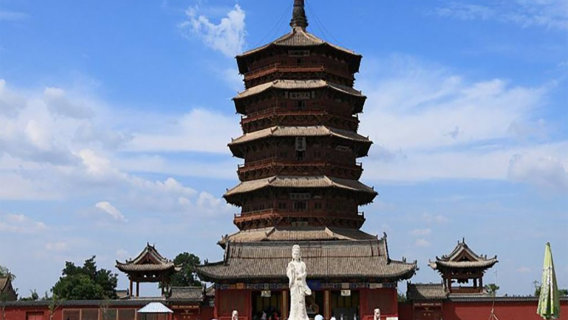
View all Day tours![※1-day private charter tour to Xuankong Temple + Yungang Grottoes in Datong [Hotel pickup included]](https://ak-d.tripcdn.com/images/10040v000000jhuz86DE4_C_568_320.jpg?_fr=wc)
4.9/5
· 50 reviews· 254 bookedFree cancellation
Instant confirmation
Book now for tomorrow
50 consecutive positive reviews
FromPLN 231.16
4.9/5
· 50 reviews· 204 bookedFree cancellation
Instant confirmation
Book now for tomorrow
50 consecutive positive reviews
FromPLN 221.25
![※※Private chartered tour: 1-day tour to Datong Xuankong Temple + Yungang Grottoes + Yong'an Temple with private charter [city pickup]](https://ak-d.tripcdn.com/images/0104z120008ab62gc27C1_C_568_320.jpg?_fr=wc)

4.9/5
· 201 reviews· 324 bookedFree cancellation
Instant confirmation
Book now for tomorrow
99% of travelers recommend
FromPLN 231.16

4.9/5
· 39 reviews· 121 bookedFree cancellation
Instant confirmation
Book now for tomorrow
31 consecutive positive reviews
FromPLN 277.39

4.9/5
· 33 reviews· 109 bookedFree cancellation
Instant confirmation
Book now for tomorrow
97% of travelers recommend
FromPLN 220.93
![※Xuankong Temple + Yungang Grottoes + Huayan Monastery 1-day tour by private charter [Exclusive private charter with hotel pickup]](https://ak-d.tripcdn.com/images/0353f12000r5t42q553B0_C_568_320.jpg?_fr=wc)
4.8/5
· 18 reviews· 77 bookedInstant confirmation
Book now for tomorrow
FromPLN 247.67

5.0/5
· 12 reviews· 50 bookedFree cancellation
Instant confirmation
Book now for tomorrow
FromPLN 118.88
![※Datong Xuankong Temple + Ying County Wooden Pagoda Private Charter 1-Day Tour [Flexible Departure Time | Train Station Pickup]](https://ak-d.tripcdn.com/images//0581j12000ne8yzqg9E18_C_568_320.jpg?_fr=wc)
5.0/5
· 6 reviews· 40 bookedInstant confirmation
Book now for tomorrow
FromPLN 224.55
Free things to do in Fengzhen
Yungang Grottoes
Datong · 36.8km from FengzhenBook now for tomorrow, Cancel anytimeHuayan Temple
Datong · 40.4km from FengzhenBook now for tomorrow, Cancel anytimeDatong Ancient City
Datong · 40.4km from FengzhenShanhua Temple
Datong · 41.1km from FengzhenDai Wang Fu·Daming Baixi Garden
Datong · 40.3km from FengzhenNine-Dragon Wall
Datong · 40.5km from FengzhenBadaling Great Wall
China · BeijingBook now for tomorrowThe Palace Museum
China · BeijingDatong Ancient City Wall
Datong · 40.8km from FengzhenDe Sheng Bao
Datong · 8.6km from Fengzhen
What travellers say about Fengzhen

M27***7717 October 2026
5.0
This group tour was an excellent experience, and I must give a huge thumbs up to our tour guide, Song Lijuan. Throughout the entire trip, she was patient and meticulous. Knowing that there were several elderly people in the group, she deliberately slowed down the pace, never rushing anyone, and allowing ample rest and buffer time at each section of the route.
Her explanations were exceptionally detailed. She not only explained the historical anecdotes of the scenic spots in a vivid and easy-to-understand way, but she would also stop to let the elderly catch up before continuing. She would also proactively offer assistance to elderly members with mobility issues, taking care of their needs at every turn. It was a truly heartwarming and reliable experience, making it a very comfortable trip.
Yungang Grottoes

203***5617 October 2026
5.0
Huayan Temple, a royal temple from the Liao Dynasty, is well worth a visit. The roof ornaments of the main hall are even taller than those of the Forbidden City, and the temple boasts exquisite painted decorations and lifelike sculptures. The Huayan Pagoda, with its mortise and tenon structure, and its all-copper underground palace are also worth seeing. The painted sculptures in the Sakyamuni Hall, hailed as the "Venus of the East," are also highly recommended.
Huayan Temple

悠闲溜达的猫🐱13 October 2026
4.0
The ancient city is beautiful at night with the lights on, and all the attractions are within walking distance. There are many restaurants and popular eateries, but expect to wait over an hour during peak hours. Supermarkets are scarce within the ancient city; delivery is the only option if you need food.
Datong Ancient City

M38***4917 October 2026
5.0
Walking through Shanhua Temple, there is no excessive commercialization, only ancient trees, ancient buildings, painted sculptures, and murals to accompany you. Every step you take is like stepping into time, and you can feel the quiet power accumulated over thousands of years. This is probably the most comfortable way to visit an ancient temple.
Shanhua Temple

朔风万里30 September 2026
5.0
Definitely worth a visit! You can enter the park anytime within three days. There are shows, various games, NPC interactions, and most importantly, the iron flower performance is truly spectacular! The performers in the park are all very friendly!
Dai Wang Fu·Daming Baixi Garden

_We***087 October 2026
5.0
One of the three major Nine-Dragon Walls, it's definitely worth a visit. The venue is rather small; it's actually only one side, so you can see the whole thing from the outside. However, there are explanations inside, so if you want to learn about the history, it's worth going in.
Nine-Dragon Wall

MinkNara16 October 2026
5.0
จองกับ trip.com สะดวกสบายไม่ต้องพะวงเรื่องการหาซื้อตั๋วว่าอยู่ตรงไหน สามารถไปต่อคิวขึ้นกระเช้าได้เลย คิวรอขึ้นกระเช้าที่นี่ยาวรอนานช่วงเช้า บนกระเช้าใช้เวลาขึ้นไม่นานประหยัดเวลาได้เยอะ ขาลงเดินใกลใช้เวลาพอสมควรแต่ได้ชมวิว ผ่านพิพิธภัณท์ ต้องเผื่อเวลา ถ้าเวลาน้อยแนะนำขึ้นลงกระเช้า
Badaling Great Wall

_TI***6417 October 2026
4.0
We booked last minute and they were able to accommodate us. There was heavy rain but still very crowded but really worth the visit. History and architecture is incredible. Cora was our guide and she explained well in English and knew about many details about the construction of the palace and the history. A great experience (unlucky for the rain). Cora also waited for us as we were late and was very helpful throughout so thank you! Very good instructions on meeting point sent one day before the visit and very responsive customer service. Highly recommended.
The Palace Museum

139***555 August 2026
5.0
During the Spring Festival, the lantern festival and traditional song and dance performances were impressive and charming, and the crowds were quite large, making it very lively. There were also float parades, allowing you to see the performers up close. The ancient city wall is very long, and if you like walking, you can walk and practice on it.
Datong Ancient City Wall

华-Rainbow20 November 2021
4.0
Desheng Fort is located in Xinrong District, 40 kilometers north of Datong City. This castle has preserved some of its buildings, many of which are made of rammed earth.
De Sheng Bao


