Dai County

Things to do in Dai County

Search attractions or local attractions & tours
Search

Explore top experiences

Top 10 attractions in Dai County
View all Attractions
Yanmenguan
No. 9 of Fall Viewing Attractions in Shanxi

Yanmenguan

8.1
4.7/5
8.2k reviews

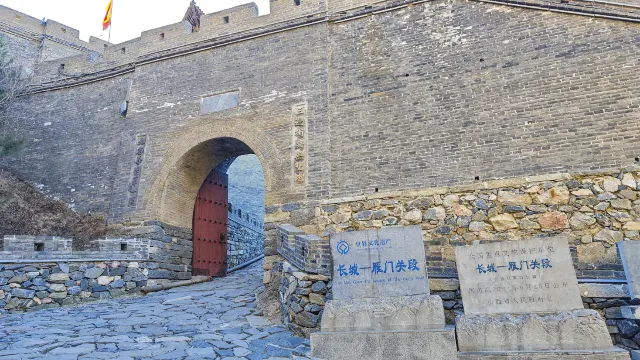
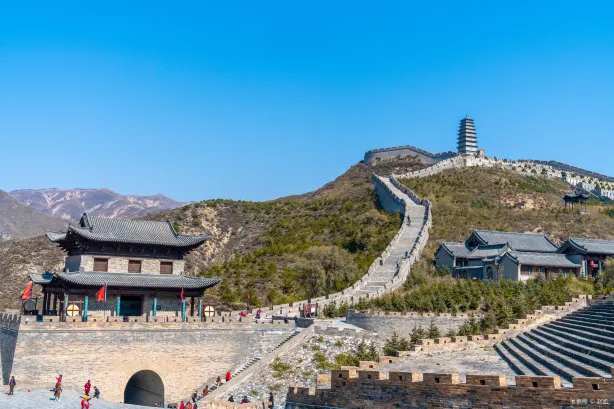
Yanmenguan, located approx. 30 km northwest of Dai County in Xinzhou, is a pass on the inner Great Wall of the Ming Dynasty, andNingwu Pass, together with Pianguan, they are known as the "three outer passes". There is no public transportation from Dai County town to the attraction, so you can only get there by private charter. Inside the attraction, you have to rely entirely on walking.YanmenguanSince ancient times, it has been a crucial pass for the Central Plains dynasties to defend against invasions from northern nomadic tribes. Its earliest history can be traced back to the Warring States period when King Wuling of Zhao fought against the Xiongnu here. Han Dynasty generals Li Guang, Wei Qing, and Huo Qubing once led troops to battle the Xiongnu in this area. During the Northern Song Dynasty,YanmenguanIt became the main battlefield between the Song and Liao dynasties, and the prototype of the well-known story of the Yang family generals took place here. A statue of Yang Liulang stands in the attraction. ExistingYanmenguanIt was built in the seventh year of the Hongwu era of the Ming Dynasty (1374) (with multiple reconstructions in recent years). Currently, there are three gates (east gate, west gate, and small north gate). A wild goose tower stands atop the east gate, and the lintel of the small north gate (i.e., the barbican gate) is inscribed with "Yanmenguan"Three large characters flanked by brick-carved couplets: 'Foremost strategic pass in three frontiers, most revered fortress among nine passes,' both inscribed by the great calligrapher Fu Shan of the late Ming and early Qing dynasties. You can visit the ruins of Ming and Qing military barracks on the hill north of the fortress. To the right outside the west gate areGuan Yu templeOutside the east gate stands the Jingbian Temple, dedicated to Li Mu, a renowned general of the Zhao state during the Warring States period. If you are a fan of the Great Wall, when you visit Yanmenguan, you can walk along the ancient pass trail here. The ancient pass trail in the attraction is built along the local mountain terrain, winding through the peaks. Climbing this section of the trail may be slightly tiring for those who usually work in offices, but when you ascend a peak along the ancient path and gaze at the vast expanse of withered grass outside the pass, quietly feeling the weight of history, you'll find the physical effort well worth it. There are some farmhouse inns near Yanmenguan that can provide food and stay, but most visitors return to Dai County or go to other counties or cities for accommodation. Walking the ancient pass consumes a lot of energy, so you can bring some dry food and drinking water.

Dai County · 14.6km from downtown
38% offFrom £6.30
Bianjing Drum Tower

Bianjing Drum Tower

4.7
4.5/5
54 reviews

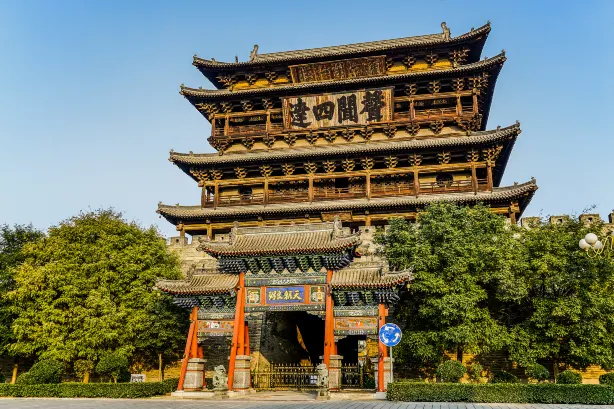
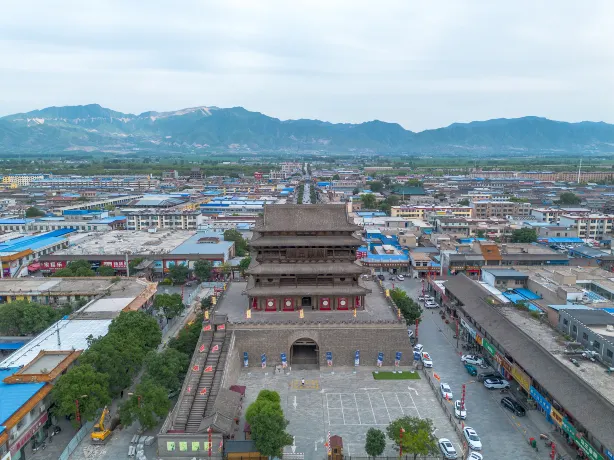
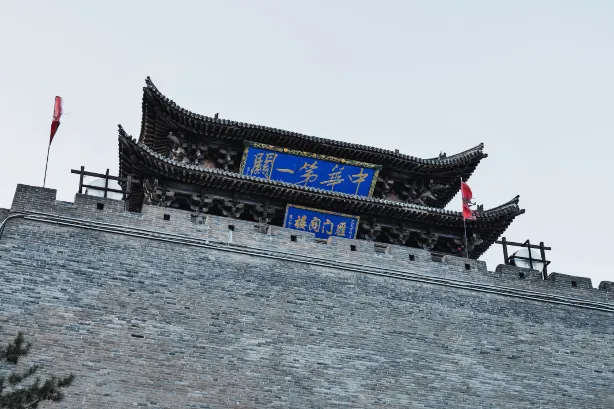
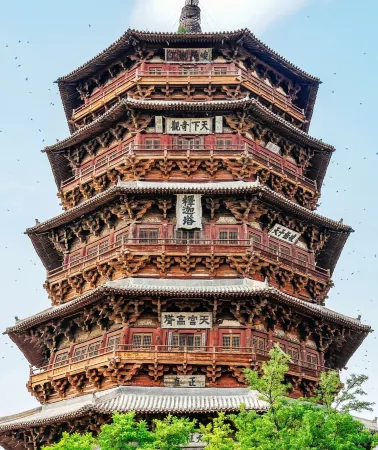
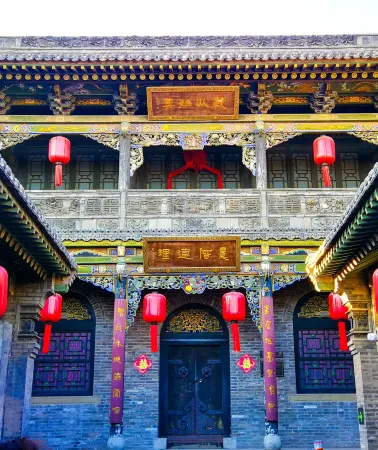
Bianjing Drum Tower is located in the center of Dai County, commonly known as the Drum Tower or Qiao Tower. It was first built in the 7th year of the Hongwu reign of the Ming Dynasty (1374) and was initially named "Yuhuang Pavilion." After being destroyed by fire, it was rebuilt during the Chenghua reign and renamed "Bianjing Drum Tower." This brick-and-wood pavilion consists of a tall foundation and an upper structure, with a total height of approx. 40 m, making it a typical representative of Ming and Qing dynasty pavilion-style architecture. The building has three stories, an exterior with a hip-and-gable roof, seven bays in width and five bays in depth on each floor, and is surrounded by corridors. The eaves taper layer by layer, and the facade proportions are harmonious. The foundation is over 10 m high, with a stone-arched gate tunnel running north-south through the center for pedestrians to pass through, and the horse path to the tower is located on the northeast side of the foundation. Beside the tower stands a Tang Dynasty sutra pillar, which is a precious cultural relic. The most striking features of this tower are three giant wooden plaques: the north facade hangs a plaque reading "Weizhen Sanguan," referring to Yanmenguan, Ningwu Pass, and Piantou Pass; the middle of the south facade hangs a plaque reading "Shengwen Sida," and under the eaves of the top floor hangs a plaque reading "Yanmenguan's First Tower." All are Qing Dynasty inscriptions with vigorous calligraphy that are striking from a distance. This was once the highest point of Daizhou Ancient City, overlooking Yanmenguan to the north and the Hutuo River to the south, occupying the position of a military command center in the ancient three-pass defense system. Liang Sicheng and Lin Huiyin once visited here for research.

Dai County · 578m from downtown
Daizhou Ancient City - Ayuwang Pagoda

Daizhou Ancient City - Ayuwang Pagoda

4.7
4.6/5
26 reviews

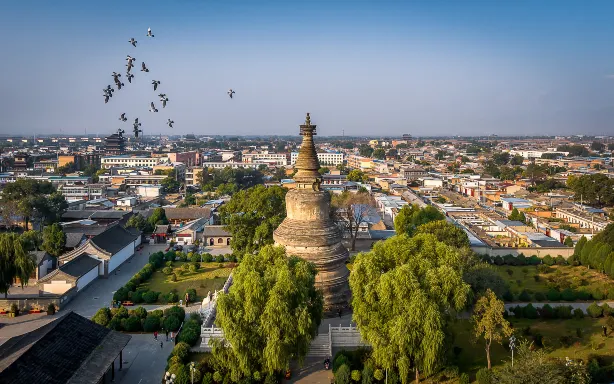
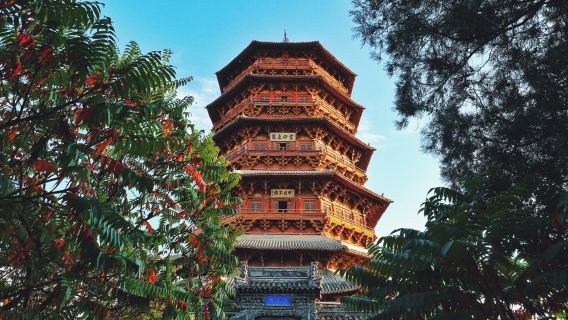
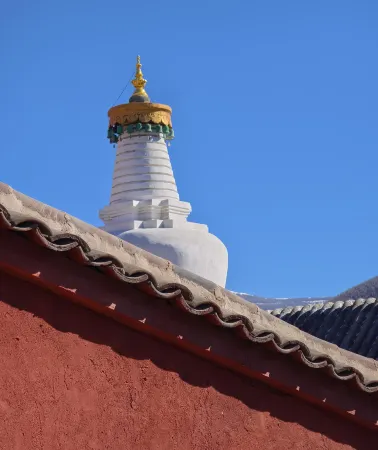
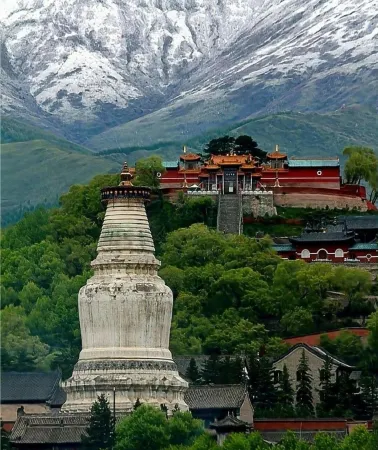
The Daixian Ashoka Pagoda, commonly known as the White Pagoda, is located in the Yuanguo Temple in the ancient city of Daixian, facing the Bianjing Tower. The Ashoka Pagoda was first built in the first year of Renshou in the Sui Dynasty (601 AD). It was originally a wooden structure and was called "Longxing". It was rebuilt in the first year of Dazhong in the Tang Dynasty (847 AD) and changed "Longxing" to "Yuanguo". In the following hundreds of years, it was abandoned and rebuilt several times. In the twelfth year of Zhiyuan in the Yuan Dynasty (1275 AD), it was rebuilt into a brick pagoda and has been preserved to this day.The Ashoka Pagoda is made of bricks and is a cone in the Tibetan Buddhist style. The base of the pagoda is rectangular, 50 meters long from north to south, 30 meters from east to west, and 1.5 meters high. The pagoda is built in the center of the base. It is built on a Sumeru pedestal with upturned lotus petals and a mixed belly and square pedestals, and is carved with various floral decorations, lotus petals, and Indian "Dharani Sutras".The tower has a L-shaped pedestal on which a brake pole is supported. The original brick pagoda had 13 floors, two of which have been destroyed. The upper part is covered with a plate and the middle is filled with a golden top jewel. The tower has a beautiful shape, is strong and upright, and is highly carved. It is a masterpiece among Tibetan towers in my country. Two stone statues of Sakyamuni and Duobao are placed side by side on the north wall of the third floor of the tower. The upper beam of the Buddha pedestal is engraved with an inscription that the statue was made for Emperor Taizong's birthday in the second year of Zhenguan. The frame of the south gate preserves the cloud pattern carved in Tang Dynasty, and the surface is left with inscriptions by tourists from Song Dynasty.

Dai County · 236m from downtown
Daizhou Ancient City

Daizhou Ancient City

4.6
4.6/5
7 reviews

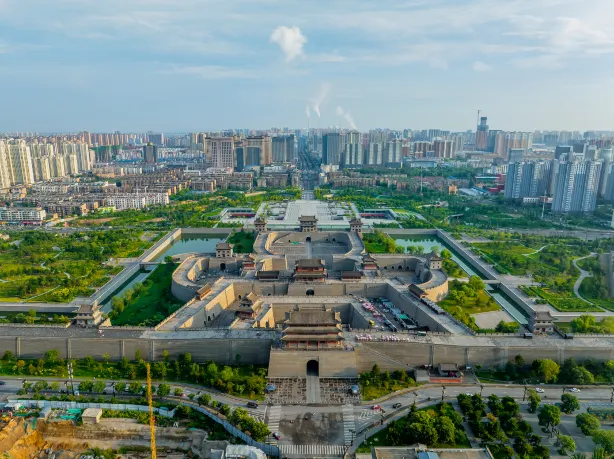
Daizhou Ancient City is located at the foot of Yanmenguan and has been an important military town on the northern frontier of China since ancient times. Over the past two thousand years, more than a hundred battles have taken place here. Famous generals throughout history, such as Li Mu, Xue Rengui, Guo Ziyi, and Yang Ye, have all guarded this place. Yanmenguan and the ancient city together formed a complete border defense system. The existing walls of Daizhou Ancient City were built in the early Ming Dynasty. The walls are basically intact, and the street layout within the city still retains the style of the Ming and Qing dynasties. Standing in the center of the ancient city is the Bianjing Drum Tower, commonly known as the Drum Tower. It was first built in the 7th year of the Hongwu reign of the Ming Dynasty, with a total height of approx. 40 m. It features three stories, four eaves, and a hip-and-gable roof, making it one of the few large wooden drum towers remaining in China. The north side of the tower hangs a giant plaque reading "Weizhen Sanguan," and the south side hangs a plaque reading "Shengwen Sida." It is magnificent in scale. A popular saying still circulates among the people: "Daizhou Drum Tower, Yingzhou Pagoda," comparing it to the Wooden Pagoda of Yingxian. Liang Sicheng and Lin Huiyin once visited this tower specifically for research and spoke highly of it. The city is also dotted with ancient buildings such as the Ashoka Pagoda, the Confucian Temple, the City God Temple, and the Martial Temple. Among them, the Confucian Temple was first built in the Tang Dynasty, with the existing buildings mainly dating from the Ming Dynasty. Its four courtyards are arranged along the central axis. The caisson ceiling in the Dacheng Hall is magnificent, and there are Tang Dynasty locust trees planted in front of the hall. It is a sizable prefecture-level Confucian Temple in North China. The ancient city is surrounded by rolling mountains, with the Hutuo River flowing through it. The natural landscape and the profound cultural heritage complement each other.

Dai County · 617m from downtown
Free attraction
Daixian Confucian Temple
No. 9 of Fall Viewing Attractions in Xinzhou

Daixian Confucian Temple

4.5
4.7/5
32 reviews

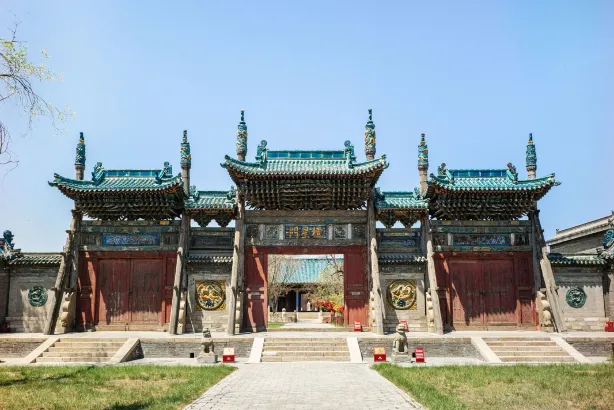
Daixian Confucian Temple is said to date back to the Tang Dynasty. The existing structures are primarily from the Ming Dynasty, with a few built during the Qing Dynasty, making it one of the most prominent prefecture-level Confucian temples remaining in North China. The entire architectural complex faces south and consists of three courtyards. All roofs are covered with peacock-blue glazed tiles, which are particularly striking in the sunlight. The front courtyard is marked by the Archway of Lingxing Gate, a six-pillar, five-roof structure. The pillar tops are adorned with glazed coiling dragon and crouching lion finials, and the spaces between the side towers are inlaid with circular glazed dragon wall panels, showcasing exquisite craftsmanship; the courtyard also features a semi-circular Pan Pool and two ancient locust trees from the Tang Dynasty, which are over 1,000 years old. The main building in the middle courtyard is Dacheng Hall, which is 7 bays wide with a single-eave hip-and-gable roof. It stands on a wide white marble base and is enclosed on three sides by stone-carved railings. The caisson ceiling inside the hall features an Eight Trigrams design, supported by 4 layers of dougong (bracket sets) that rise in square, octagonal, and circular shapes. The layered transitions are magnificent, making it a masterpiece of Ming Dynasty woodwork. The lattice screens on the front eaves are carved with over 10 types of patterns, which are also worth a close look. The back courtyard houses the Chongsheng Shrine, with the Chunguisa Shrine, Wenchang Pavilion, and Minglun Hall located in the corridors on either side, forming a complete Confucian architectural complex.

Dai County · 830m from downtown
Guangwu Great Wall
No. 1 of Fall Viewing Attractions in Shuozhou

Guangwu Great Wall

4.5
4.8/5
40 reviews

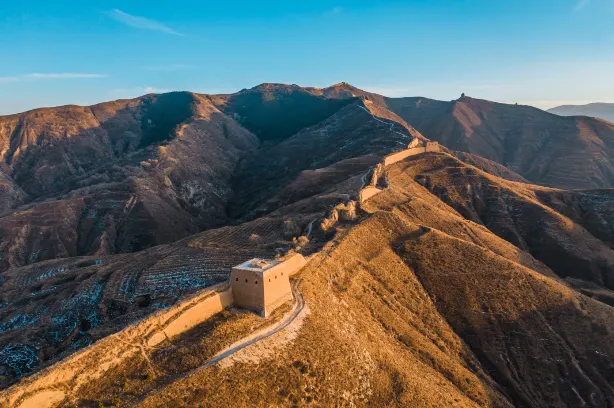
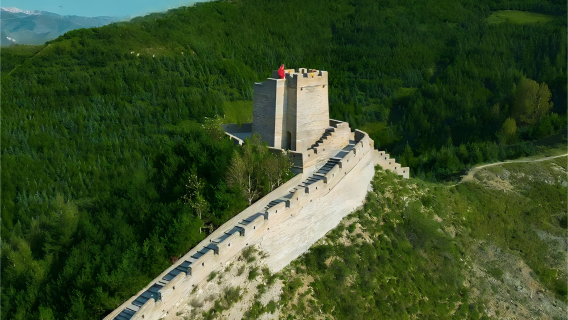
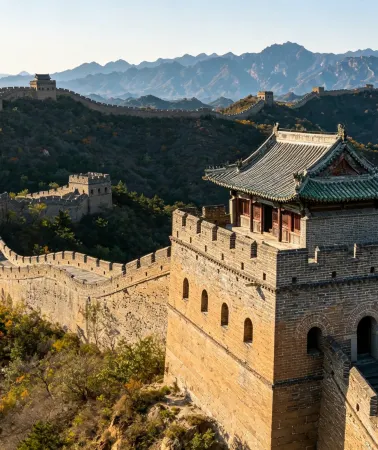
Guangwu Great Wall is part of the Ming Dynasty's inner Great Wall, also known as the Houling Great Wall. It connects to Yanmenguan in the east and overlooks the old city of Ningwu in the west, serving as an important part of the Yanmenguan defense system. This section of the Great Wall was built in the 33rd year of the Wanli reign of the Ming Dynasty (1605) under the supervision of Governor Li Jingyuan. It features a brick-and-stone exterior with a rammed-earth interior, built upon a stone foundation, and is one of the best-preserved brick-clad sections of the Ming Great Wall in China. The Great Wall winds along the mountain ridge, and because some sections resemble sawteeth, it is known locally as the Sawtooth Wall. More than 10 watchtowers are distributed along the route, each with different architectural specifications. Among them, the iconic landmark Moon Gate is a surviving hollow watchtower, named for its archway that resembles a full moon. Moon Gate once collapsed due to strong winds but was later restored to its original appearance through protective measures, and it remains a popular photo spot on this section of the Great Wall. Many watchtower archways are embedded with brick carvings inscribed with the construction date and the names of the officials who supervised the project. Despite hundreds of years of weathering, the inscriptions are still faintly legible. This section of the Great Wall retains its original appearance without large-scale restoration. The brick cladding and rammed-earth remains coexist, and while some bricks were removed by nearby villagers, the remaining walls and battlements appear even more weathered and historic. The hiking route from Baicaokou to Xin Guangwu Village is approx. 10 km long. Along the way, you can get a close look at military facility ruins such as watchtowers and the Kizilgaha Beacon Tower, making it a classic route favored by outdoor hiking enthusiasts. The sawtooth-shaped section of the Great Wall is steep and narrow, requiring hikers to use both hands and feet in some areas, making it suitable for hikers with a certain level of physical fitness.

Shanyin · 20.6km from Dai County
Free attraction
Badaling Great Wall
2027 Global 100 - Best Things to Do

Badaling Great Wall

10
4.7/5
64k reviews

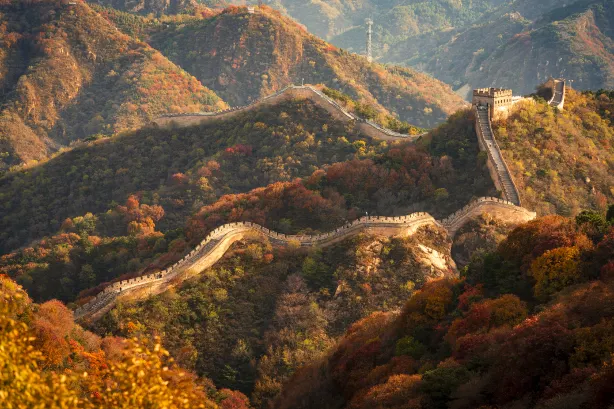
The Badaling Great Wall is a highly representative section of the Ming Great Wall, located in Yanqing, Beijing, north of Juyong Pass. Since ancient times, it has been a strategic military location guarding the northwestern passage to the capital. The pass city is trapezoidal in shape, narrow in the east and wide in the west, with two gates, east and west. The east gate bears the inscription "Juyong Outer Town," and the west gate bears the inscription "Key to the North Gate." Both inscriptions remain clearly legible to this day. Extending north from the pass is the North Wall, along which more than ten watchtowers are distributed; to the south is the South Wall, which has fewer watchtowers. North Tower 8 is the highest point of the entire section, at over 1,000 meters above sea level, and from its top you can overlook the magnificent sweep of the wall winding along the mountain ridges. The North Wall has higher terrain and steeper slopes with open views, and is the main route for most visitors; the South Wall is relatively gentle and less crowded, making it suitable for visitors who want to take photos at a relaxed pace and avoid the crowds. If time permits, walking the South Wall first and then the North Wall is a more leisurely arrangement. Badaling Great Wall is also one of the earlier sections of the wall opened to the public. The top surface of the wall is paved with square bricks, and the widest parts can accommodate five horses walking side by side. Defensive structures such as battlements and arrow holes are well preserved, and walking along it gives a direct sense of the construction standards of Ming Dynasty border defense works. In fall, layers of red leaves on the mountains contrast beautifully with the gray brick wall, making it a season that many photography enthusiasts travel specifically to capture. ▲Travel through 600 years of gilded splendor and encounter the visual shock of crimson red leaves blanketing the mountains ▲nightAs night falls, it winds through the mountains like a brilliant golden dragon, and the ancient city wall illuminated by lights tells of the glory and mystery of a thousand years of history ▲ In winter, the Badaling Great Wall, covered in pristine white snow, winds through the mountains like a silver dragon. The golden light of dawn spills across the wall, painting a tranquil and magnificent picture.

China · Beijing
From £4.02

Experiences you can't miss in Dai County

Featured Day tours in Dai County

View all Day tours
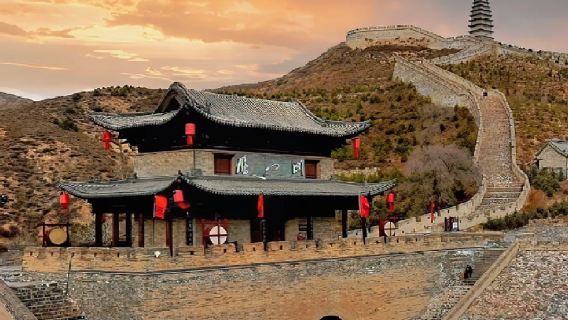
Yanmen pass great wall + Ying County wooden pagoda + Pure Land Temple + Guangwu ancient town small group 1-day tour | includes one-way expressway fee
󱌍
From£39.12
Departing from DaTong: One-day private car tour to Yanmen Pass and Xinzhou Ancient City
󱌍
Duration: 6.5 hrs
English
Free cancellation
Instant confirmation
From£117.36
Departing from Taiyuan or Datong: private car tour to Yanmen Pass and Xinzhou Ancient City
󱌍
5.0/5
· 1 review
Duration: 9 hrs
English
Free cancellation
Instant confirmation
Book now for tomorrow
From£104.32
[Departure from Datong]Private chartered one-day tour: Yingxian Wooden Pagoda + Yanmenguan
󱌍
Duration: 8.5 hrs
English
Free cancellation
Instant confirmation
From£84.76
※Datong Yanmen Pass + Xuankong Temple + Ying County wooden pagoda private charter 1-day tour | City transfer including one-way expressway
󱌍
From£39.77
Private tour | Taiyuan 1-day tour to Yanmen Pass + Xinzhou Ancient City/A journey through the millennia-old frontier ancient city
󱌍
From£45.67
Shanxi Xuankong Temple + wooden pagoda + Yanmen Pass private tour
󱌍
5.0/5
· 1 review
Duration: 11.5 hrs
English
Free cancellation
Instant confirmation
Book now for tomorrow
9% off
Limited-time sale
From£85.72£95.24
Tour to Yungang Grottoes and Great Wall (Entrance Fees Not Included)
󱌍
Duration: 9.3 hrs
English
Free cancellation
Instant confirmation
From£69.62

More things to do

Private Tours in Dai County

View More Private Tours in Dai County
Group Tours in Dai County

View More Group Tours in Dai County
Dai County Today's weatherCloudy -3-11℃
Dai County weather for the next 2 days11/27: -7-5℃, 11/28: -7-6℃

Free things to do in Dai County

What travellers say about Dai County

user-avatar
Anonymous user22 November 2026
4.0
Take the bus from the square at the North Gate of Xinzhou Ancient City. It takes about an hour and a half to reach Yanmen Pass Scenic Area. There aren't many people during the off-season, so you can finish your visit around 1:00 PM. Then, return to the North Gate of Xinzhou Ancient City stop and get off.

Yanmenguan

user-avatar
会飞的鱼zzt2 July 2025
5.0
边靖楼位于山西忻州市代县县城十字街心,居整个古代州城的最高点,是历史上长城险隘雁门关的重要依托和支撑点。是守望瞭敌、指挥作战,具有重要军事价值的建筑,有万里长城第一楼之美誉。楼身可以看到清雍正十一年知州杨弘题写的亚洲第一巨匾“威镇三观”和汤豫题的“声闻四达”匾额。

Bianjing Drum Tower

user-avatar
殷都老虎18 January 2026
4.0
The Ashoka Pagoda (a national cultural relic) is located in the backyard of the Daixian County government building in Xinzhou City, Shanxi Province, and is commonly known as the White Pagoda. Originally built in 601 AD (the first year of the Renshou era of the Sui Dynasty), it suffered three major destructions during its more than 600 years of existence, and was rebuilt as a brick pagoda in 1275 AD (the twelfth year of the Zhiyuan era of the Yuan Dynasty). It is a conical Tibetan Buddhist pagoda with a rectangular base, the pagoda itself situated in the center of the base. The pagoda itself has a circular base, and the body is a slightly wider, round, dome-shaped structure with an 11-tiered brick spire. This large pagoda, 21.78 meters in diameter and 40 meters high, is harmoniously proportioned, stable and upright, simple and elegant, and features superb brick carving techniques, making it a masterpiece of Yuan Dynasty Lamaist pagodas in China. While most Lamaist pagodas have square bases, this pagoda has a perfectly circular base. The Ashoka Pagoda and the Great White Pagoda of Miaoying Temple in Beijing are examples and models of early Lamaist pagodas still existing in the Central Plains region. Ashoka was a king of ancient India in the 3rd century BC. His dynasty, named after the Mauryan clan, was founded by him. In 270 BC, after murdering his brother and ascending the throne, Ashoka waged war year after year, achieving the first major unification of India by force and establishing a vast dynasty. Ashoka was known for his volatile temper, cruelty, and bloodthirstiness, but he gradually repented, reformed, and joined the Sangha. To demonstrate his piety, Ashoka made Buddhism the state religion and ordered the construction of Buddhist temples throughout the country. Under his influence, Buddhism, founded by Prince Siddhartha Gautama of King Suddhodana, flourished in the Mauryan Empire. To show his reverence for the Three Jewels of Buddhism, Ashoka donated the entire country to Buddhist causes three times, only to redeem it with precious jewels. In the seventeenth year of his reign, he organized the Third Buddhist Council, which facilitated Buddhism's spread beyond India and into the world. It is said that, to promote Buddhism, King Ashoka built 84,000 stupas around the world, including China, to enshrine the relics of Shakyamuni Buddha, which were originally divided among eight countries. All these stupas are called "Ashoka Stupas." Travel Guide Transportation: High-speed rail to Yanmenguan Station (military seats have charging stations). A shuttle bus from the station directly to Daizhou Ancient City (8 yuan one way). During peak season, there is a direct shuttle bus to Yanmenguan (40 yuan round trip); during off-season, buses only run at 8:00 and 12:00, so it is recommended to call the scenic area in advance. A taxi costs 30-60 yuan one way. Stay in a hotel in Daizhou Ancient City. You can book a bus to Yanmenguan at 8:30 am. Ticket Price: Free. Time: 15 minutes. (The same courtyard contains the County Government Office and Mao Zedong's Residence, both free, totaling 20 minutes.) Food and Accommodation: Convenient. It is recommended to stay at the Home Inn Business Hotel, as it has a good location and service. Route: West Gate, Bianjing Tower, Ashoka Pagoda, Confucian Temple (2-5 hours total), Yanmen Pass (3 hours). Nearby attractions: Chongfu Temple, Yingxian Wooden Pagoda, Jingtu Temple, Huiji Temple.

Daizhou Ancient City - Ayuwang Pagoda

user-avatar
静水深流-ZWH1 May 2025
5.0
I passed by Dai County when I was traveling to Xinzhou. I arrived a little late, so I only went to the Confucian Temple. It was quaint and the blue glazed tiles had not faded after more than 600 years. It was very beautiful. The lady who gave the explanation was very professional and patient, which added to my knowledge. Overall it exceeded my expectations.

Daizhou Ancient City

user-avatar
ie_liuxi6 May 2025
5.0
游完玩雁门关开车到代县找了个名宿住下,恰好就在文庙的旁边,过了六点吃过晚饭没事过去看看以为下班关门了,结果还能进去就进去转了转,还满有历史感的,庙区蛮大的,各个建筑几乎保持原味历史痕迹明显,临晚了没啥人进去看看安静得很,不错。

Daixian Confucian Temple

user-avatar
封云起30 September 2025
5.0
There is an observation deck on the internal road from the north gate to the south gate of Yanmen Pass, where you can see the panoramic view of Yanmen Pass from the south gate. The through bus from the north gate of the scenic area to Yanmen Pass Station passes by the observation deck when taking the internal road. Such a beautiful scenery can only be seen from the internal road. It's a pity that tourists can't see it. It is recommended that the scenic area study the tourist viewing route. The first picture I found on the Internet, I didn't have time to take a photo on the scenic bus

Yanmen Pass Section of the Great Wall

user-avatar
忙忙忙忙里偷闲逛逛19 May 2026
5.0
The Guangwu section of the Ming Great Wall is absolutely worth a visit! It's authentic and far superior to any newly built section. Seeing the Great Wall winding along the mountain ridge amidst the undulating mountains evokes a sense of vastness and grandeur. The 600-year-old Great Wall and the modern wind turbines echo each other, reminding us that our efforts for a better life have never ceased. Standing atop the watchtower, one can imagine the clash of swords and the mournful sounds of war drums, and the red flags fluttering in the west wind – today we hold the long spear in our hands, when will we bind the dragon? A visit here can be short or long. It takes about half an hour to walk from the parking lot to the Moon Gate. If time permits, you can continue walking to see several well-preserved watchtowers. Be sure to wear sunscreen as the UV radiation is strong.

Guangwu Great Wall

user-avatar
KaBLoM Swiss30 September 2026
5.0
Far from the cities and their useless gadgets, here's a moment of pure, well-earned pleasure (absolutely no YouTube nonsense): a 2850m climb that will leave your legs burning to reach the first gateway to Mongolia, a marvel without cable cars or anything else, just our own two feet! The view is exceptional. There are several routes to choose from, ranging from 3 to 20km.

The First Pass of China

user-avatar
D13***4723 November 2026
5.0
Very good. Originally, we planned to take the cable car, but since it was closed, we decided to climb it instead. Three hours was enough. We climbed slowly from North 1 to North 12. After North 8, it got a bit steep, but there were far fewer people.

Badaling Great Wall

Trip Moments in Dai County

Popular cities near Dai County

Frequently asked questions

What are the recommended tours and excursions in Dai County?

When choosing a tour, start with how much time you have and the kind of experience you're looking for. Trending options right now include Yanmen pass great wall + Ying County wooden pagoda + Pure Land Temple + Guangwu ancient town small group 1-day tour | includes one-way expressway fee, Departing from DaTong: One-day private car tour to Yanmen Pass and Xinzhou Ancient City, and Departing from Taiyuan or Datong: private car tour to Yanmen Pass and Xinzhou Ancient City. Check the real-time availability and itinerary before you book.

As of 26 November 2026, the reference price for day tours and activities in Dai County is around GBP 39.12 – GBP 117.36. Rates vary by duration, group size, transport, tickets, meals, and any special admission requirements. Before you book, please confirm the billing currency and whether the price is quoted per person or per group.

Get help anytime, anywhere within 30 secondsContact customer support

Change and cancellation policies vary by attractions and tours. Please check the product details page for more information.

Ticket prices may vary between weekdays and weekends, as well as during peak and off-peak seasons. When booking with Trip.com, you can also use Trip Coins to get extra savings. For more tips on booking discounted tickets, please visit Trip.com for the latest information.