






 4.7/5
4.7/5 hutian
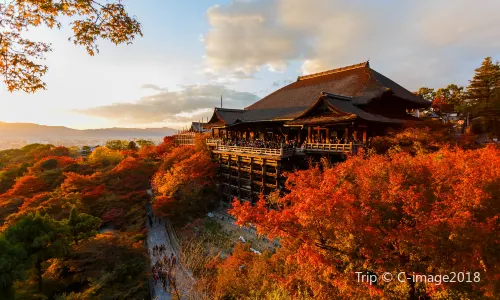
Kiyomizu-dera Temple, one of the oldest temples in Kyoto, is located on the mountainside of Mount Otowa in Higashiyama Ward, Kyoto. Founded in 778 as the temple of Emperor Kanmu during the Heian period, it was designated a UNESCO World Heritage Site in 1994. The main buildings include the Niomon Gate, the main hall, and a three-story pagoda. The Kiyomizu Stage in front of the main hall is particularly famous; supported by 139 thick wooden beams, it is suspended on a mountainside slope and is a National Treasure of Japan. The temple also houses an eleven-faced, thousand-armed Kannon statue, and the Otowa Waterfall's clear water is divided into three streams, representing longevity, health, and wisdom, attracting many visitors to pray for blessings.
 4.7/5
4.7/5 KuMa_Y
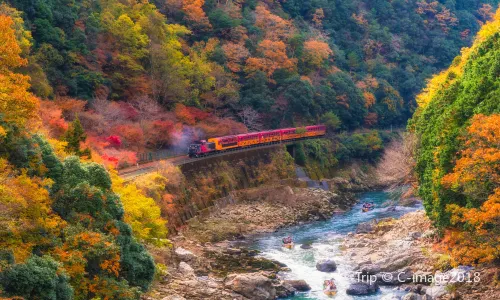
Lying serenely on the banks of the Hozu River in the western suburbs of Kyoto, Arashiyama takes its name from "mountain mist," and indeed, a thin mist often lingers in the mornings, like a veil covering the face, adding a touch of mysterious beauty. In spring, Arashiyama's waters shimmer beneath the Togetsukyo Bridge, where cherry blossoms shimmer in the water. A blanket of pink and white cherry blossoms hangs down, weighing down branches. Occasionally, petals drift onto the river, drifting eastward with the current, like a scene from a ukiyo-e painting come alive. Visitors row boats upstream or stroll along the shore, mesmerized by this fleeting beauty. The Sagano train whirrs through the mountains, its windows framing a moving painting. In late autumn, a different atmosphere unfolds. The mountains transform from green to red, layer upon layer, a vibrant display. The stone steps of Jojakko-ji Temple, blanketed in crimson leaves, rustle as they step, like the earth's own sigh. The bamboo forest path is deep and secluded, the rustling of bamboo tips like crackling jade, and sunlight filtering through the gaps creates a dappled, shimmering scene. The tranquility of this place contrasts perfectly with the bustle of tourists not far away. Movement and stillness, noise and silence, coexist in remarkable harmony. There are temples in the mountains, and within these temples are monks. In the dry landscape garden of Tenryu-ji Temple, one or two monks can often be seen sweeping fallen leaves with brooms, their movements slow and Zen-like. They sweep more than just leaves; they clearly sweep the grime of our hearts. Occasionally, the long, deep ring of a bell echoes from the Great Compassion Pavilion, startling a few jackdaws, which suddenly fly off into the distance. Drifting down the Hozu River, the water is clear and shallow, and fish swim and flutter. The boatman, holding a bamboo pole, tells legends of mountain spirits and water monsters in a raspy yet intimate Kansai dialect. A teahouse stands on the shore, where an elderly woman kneels to serve tea. The bitter aroma of matcha blends with the sweetness of wagashi, evoking a sense of tranquility. The beauty of Arashiyama lies not in its dramatic heights but in its tranquility; not in its bustle but in its serene stillness. The scenery changes with each season, but the beauty of its tranquility remains constant, inviting one to forget the worries of the world and simply wish to become a wisp of mist in the mountains, a leaf in the forest, living with nature.
 4.4/5
4.4/5 우수한별
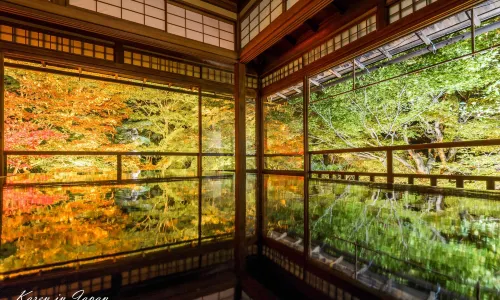
우수한별Rurikoin is a place in Kyoto that leaves a deep and lasting impression with its serene beauty. When I first stepped through its gate, the tranquility of the garden took my breath away. This is not just a temple—it feels like a space where time itself has stopped. With each step, the gentle rustling of fallen leaves and the distant sound of birds seemed to cleanse my soul.
 44.5/5
 乐游记2.0
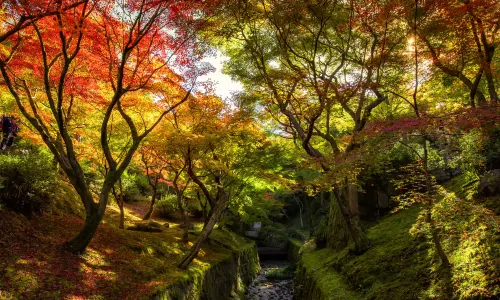
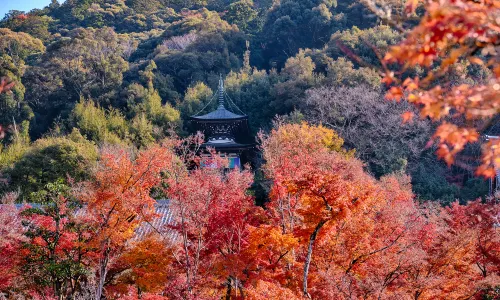
During autumn, visit Tofuku-ji Temple, where maple leaves blaze with fiery crimson, smearing the gardens and valleys. From Tsutenkaku, overlooking Xiyujian, the stream flows like a brocade, its vermilion bridge contrasting with golden foliage. A blend of Zen and autumnal charm, each step a new scene, truly a breathtaking sight in Kyoto. Despite the crowds, the temple's tranquil beauty remains undimmed. Only the whisper of light and shadow and the rustling of fallen leaves brings a sense of inner peace.
 54.5/5
 Nature Lover68
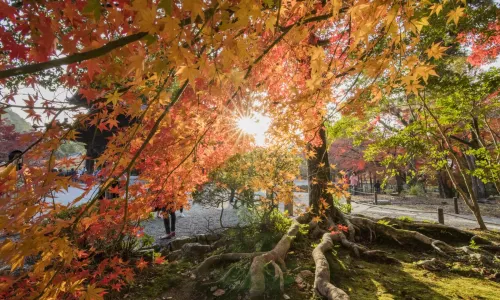
Eikan-dō(Zenrin-ji) Temple is situated in 48 Eikandocho, Sakyo Ward, Kyoto, 606-8445, Japan. This temple is one of the popular places for admires the autumn foliage in Kyoto.The landscaping of temple is top notch with beautiful traditional Japanese architecture. Recommended to visit in a sunny morning.
 64.5/5
 mosy2018
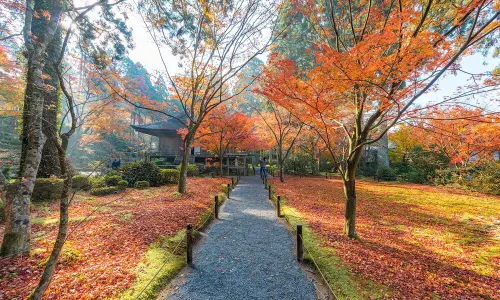
I went for a walk. This temple is very famous. In fact, the architecture is very classical. It is said that it is very old and has been handed down for a long time. Some people burn incense in the temple. They are all wooden houses. The layout is very beautiful. It is quite big to walk inside. A row of arch bridge-style buildings. It is said that when the water supply was tight in the past, it was used to open up the source. Every step along the way is a new scene. It is a very clean environment and very comfortable.
 74.4/5
 _TS***8
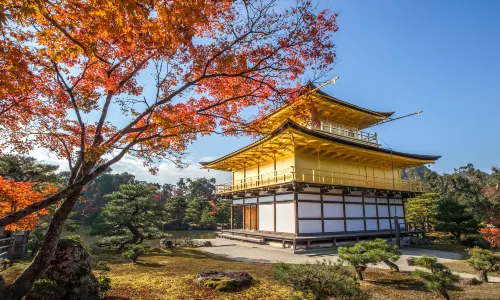
a place for worship, relax and you can find peace inside out, the place is ancient and the distance is a bit far away surroundings are nice
 84.7/5
 BiancaAriel
I was surprised that there were many foreign tourists after getting off at the bus stop. The direction signs stand out. There are security personnel wearing uniforms on the crosswalk at the entrance. Admission tickets are only available in cash. The size of the tourist area is not large, so you don't have to walk for a long time. The trees are well managed. I can't get close to the building, but I was moved enough just to see it from a distance. If I live nearby, I might come here for a walk every day.
 94.4/5
 LMOOLM
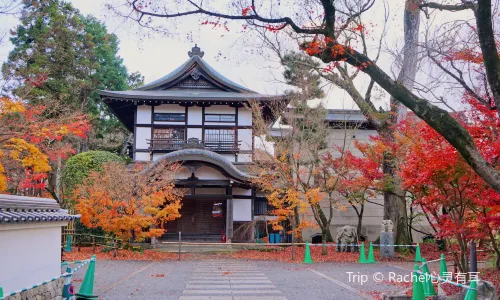
This place is 10/5 during cherry blossom season. It was soooo beautiful. If you only want to visit 1 place for cherry blossom in Kyoto, it is definitely here!
 104.5/5
 魔女锦鲤
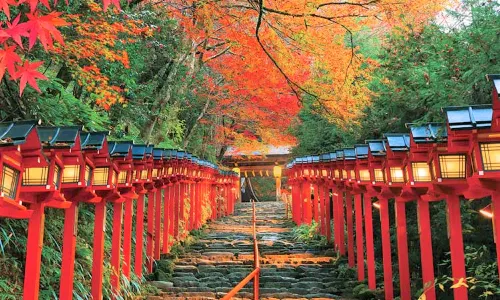
魔女锦鲤Going up the mountain along the flat road, the vermilion torii in front of you is the Kifune Shrine. There are many red lanterns on both sides of the long stairs, which is also the most photographed place in Kifune Shrine - the lantern-offering shrine. On the side of the bottom of the stairs, many photographers have already occupied favorable shooting positions, waiting for the lights to be turned on at night. Kifune Shrine is an ancient shrine at the western foot of Kurama Mountain and the head shrine of Kifune Shrine. This is also the source of water for Kyoto. Kifune Shrine enshrines the most revered water god of Kyoto people. It has a history of more than 1,600 years, which is longer than the history of Kyoto itself. The steps paved with bluestone slabs extend from the torii to the main shrine of the shrine. Vermilion lanterns stand on both sides of the shrine. Looking from the bottom up, they are densely packed all the way, which is very spectacular.
 Achieved a 2-year streak on the annual lists
