





 4.6/5
4.6/5 一直在路上的猫
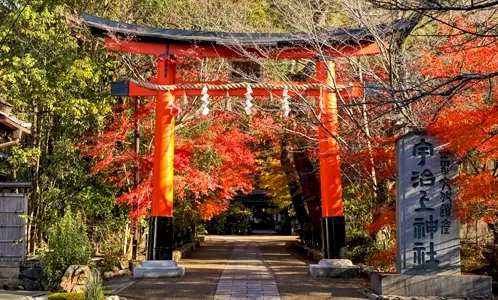
• Historical origin: Uji-Kami Shrine is located in Uji City, Kyoto Prefecture, Japan. It was built in the late Heian period and was listed as a World Cultural Heritage in 1994. In the Meiji period, it was merged with Uji Shrine to form the "Rikyu-Kami-Shrine". ◦ Main Hall: It is the oldest existing shrine building in Japan. It is in the Ryu-zukuri style of the Heian period. It uses cypress bark roofs, beautiful roof curves, and finely carved brackets. It is listed as a national treasure of Japan. ◦ Worship Hall: It was built in the early Kamakura period. It is a rare site of the shinden-zukuri style. The roof curves to the left and right ends, and the eaves board at the connection is folded. • Deities enshrined: Emperor Ojin is enshrined in the center, Umichi Wako is enshrined on the left, and Emperor Nintoku is enshrined on the right. • Surrounding landscape: The Kirihara water, which was selected as one of the seven famous waters of Uji, flows out from the shrine, making it an excellent choice for brewing Uji tea. The Uji River behind the shrine is breathtakingly beautiful when the cherry blossoms in spring and maples in autumn.
 4.7/5一直在路上的猫
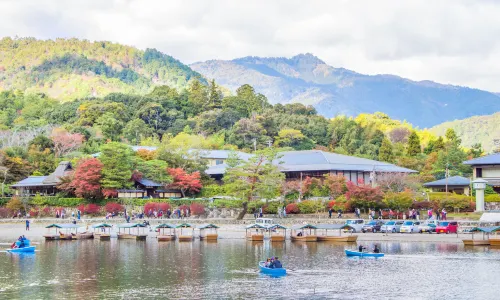
It is a temple garden with a pond and spring boat tour style in the Heian period. It is a must-see when visiting Uji. The ticket is 600 yen, and the ticket for the Hoshokan alone is 300 yen more, but you have to wait for 50 people every 20 minutes to enter, and you are not allowed to take photos inside. So I didn't go into the Hoshokan. • Historical evolution: During the Zhenguan period, Minamoto Ryū opened a villa, and many emperors built villas here afterwards. In 998, Fujiwara Michinaga got this place and rebuilt the garden house. In 1052, Fujiwara Yorimichi rebuilt it into Byodoin, and in 1062, the house was abandoned for a temple. After the 12th century, the Hokke Hall and the Five Halls were successively built. In 1336, most of the courtyard was destroyed by war, and it was gradually rebuilt. It was listed as a World Cultural Heritage in 1994. • Architectural features: Byodoin is centered on the Aji Pond. The Phoenix Hall is located on an island in the pond, forming a complete axis layout with the ruins of the small imperial palace on the east bank. This layout has had a profound impact on buildings such as Toba Imperial Villa and Hojuji Temple in Kyoto. The Phoenix Hall is in the Tang Dynasty style, with a symmetrical central axis in the plane and elevation, both resembling a phoenix. The Central Golden Hall and the Wing Corridor Building have overlapping brackets, high eaves, and a phoenix carved on the main ridge, as if a phoenix spreads its wings. It is regarded as a classic of ancient architecture. ◦ Phoenix Hall: The official name is "Amitabha Hall". Because there is a golden bronze phoenix statue on the roof, it has been called "Phoenix Hall" since the Edo period. It combines national treasures such as painting, architecture, crafts and sculptures in one hall. The design concept imitates the Pure Land of Paradise. The plane resembles the flying shape of a phoenix. The main hall is the phoenix body, the left and right corridors are the phoenix wings, and the back corridor is the phoenix tail. The hall enshrines the seated statue of "Amitabha Tathagata Buddha", and the walls are painted with the Eight Phases of Sakyamuni, the Nine Pure Land Transformations, and the Cloud Offerings. ◦ Guanyin Hall: Built in the 13th century, the hall enshrines the statue of Guanyin Bodhisattva. It was rebuilt from the ruins of a Buddhist temple in the Kamakura period and is an important cultural property of Byodo-in Temple. ◦ Bell Tower: There is a three-ton bronze bell inside, which is a rare national treasure of Japan. ◦ Hosho-kan: It is a museum that displays the treasures of Byodo-in Temple. The museum displays a Heian-era Buddhist bell, the original Phoenix Chiwen, 26 cloud-supporting Bodhisattva statues, Heian-era sculptures headed by the Eleven-faced Guanyin, and a reproduction of the colorful decorations inside the Phoenix Hall.
 4.7/5
4.7/5 yuhutian
The rafting trip is quite long, so you can take your time to appreciate the surrounding scenery. The boatman also provides commentary along the way, which is quite entertaining. There are a few rapids and shoals, but there's no real danger. Overall, it's definitely worth experiencing at least once.
 4.4/5
4.4/5 M53***39
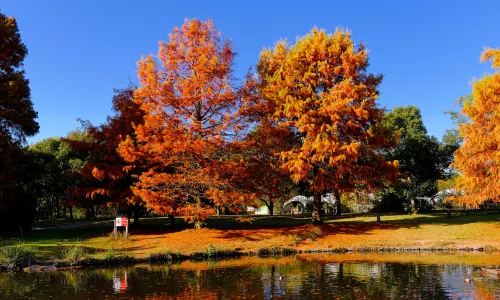
It's beautiful, and there aren't many tourists if you go early. I spent the whole morning sunbathing here, it was so relaxing! I even met an elderly lady along the way, and we chatted together, it was a very happy time!
 4.6/5
4.6/5 贝小贝193
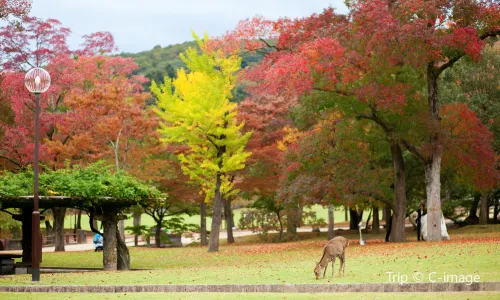
If you're in Japan, you absolutely have to visit the deer. They're incredibly friendly and will follow you if you have a biscuit. When taking photos, try to find does and fawns; males can be aggressive. The park is huge, right next to Todai-ji Temple. It's a great place to wander around and enjoy ice cream, drinks, and snacks.
 4.4/5
4.4/5 VOVO逍遥行
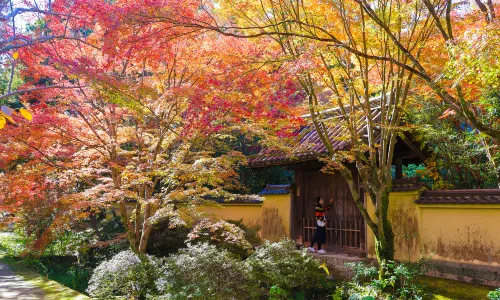
It was built by the Tang Dynasty monk Jianzhen in 759 AD and completed in 770 AD. It is the main temple of the Vinaya School of Japanese Buddhism. It is listed as one of the two major temples for the dissemination and research of Vinaya along with the Kaidan-in of Todaiji Temple. The banner on the gate of the temple, "Tōshōdaiji", was written by the Japanese Empress Koken in the style of Wang Xizhi and Wang Xianzhi. There are lecture halls and ordination platforms from the Tenpyō era, golden halls from the Nara era, and drum towers from the Kamakura era in the temple. The golden hall, sutra collection, drum tower, and statue of Jianzhen are known as national treasures. Jianzhen also brought the high level of civilization of the Tang Dynasty in China, and promoted the improvement of the level of Buddhism, medicine, architecture, and sculpture in Japan. In 1980 and 2010, the statue of Jianzhen returned to Yangzhou twice to "visit relatives". In 1998, Toshōdaiji was listed as a World Cultural Heritage as an important part of the "Cultural Heritage of the Ancient Capital of Nara".
 4.8/5
4.8/5 M23***61
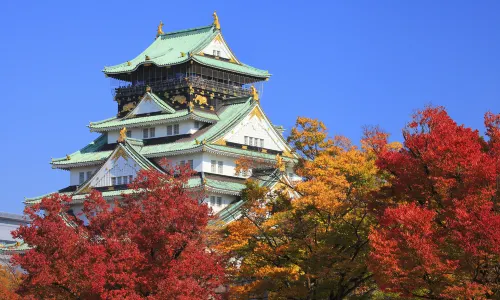
There weren't many highlights. It was a reconstruction of an old building, which explains why there were so many modern architectural details. There was a lot of explanatory material, but not many original artifacts; it seems that apart from the foundation, there's not much from the Toyotomi Hideyoshi era. The extra stone museum ticket wasn't really worth it. You just go in, look at the pile of stones from the foundation, and then leave. The Japanese are really something—they managed to put together an exhibition of such a small amount of material.
 4.5/5
4.5/5 masaki0125
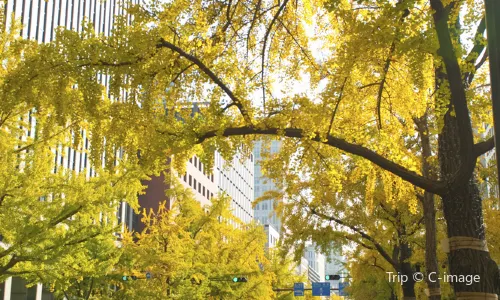
The Osaka Midosuji Street light show from November to December every year makes this busy commercial street during the day more warm and charming at night. It is the ginkgo season and Christmas season, and the street is decorated brightly and warmly. It feels good to walk along Midosuji Street from north to south while listening to "Osaka Romance".
 4.5/5一直在路上的猫
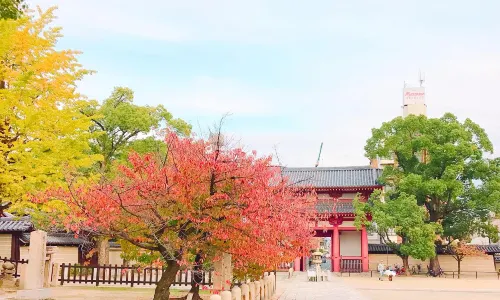
It is the earliest Buddhist temple in Japan. It was built by Prince Shotoku in 593. At the beginning, it was located on the east bank of Tamatsukuri. Later, it was moved to the mausoleum in Naniwa, which is the current site. Historically, Shitennoji Temple has suffered many wars and natural disasters. There have been seven major damages, but each time it was rebuilt or repaired by Kongo-gumi. The main buildings were rebuilt in 1963, and the Sutra Hall and the Painting Hall were rebuilt in 1979. Today, it still maintains the style of the Asuka period. • Architectural features: The temple has a unified architectural style, red columns and white walls, showing the characteristics of the Southern and Northern Dynasties in China. The main buildings such as the central gate, five-story pagoda, golden hall, and lecture hall are arranged in a straight line from north to south, and the exterior is surrounded by corridors. This layout of the temple imitates the architectural style of China at that time and is called "Shitennoji style". • Religious significance: Shitennoji Temple is the head temple of the Japanese Kazu sect (Shotoku sect). The temple enshrines the Bodhisattva Avalokiteśvara and the Four Heavenly Kings. It is known as the "Golden Light Four Heavenly Kings Great Gokoku Temple". It is a temple that protects and guards the country in the Buddhist community, and is also regarded by Buddhists as the Buddhist altar of Osaka. • Cultural value: Shitennoji Temple is the birthplace of Japanese art and craft industries and other cultures. The temple houses many treasures, such as the Lotus Sutra on paper-colored fan-shaped pages and the Japanese national treasures such as the Bingzi Jiaolin Sword and the Seven Star Sword. In addition, Chinese and Korean dance music that were introduced along with Buddhism have also evolved into the unique Tennoji dance music. • Related activities: Shitennoji Temple holds many activities every year, such as the doya-doya festival, the Holy Spirit Society, the Shitennoji wasso, the dance music grand ceremony, the bonfire dance music, etc. A flea market is also held on the 21st and 22nd of each month, when you can find various special items such as antiques, clothing, accessories, etc. The main gate is open free of charge all day, but the central monastery and treasure house require additional fees.
 4.9/5
4.9/5 zachian
A really beautiful and lovely temple in Kyoto. This is a must visit.

