Xinye

Things to do in Xinye

Search attractions or local attractions & tours
Search

Explore top experiences

Top 10 attractions in Xinye

View all Attractions
Longmen Grottoes
2026 Asia 100 - Best Things to Do

Longmen Grottoes

8.9
4.7/5
62.4k reviews

Longmen Grottoes are located in the southern suburbs of Luoyang, Henan Province, on the cliffs along both banks of the Yi River. As one of China's three major grotto art treasures, they were inscribed on the World Cultural Heritage list in 2000. The grottoes were first carved when Emperor Xiaowen of Northern Wei moved the capital to Luoyang, and construction continued through the Eastern Wei, Western Wei, Northern Qi, Sui, and Tang dynasties, with the vast majority of niches and statues left from the Northern Wei and Tang periods. Today, more than 2,000 niches and over 100,000 statues remain, along with a large number of inscriptions and steles, making the site an important representative of Chinese stone carving art. The attraction is divided by the Yi River into two parts: West Hill and East Hill. The West Hill Grottoes are the essence of the site, carved from the Northern Dynasties through the Sui and Tang periods. Famous caves include Guyang Cave, Binyang Cave, Lotus Cave, Wanfo Cave, and Fengxian Temple. The Lushena Buddha at Fengxian Temple stands about 17 m tall, making it one of the larger Buddha statues at Longmen Grottoes. Its face is dignified and serene, with a faint smile, and legend holds that it was modeled on the appearance of Wu Zetian, earning it the name "Oriental Mona Lisa." The inner walls of Wanfo Cave are densely covered with about 15,000 small Buddha statues, each only a few cm tall, neatly arranged and finely crafted. Guyang Cave is the earliest cave carved at Longmen, and its inscription calligraphy is exquisite; the selected "Twenty Masterpieces of Longmen" are representative works of Wei stele calligraphy. Binyang Cave consists of the South, Middle, and North caves and took more than twenty years to complete. Its original reliefs depicting emperors and empresses worshipping the Buddha were looted and lost overseas in the 1930s. In Binyang North Cave, a Buddha statue has a distinctive hand gesture, with the right index and middle fingers raised in a shape resembling the modern "scissors hand," though it is actually a Buddhist mudra, and it once sparked heated discussion online. The East Hill Grottoes are mostly Tang dynasty works and are smaller in scale than those on West Hill, but from the opposite bank visitors can enjoy panoramic views of West Hill from different angles, especially distant views of the Lushena Buddha. The attraction also includes Xiangshan Temple and Bai Juyi Memorial Park (Bai Garden). The Tang dynasty poet Bai Juyi lived in Luoyang in his later years and once praised it, saying, "Of the scenic splendors of Luoyang's surrounding mountains and waters, Longmen ranks first." When visiting, simply follow the route West Hill—East Hill—Xiangshan Temple—Bai Garden, proceeding in one direction without backtracking. The West Hill Grottoes are densely packed with content, so it is advisable to set aside ample time for a closer look; East Hill is quieter and more secluded, suitable for a brief visit and gazing across the river when energy is limited.

China · Luoyang
The Three Gorges Dam Tourism Area
No. 1 of Best Things to Do in Hubei

The Three Gorges Dam Tourism Area

8.9
4.7/5
9k reviews

The Three Gorges Dam Tourism Area is located in the Xiling Gorge section of the Yangtze River in Yichang, Hubei. It is a scenic attraction built around the Three Gorges hydro project, covering over ten square kilometers. Currently, it offers travelers three viewing spots: Tanzi Ridge, the 185 viewing platform, and the river closure memorial park. The dam crest itself is not open to travelers, so visits primarily revolve around these three attractions. Tanzi Ridge is the highest accessible point in the dam area, named for its jar-shaped summit viewing platform resembling an overturned jar. It also served as the survey site for the dam's initial location selection. From the ridge top, visitors can overlook the Three Gorges Project in its entirety—the dam, power station, and twin five-level ship locks are all visible. The five lock chambers cascade down the mountainside, earning the nickname "Fourth Gorge of the Yangtze." The park displays engineering artifacts like ancient riverbed stones, river closure rocks, and foundation stones from the dam site, complemented by model exhibits that help visitors intuitively understand the origins and development of this mega-project. The 185 observation platform is located on the left bank of the dam. It gets its name from sharing the same elevation of 185 m as the dam crest. Standing on the platform feels like being atop the dam: on one side, the dam and vertical ship lift are within close reach, offering a chance to witness ships "riding the elevator" over the dam; on the other side lies the vast, tranquil reservoir upstream. The stark contrast between the stillness above and the dynamism below the dam is striking. The closure memorial park is situated on the right bank downstream of the dam, preserving artifacts like tetrahedral closure stones and large loading machinery used during the construction. It's an ideal spot to view the dam's full frontal grandeur. During flood seasons when the dam releases water, torrents rush out from the deep outlets, creating towering mist and thunderous echoes that reverberate through the valley—a truly awe-inspiring spectacle. The three attractions are far apart, and the scenic area provides shuttle buses for transportation. It is recommended to reserve half a day to visit them in order.

China · Yichang
Laojun Mountain Scenic Spot
No. 1 of Fall Viewing Attractions in Henan

Laojun Mountain Scenic Spot

8.6
4.7/5
16.6k reviews

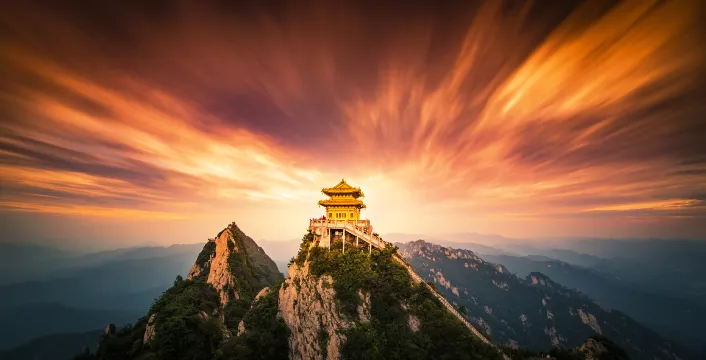
It is said that Laojun Attraction is the place where Li Er (Laozi), the founder of Taoism, practiced in seclusion. During the Northern Wei Dynasty, a temple was built in the mountain to commemorate it. Later, it was named "the famous mountain in the world" and has always been popular. The mountain is lush with trees and picturesque, and mountain springs can be seen everywhere. In the golden autumn, this is the best choice for viewing red leaves in the Souvenir areas. After the rain, Laojun Mountain is surrounded by clouds and mist in each peak, like a fairyland in the sky. The Attraction area is huge and is mainly divided into the main Laojun Mountain Attraction in the center, the Dream Valley Attraction in the west, and the Zhaigou Attraction Area in the east. Generally, tourists will spend a day to visit the main Laojun Mountain Attraction, which is also the most developed area of ​​the entire Attraction. If you go to the top of the mountain, you will also have the opportunity to see the beautiful sea of ​​clouds, sunrise, and sunset. The main Attraction of ​​Laojun Mountain includes Zhongtianmen, Jinding, Laojun Temple, Nantianmen, Yuhuangding and Mazongling. Since its construction in the Northern Wei Dynasty, Laojun Temple has been the center of worship for pilgrims from the Central Plains; the Taoist temple on Yuhuangding enshrines the Jade Emperor and is also a good place to view the scenery in the mountain; Jinding and Mazongling are good places to watch the sunrise and the sea of ​​clouds. Recommended itinerary: Day Trips Most tourists choose to spend a day to visit the main Attraction of ​​Laojun Mountain. Lingguan Hall - the statue of Laojun at the foot of the mountain - Lincu Hall - Zhongtianmen - tree-lined trail - Lying Yunsong - Bodhisattva Hall - Laojun Temple, Jinding - Yuhuangding, and then return along the original route. Tourists can choose to walk the whole way or take a "walk + cable car" tour of Laojun Mountain according to their own conditions. There is the Zhongling Cableway of the Attraction between the Lingguan Temple at the foot of the mountain and the Zhongtian Gate on the mountainside. Take the Zhongling Cableway and then walk from Zhongtian Gate to the top of the mountain, Yuhuang Peak. The road from Zhongtian Gate to the top of the mountain is not very steep and can usually be completed in about an hour. Two-day tour If you have enough time, you can spend two days to visit Laojun Mountain. The general route is: D1: Visit the main Attraction of ​​Laojun Mountain and stay in the mountain that night. D2: From the top of Laojun Mountain, choose to go down the mountain to the Dream Valley in the west or the Zhaigou Attraction in the east, and arrive at the west gate and east gate of the Attraction respectively. In the main Attraction of ​​Laojun Mountain, you can stay near Zhongtianmen on the mountainside and Laojun Temple on the top of the mountain. There are hotels near Zhongtianmen with better accommodation conditions, while the accommodation conditions Souvenir Laojun Temple are relatively poor. If you plan to go to the top of the mountain to watch the sunrise the next morning, you can stay Souvenir Laojun Temple. Compared with the Zhaigou Attraction in the east, the mountain roads in Dream Chasing Valley are smoother, and tourists can choose one of them to go down the mountain according to their preferences. There are many places in the Attraction that can provide Dining services for tourists, but the signboards on some sections of the road in the Attraction are not yet very complete, so tourists need to pay more attention when visiting.

China · Luanchuan
Hubei Provincial Museum
2026 Asia 100 - Family-friendly Attractions

Hubei Provincial Museum

8.5
4.9/5
7.9k reviews

The Hubei Provincial Museum has ten treasures of the museum, including those unearthed from "Tomb of Marquis Yi of Zeng" the Hubei Provincial Museum's Zenghouyi chime bells; the Yue Wang Goujian sword, a masterpiece of the cold weapon era; the fossilized skull of the Yunxian Man dating back 1 million years; and a treasure of Yuan blue-and-white porcelain: the plum vase with the Four Loves design. The museum's regular exhibitions also feature distinctive characteristics of ancient Chu culture and ancient Yangtze River civilization. The Hubei Provincial Museum consists of the comprehensive exhibition hall,Chu culture hall,Chime bell hallIt is composed of multiple pseudo-classical buildings, and the layout reflects the high-platform architectural layout format of ancient Chu architecture, namely "one terrace, one hall" and "multiple terraces forming a group." Unearthed in 1978 at "Tomb of Marquis Yi of Zeng" in the Hubei Provincial Museum - the Zenghouyi chime bells have a wide range and their excavation rewrote the history of world music; the sword of Goujian, King of Yue, a masterpiece of the cold weapon era, is still incomparably sharp to this day, and displayed beside it is the "spear of Fuchai, King of Wu"; the geological age of the Yunxian human skull fossil is approx. 1 million years ago, earlier than the Peking Man skull fossil; the Yuan blue-and-white plum vase with four loves design is an extremely rare masterpiece among Yuan dynasty blue-and-white porcelain. Hubei is located in the middle reaches of the Yangtze River and belonged to the territory of the Chu state during the Spring and Autumn and Warring States periods. The permanent exhibitions at the Hubei Provincial Museum showcase ancient civilizations of southern China that differ from the Yellow River civilization of the north. The museum's current permanent exhibitions include "Yunxian Man: Prehistoric Humans in the Middle Reaches of the Yangtze River," "Qujialing: Prehistoric Culture in the Middle Reaches of the Yangtze River," and "Panlongcheng: Bronze Civilization in the Middle Reaches of the Yangtze River." In addition to viewing cultural relics at the Hubei Provincial Museum, you can also enjoy chime bell performances. In the museum's performance hall, chime bell performances are held from Tuesday to Sunday, and it is closed on Mondays.

China · Wuhan
Qingchuan Pavilion
No. 4 of Best Things to Do in Hubei

Qingchuan Pavilion

8.4
4.7/5
7.7k reviews

Qingchuan Pavilion stands on Yugong Rock at the eastern foot of Tortoise Hill in Hanyang, facing the Han River to the north and the Yangtze River to the east, gazing across the river at Yellow Crane Tower in Wuchang on the opposite bank. The pavilion's name is taken from the line "the clear river reflects the trees of Hanyang" by the Tang dynasty poet Cui Hao, and it was initiated for construction by Fan Zhizhen, the Ming dynasty prefect of Hanyang. First built during the Jiajing era of the Ming dynasty, it has a history of more than four hundred years. Throughout history, Qingchuan Pavilion was destroyed and rebuilt as many as six or seven times, the last destruction caused by a windstorm; the existing structure was rebuilt in the 1980s following the style of the Guangxu era of the Qing dynasty. Long known as one of the "finest sights of the Three Chu regions" and a "grand vista through the ages," Qingchuan Pavilion echoes Yellow Crane Tower across the river and stands out distinctly along the banks of the Yangtze. The attraction is composed of three main structures—Qingchuan Pavilion, Yuji Xinggong (Yu and Ji Ancestral Hall), and Tiemen Pass—along with auxiliary structures such as the ancient archway, Chubo Pavilion, Chaozong Pavilion, Yu Stele Pavilion, Jingchu Heroic Spirit Stele, and the poetry stele corridor, forming a complex of ancient and pseudo-classical buildings standing by the river. Among them, Yuji Xinggong was first built during the Shaoxing era of the Southern Song dynasty under the original name Yu Wang Temple; during the Tianqi era of the Ming dynasty, it was renamed "Yuji Xinggong" after its worship was changed to Houji and other former sages, and it has been an important site in Wuhan for successive generations to pay homage to Yu the Great. Tiemen Pass was first built during the Three Kingdoms period and has been a strategic location contested by military strategists since ancient times; it was restored in the 1990s. Ascending Qingchuan Pavilion offers a panoramic view of the expansive river scenery where the Yangtze River and the Han River converge. Inside the pavilion, permanent exhibitions such as "Traces of Yu Across the Nine Provinces" and "Historical Paintings of Qingchuan" present Yu the Great culture and the historical heritage of Qingchuan Pavilion from multiple perspectives, ranging from water-control culture to poetry and couplets. The attraction nestles between the hills and the river, with pavilions and terraces scattered in graceful arrangement. The poetry stele corridor preserves inscribed stones bearing verses by literati and poets of successive dynasties, and strolling through it allows visitors to feel the rich historical and cultural atmosphere.

China · Wuhan
Wudang Mountains
No. 5 of Best Things to Do in Hubei

Wudang Mountains

8.1
4.6/5
15.5k reviews

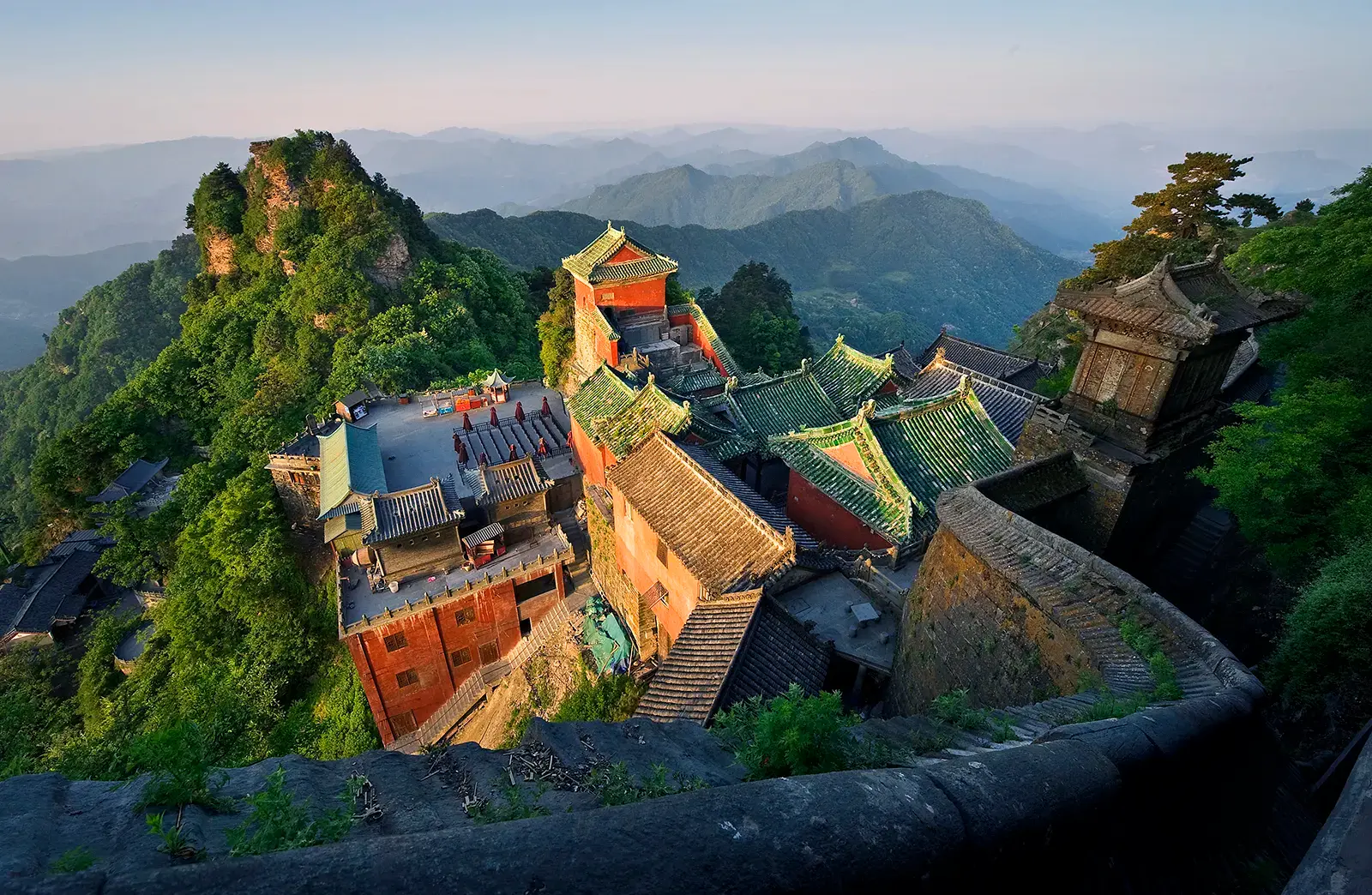
The Wudang Mountains are located in Shiyan, northwestern Hubei province. Its main peak, Tianzhu Peak, stands at an elevation of over 1,600 m. Legend has it that Emperor Zhenwu cultivated and ascended to immortality here, while Taoist Zhang Sanfeng further synthesized the essence of martial arts during the late Yuan and early Ming dynasties, making this the birthplace of Wudang martial arts. During the Yongle era of the Ming dynasty, the imperial court launched the monumental project of "constructing the Forbidden City in the north and building the Wudang Mountains in the south." The mountain temples were built according to royal standards, with their layout unfolding layer by layer following the mythological narrative of Zhenwu's spiritual cultivation. The palaces blend harmoniously with the peaks, cliffs, and streams, creating an ethereal and mystical atmosphere befitting a sacred mountain. The attractions unfold along the mountain terrain from the base to the summit, connecting key areas like Taizi Slope, Zixiao Palace, Nanyan Palace, and Taihe Palace. At Taizi Slope, the undulating Nine-bend Yellow River Wall follows the mountain contours, while Wuyun Tower's "one pillar supporting twelve beams" remains an architectural marvel. Zixiao Palace, a well-preserved imperial Taoist temple, features the stately Zixiao Hall with its double-eaved, nine-ridged roof. Nanyan Palace clings dramatically to a cliff face, offering vertiginous views of the valley below. Ascending the stone-paved ancient path to Tianzhu Peak's summit reveals the gilded bronze Golden Hall—the architectural masterpiece of the entire complex. As the birthplace of Wudang martial arts, this place attracts enthusiasts from home and abroad who come to seek masters and practice martial arts. The Taizi Slope on the mountain and the Xuantian Yuxu Palace at the foot serve as daily training grounds for practitioners. If you happen to encounter Taoist priests or students demonstrating Wudang boxing techniques, take a moment to quietly observe and appreciate the centuries-old martial arts heritage. A two-day visit is recommended: On the first day, enter from the mountain gate to visit Taizi slope and Zixiao palace, then stay overnight near Wuyaling. On the second morning, first visit Nanyan palace, then ascend to the golden summit before hiking down or taking the cableway at Qiongtai. After exiting the mountain gate, you may also visit Xuantian Yuxu palace. The attraction's shuttle buses connect all major core attractions, allowing flexible combinations of hiking and riding. Most dining and lodging options are concentrated around Nanyan, convenient for rest during the climb. From late October to November each year, when the forests are ablaze with color and red leaves cover the mountains, it's the perfect time to enjoy the fall scenery in the mountains.

China · Danjiangkou
Henan Museum
No. 2 of Family-friendly Attractions in Henan

Henan Museum

8.1
4.8/5
10k reviews

[Henan MuseumIntroduction Founded in 1927, it is one of the earlier-established museums in China. The museum covers an area of 126 mu, with a building area of 55,000 square m. The museum currently has a collection of approximately 250,000 artifacts (sets), with particular strengths in prehistoric artifacts, Shang and Zhou bronzes, ceramics from successive dynasties, jade objects, and stone carvings. The fine artifacts are numerous in quantity, comprehensive in variety, high in quality, and great in value, making this a cultural and artistic treasury that bears witness to the trajectory of Chinese civilization and showcases the course of China's historical development. Currently open are the permanent exhibition "Great China: Building the Capital at the Center" and the thematic exhibitions "Henan in the Ming and Qing Dynasties," "Ancient Stone Carving Art of the Central Plains," "Auspicious Bronzes from Dan and Xi: Chu Bronze Art of the Central Plains," "Treasures of Craftsmanship: Ming and Qing Treasures from the Museum Collection," and "Special Exhibition of National Treasures," among others. The "Social Education Experience Hall" and the "Hall of Ancient Chinese Music," which complement the exhibitions, are also open for use. With the mission of "carrying forward inherent culture, promoting academic research, enhancing public knowledge, and advancing social civilization," it meticulously builds a public welfare cultural service brand, serving as an important window to appreciate Central Plains culture, Yellow River culture, and the Chinese cultural lineage, an important front for promoting core values, and an important platform for enhancing cultural exchange and cooperation. [Existing exhibition guide] Permanent exhibition "The Great Chinese Civilization: Choosing the Center to Build the Capital" The permanent exhibition "The Great Chinese Civilization: Choosing the Center to Build the Capital" takes the history of capital establishment in the Central Plains as its main thread, the development history of Central Plains civilization as its outline, and the backdrop of world civilizations as its reference. It integrates the cultural relic advantages of the Henan region, captures the highlights of ancient development in the Central Plains, showcases the trajectory of the Chinese nation's civilizational development, and recreates the long-standing splendor of Central Plains culture as well as its influence and radiating power. At the same time, from a global perspective, it presents the similarities and differences between Central Plains culture and cultures of other regions, and initiates a dialogue between this civilization and other civilizations. The permanent exhibition is located on floors 1, 2, and 3 of the main exhibition hall and is divided into 10 galleries, consisting of seven sections: the Neolithic Age, Xia and Shang, Western Zhou, Eastern Zhou, Qin, Han, Wei, Jin, and Northern and Southern Dynasties, Sui and Tang, and Song, Jin, and Yuan. It interprets the capital culture of the Central Plains and the cultural life within the capitals across various historical periods. [Henan MuseumHuaxia Ancient Music Orchestra] Henan is located in the Central Plains and has been a land of rites and music since ancient times, enjoying exceptional advantages for the development of musical culture. From the bone flutes of eight thousand years ago, to the bells, drums, chimes, and zithers, as well as the pipes, flutes, and mouth organs of the Xia, Shang, and Zhou dynasties, and to the music and dance, hundred entertainments, and banquet music and grand suites of the Han and Tang dynasties, the ancient music of the Central Plains is like a long river of history, surging endlessly and magnificent. Since its establishment in 2000, it has conducted restoration research on Central Plains musical artifacts, restored and reconstructed ancient musical scores, costumes, and performance scenes, and launched concerts with different themes, which have been highly praised by audiences at home and abroad. Millennia-old music, passed down through generations, the Huaxia Ancient Music Orchestra is resounding with the ceaseless spiritual voice of the Chinese nation... [Henan MuseumCultural and creative area] "Yubo Cultural Creativity" actively cooperates with enterprises both within and outside the province. By absorbing the creative concepts, design styles, and product characteristics of various enterprises, it has sorted out more than 300 cultural relic elements (sets) suitable for development. Adhering to the development principle of "highlighting originality," it has cumulatively produced nearly 800 cultural and creative products, covering categories such as stationery, toys, daily necessities, apparel, and food. Among them, a series of cultural and creative products developed with the museum's treasured artifacts and star relics as themes have achieved excellent results in various cultural and creative competitions across the country and have represented our province on the exhibition stages of major cultural and creative themes on multiple occasions. Currently, Yubo Cultural Creativity has focused on building physical product brands such as "Zhuozhen Cultural Relic Coffee," "Lost Treasures — Archaeological Blind Box," and "Cup of Light," as well as event brands such as "Museum Elegance Hall" and "Cultural Creativity Competition." At the same time, it is actively exploring the deep integration of cultural creativity and scientific research, collaborating with multiple universities to establish cultural creativity talent training and practice bases, and accelerating the training of cultural creativity talent. "The movement of the great Peng bird does not rely on the lightness of a single feather; the speed of a fine steed does not depend on the strength of a single foot." In the future, Yubo Cultural and Creative will continue to draw on more social forces to jointly explore the charm of history and culture, create more cultural and creative works, and make due contributions to the high-quality development of our province's cultural and creative industry. Location: Boutique on the west side of the first-floor lobby, book café on the third floor, pop-up store at the west exit [Henan MuseumSocial education experience hall] When visiting the Henan Museum, besides seeing exhibitions, listening to ancient music, and shopping for cultural creative products, there is one more place you must experience. Located on the first floor of the East Annex Building, it is a brand-new comprehensive practice experience area of over 1,400 square meters that can accommodate up to 500 people participating in activities at the same time. This place endows museum education with new dimensions of development; it is a national research and study education base for primary and secondary schools; it is a family-friendly museum classroom where education meets fun; and it also offers an immersive way to perceive the profoundness of culture. It features seven distinct zones, including an ancient technology experience area, a field archaeology experience area, a cultural relic restoration and conservation observation area, a visitor self-directed learning area, a research and study practice education area, a 3D national treasure magic wall experience area, and a 5G + 360° real-time panoramic experience area, all offering excellent experiences and visual effects. The social education experience hall of the Henan Museum adopts a "demographic-specific, menu-based" service model to target service groups. In educating underage visitors, it focuses on creating educational projects such as "special guided tours," develops thematic learning courses, and optimizes popular educational courses including the series on the nine treasures of the museum, "How Much Do You Know About Archaeology," "Guardians of National Treasures," and idioms and allusions, thereby enriching the education system and sharing educational projects. The newly opened museum comprehensive practice experience center showcases the new dimensions of museum education development with a high starting point, three-dimensional approach, and immersive presentation.

China · Zhengzhou

Experiences you can't miss in Xinye

Xinye Today's weatherOvercast 5-16℃
Xinye weather for the next 2 days11/11: 6-17℃, 11/12: 8-16℃

Free things to do in Xinye

What travellers say about Xinye

user-avatar
M30***6110 November 2026
5.0
It's worth a visit! It's just a bit of a pity that there were no night sessions during the off-season, so I didn't get to see the night view! Don't just visit the West Hill; you should also go to the East Hill. The view of the Buddha from across the river is even more scenic!

Longmen Grottoes

user-avatar
D17***339 November 2026
5.0
Booking tickets in advance was indeed convenient. There was no need to queue on-site; I could simply scan the code to board the scenic area bus and transfer to a sightseeing bus, saving a lot of time and allowing me to appreciate the magnificence of the Three Gorges Dam!

The Three Gorges Dam Tourism Area

user-avatar
孙*国8 November 2026
4.0
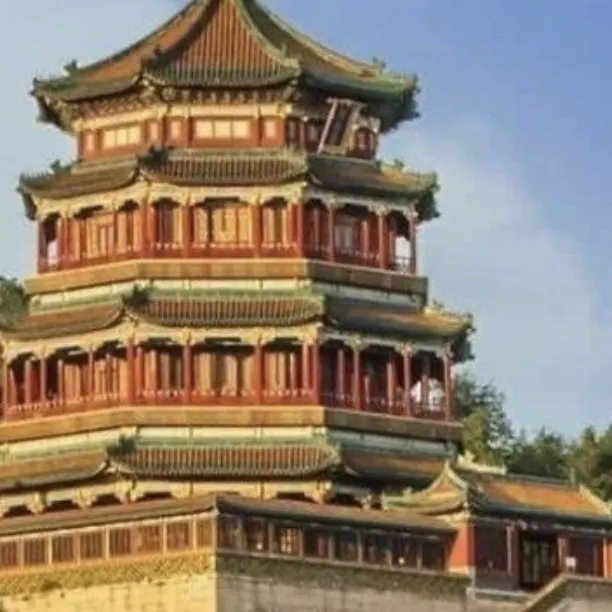
One of the three famous towers south of the Yangtze River, this Wuhan landmark truly lives up to its name. The tower is magnificent and imposing; from its summit, one can enjoy panoramic views of the Yangtze River Bridge and the three towns of Wuhan. The park is rich in inscriptions and murals, imbued with the poetic beauty of Cui Hao's poems. By day, it exudes ancient charm; by night, it is dazzling with lights. The park's pathways are gentle, and the amenities are thoughtful. A must-see when visiting Wuhan, it's an unforgettable experience.

Yellow Crane Tower

user-avatar
Anonymous user9 November 2026
5.0
I highly recommend spending 80 yuan for the aerial photography at the summit; I personally think it's well worth the money. The footage is very clear and excellent. We started climbing at 10 am. It was the off-season, so the first-level cable car wasn't crowded. After reaching the top, we started hiking. Zhongtianmen requires walking up stairs (if you can't climb, take the second-level cable car 🚡). The rest of the path was very gentle, all the way to the summit. The weather on the mountain was a bit cold, probably around 0 degrees Celsius, but it didn't snow; it just drizzled a little (I still recommend bringing a raincoat just in case). There were many people on the mountain. The descent involved both cable car and toboggan rides. A complete tour takes about 7 hours.

Laojun Mountain Scenic Spot

user-avatar
旧爱鱼香肉丝3 October 2020
5.0
Walking in Nanyang, the scenery here is really unique. For example, Baihe Wetland Park is open to the public for free. Both the water body and the surrounding environment are well maintained. It can be said to be a paradise for birds and anglers.

Baihe Wetland Park

user-avatar
大土豆一颗4 October 2026
5.0
The exhibited artifacts were quite good; I've also been to joint exhibitions organized by museums like the Hunan Provincial Museum. The Kremlin artifacts here are well-prepared and thoughtfully designed. However, the souvenir and merchandise section was rather boring. I was thinking of buying a pendant or something, but that saved me some money.

Hubei Provincial Museum

user-avatar
沅大王30 September 2026
5.0
The scenic area is filled with the fragrance of osmanthus blossoms. From the top, you can enjoy panoramic views of the Yangtze River Bridge and the Yellow Crane Tower. At the very top, watching the ships on the Yangtze and the cars and trains on the bridge, with the breeze blowing, is very pleasant, and it's not too crowded. The scenic area isn't large; a leisurely hour is about right to appreciate the scenery. Qingchuan Pavilion and Guishan Scenic Area are directly connected by the Iron Gate Pass, which leads to the West Gate of Guishan. Climbing the mountain and enjoying the breeze and osmanthus fragrance is a wonderful experience.

Qingchuan Pavilion

user-avatar
Anonymous user26 October 2026
4.0
The ancient city is vast and full of historical atmosphere. It's a pity I didn't go at night and missed the night view. The East Market and West Market were very interesting, with various performances!

City of Tang Dynasty

user-avatar
爱家小胡4 November 2026
5.0
Wudang Mountain is a place of great beauty. The 80-kilometer winding mountain road from the visitor center to the scenic area is served by shuttle buses – a service that deserves praise, as the drivers are highly skilled. This Taoist holy site boasts a rich cultural heritage and is well worth a visit.

Wudang Mountains

user-avatar
123晴晴1239 November 2026
5.0
The tour guide spoke clearly and fluently. The museum was packed with people, and with a group of 30, the young woman, being small and wearing a black coat, easily lost her way. I suggested she wear brighter colors next time, to which she replied: "Does work require specific clothing? Didn't she see the guides in the museum wearing bright red?"

Henan Museum

Trip Moments in Xinye

Popular cities near Xinye

Frequently asked questions

What are the recommended tours and excursions in Xinye?

When choosing a tour, start with how much time you have and the kind of experience you're looking for. Trending options right now include Huazhou Academy + Baihe Beach private charter 1-day tour in Nanyang, Henan with Chinese and English service, 1-day tour to Xiangyang Ancient City + Tang Dynasty Paradise + Xiangyang Prince's Mansion + Mi Fu Memorial Temple with Chinese and English services available, and Henan Nanyang World Rose Grand View Garden + She Dian Town + Qishan Shan Guild Hall Day Tour with Chinese and English Services. Check the real-time availability and itinerary before you book.

As of 10 November 2026, the reference price for day tours and activities in Xinye is around EUR 153.73 – EUR 184.47. Rates vary by duration, group size, transport, tickets, meals, and any special admission requirements. Before you book, please confirm the billing currency and whether the price is quoted per person or per group.

Get help anytime, anywhere within 30 secondsContact customer support

Change and cancellation policies vary by attractions and tours. Please check the product details page for more information.

Ticket prices may vary between weekdays and weekends, as well as during peak and off-peak seasons. When booking with Trip.com, you can also use Trip Coins to get extra savings. For more tips on booking discounted tickets, please visit Trip.com for the latest information.