Xingtai

Things to do in Xingtai

Search attractions or local attractions & tours
Search

Explore top experiences

Top 10 attractions in Xingtai

View all Attractions
Yingtan Ancient Village
No. 1 of Night Attractions in Xingtai

Yingtan Ancient Village

5.2
4.7/5
17 reviews

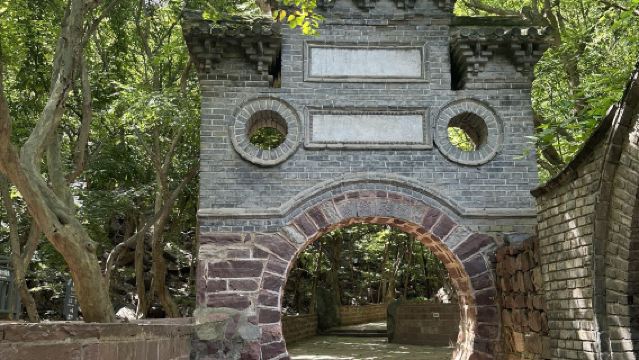
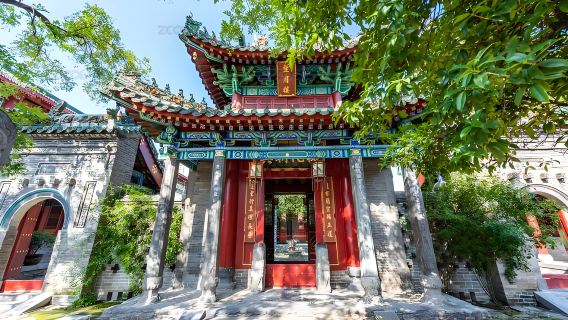
Yingtan Ancient Village is located in Luluo Town in the western mountainous area of ​​Xingtai County, Xingtai City, Hebei Province. On October 23, 2008, Fuyang Bridge in Ci County was announced by the People's Government of Hebei Province as the fifth batch of provincial cultural relics protection units. In 2009, it was rated as "China Landscape Village" by the Final Review Committee of China Landscape Villages; in 2013, it was awarded the title of "China Traditional Village" by the state. It is said that the ancient village was the place where the Huang Chao uprising army in the Tang Dynasty left the camp. During the Yongle period of the Ming Dynasty, a wealthy family surnamed Lu from Shanxi settled here with their family. As time passed, the original camp was called by the villagers (using homophony) and became the current name Yingtan. Lu inspected that this village was built during the Yongle period of the Ming Dynasty and has a history of more than 600 years. The 67 courtyards in the village are built on the mountain, with different heights. They have rich connotations and typical ancient Taihang architectural style. It is the best-preserved stone village found in our province. Most of the buildings in Yingtan Village are relics from the Ming and Qing Dynasties. There is a wall surrounding the village with four gates, which are arranged in an orderly manner. The villagers are simple in folk customs and warm and hospitable.

Xingtai · 58.3km from downtown
Xingtai Museum

Xingtai Museum

4.3
4.7/5
22 reviews

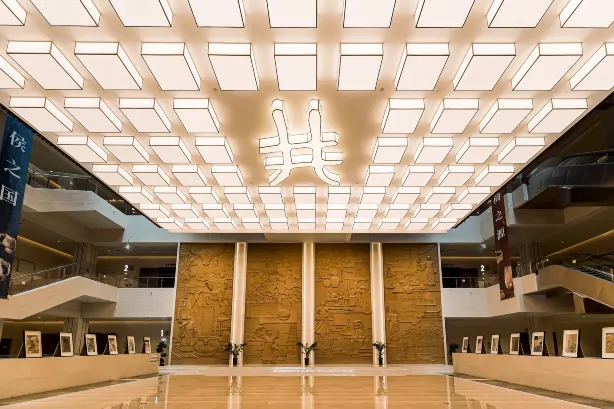
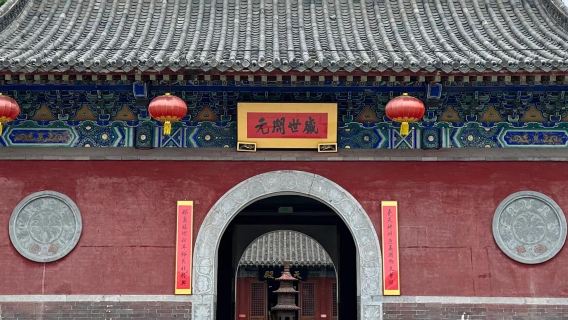
Xingtai Museum is a comprehensive museum in Xingtai, Hebei Province, which officially opened in May 2023. The museum grounds are adjacent to the thousand-year-old Xingtai Dakaiyuan Temple, and the two can be visited on the same day. The entire complex adopts an antique style featuring "Tang and Yuan dynasty aesthetics," with one main building and four auxiliary buildings arranged in a staggered layout. The roof of the main building incorporates the character "Jing" (well)—in ancient times, Xingtai was known for its many springs and was called "Jingfang," and the character "Xing" was historically interchangeable with "Jing." The architecture itself serves as a footnote to understanding this city. The museum houses over 10,000 artifacts, including more than 1,000 precious relics, primarily consisting of pottery, jade, porcelain, stone, gold, and bronze items. Notable highlights include the Shang dynasty jade ge (dagger-axe) inlaid with animal heads, the Shang dynasty bronze jue (wine vessel) with an animal-head handle and taotie pattern, the Han dynasty bronze long-necked pot with gold-inlaid four-deity geometric patterns, and the Tang dynasty Xing ware white-glazed jar with the "Hanlin" mark. Displaying the Shang dynasty jade ge, Han dynasty bronze pot, and Tang dynasty Xing porcelain together offers a glimpse into the enduring cultural heritage of Xingtai. The permanent exhibition, titled "Winds of the Well Land: Xingtai History and Culture Exhibition," serves as the main thread, tracing history from the Paleolithic era to the Qing dynasty. It connects the 3,500-year history of this city, known as the "ancient capital of five dynasties and a powerful prefecture of ten dynasties." "Millennium Xing Kiln" showcases Xing ware porcelain such as bowls, plates, cups, pots, and jars, allowing visitors to appreciate the "silver-like and snow-like" glaze of Xing white porcelain. "Historical Sites of the Xing State" uses artifacts unearthed from the Xing Marquis tombs to tell the story of the enfeoffment of the Xing State during the Western Zhou dynasty. Other exhibitions, such as "Engraved Stone Splendor," "Centennial Great Cause," and "Xingtai Memories," focus on stele art, modern changes, and urban memories, respectively. If you want to understand Xingtai in half a day, this is the perfect starting point.

Xingtai · 1km from downtown
Free attraction
Xingzhou Ancient City

Xingzhou Ancient City

4.2
5.0/5
2 reviews

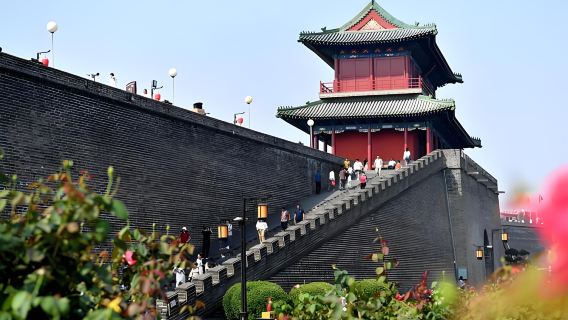
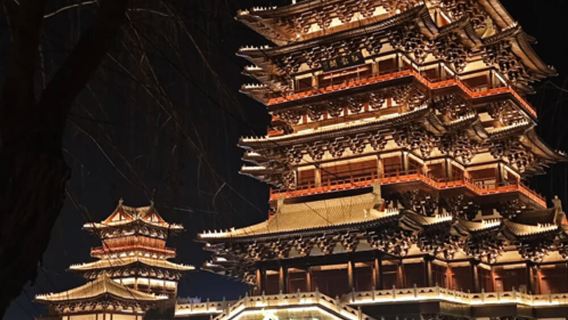
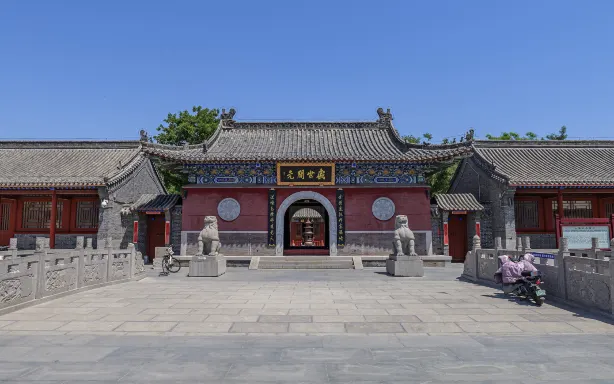
Xingzhou Ancient City is the core area of the old city of Xingtai. Historically, it was known as Xingzhou Ancient City and Shunde Prefecture City, divided into the Prefecture City and the Guan City by Zhongxing Street. Its history as a city dates back over 3,500 years, making it one of the earliest cities in North China. King Zuyi of the Shang Dynasty moved the capital to Xing, and the Later Zhao of the Sixteen Kingdoms period also made it their capital. It was established as Xingzhou during the Sui and Tang dynasties, and became a major commercial hub in the north during the Yuan Dynasty following the "Great Governance of Xingzhou." It served as the seat of Shunde Prefecture during the Ming and Qing dynasties. It is known as the "Ancient Capital of Five Dynasties and Mighty Prefecture of Ten Dynasties," hailed as the "First City of Yan and Zhao," and is an important repository of Xingxiang culture. Most of the ancient city's highlights revolve around Qingfeng Tower. The predecessor of this pavilion in the center of the old city dates back to the Tang and Song dynasties, while the current structure was rebuilt in the Ming Dynasty. To the south lies the "Hao Nan Guan," where merchants once gathered. The North Street area has been renovated in the style of the Republic of China, featuring blue brick paving and rows of old shops. Today, it brings together time-honored snacks, creative cultural shops, and various markets, with the most vibrant atmosphere appearing after the lights come on at night. The ancient official road district, with the North-South Long Street as its backbone, still retains the atmosphere of old Xingtai. The Xingtai Dakaiyuan Temple, first built in the Tang Dynasty, and the Budai Courtyard are also worth a special visit. When visiting, you might want to start from Qingfeng Tower, explore the Hao Nan Guan on the south side first, and then head back to the North Long Street and the Xingtai Dakaiyuan Temple area, setting aside half a day to stroll slowly. The evening to night is the most atmospheric time on the old street. Wearing Hanfu for photos, watching street performances, and browsing the markets are popular activities here. Crowds are concentrated during holidays, so it is recommended to go early if you want to take photos of the quiet streets.

Xingtai · 427m from downtown

Experiences you can't miss in Xingtai

Xingtai Today's weatherClear 5-18℃
Xingtai weather for the next 2 days11/30: 5-20℃, 12/1: 4-15℃

Free things to do in Xingtai

What travellers say about Xingtai

user-avatar
菠萝味咖啡23 May 2026
4.0
The scenic area is quite nice, but the route information is too limited. Route A involves taking a bus up and down the mountain, while Route C involves taking a cable car up, walking through a long canyon, then using the Taihang Elevator, and then climbing a long way up again… Overall, Route A might be less strenuous, but it doesn't include the cable car; it's best to buy your own ticket down the mountain. Overall, it's quite tiring, so those with limited stamina or traveling with children should avoid the large loop route!

Xingtai Grand Canyon

user-avatar
M57***774 September 2026
5.0
It's great, with a strong love theme, suitable for lovers, partners, family, and spouses. The waterway up the mountain is very interesting, although it's a bit steep and slippery. You can experience different ways to go down the mountain, such as ziplining, slide (big slide), aerial crossing (glass waterway rafting), and rafting, all of which are great and you can choose freely.

Tianhe Mountain

user-avatar
- 铮宝麻麻7 June 2025
5.0
Shahe Fozhao Mountain, a place that sounds very Buddhist. It takes about half an hour to climb up. There is a small temple on the top of the mountain. It is not very popular but the scenery is nice. It is recommended to bring a bottle of water, because the aunt selling water on the mountain may go to square dance. Remember to wear non-slip shoes, otherwise you may perform the "butt down the mountain" stunt. The best photo spot is behind the temple, where you can overlook the entire Shahe River, but don't expect to see the "Buddha's light shining everywhere", it is mostly the reflection of the mobile phone.

Fozhao Mountain

user-avatar
203***2211 November 2026
5.0
Yingtan Ancient Village is a very interesting ancient village. Firstly, its origins date back to the Huang Chao Rebellion at the end of the Tang Dynasty. Legend has it that this was originally a camp for Huang Chao's rebel army. Later, during the Yongle period of the Ming Dynasty, a wealthy family surnamed Lu from Shanxi moved here and gradually formed a village. The name "Yingtan" is a homophone of "camp." Secondly, many heroes of the War of Resistance against Japan fought and lived here. Thirdly, the houses in the ancient village are very historical and distinctive. The town has a strong autumn atmosphere, and although there are many fake rice grains and flower arrangements in late autumn, it's still very beautiful and photogenic. Definitely worth a visit!

Yingtan Ancient Village

user-avatar
Anonymous user9 August 2026
5.0
I really liked the hotel. The internet was smooth, the check-in process was simple, it was quiet and safe, parking was convenient, there were many restaurants nearby, the facilities were complete, and it wasn't far from the scenic spots. I really liked it.

Tianti Mountain Scenic Area

user-avatar
M31***775 October 2025
4.0
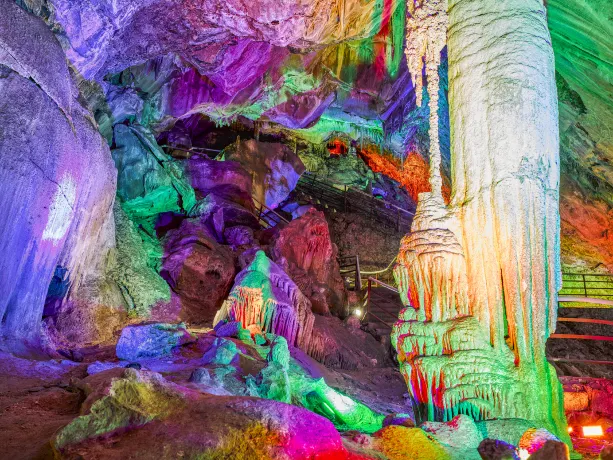
Baiyun Cave is only a cave, you can't climb the mountain. I walked around inside for an hour, and it was still beautiful under the colorful lights. You must bring water when climbing Tiantai Mountain. There is no one selling things on the mountain. It is pure climbing and the top of the mountain is pure natural scenery.

White Cloud Cave of Mount Kong

user-avatar
最美的一点27 May 2025
5.0
Hutian Wonderland: The landform here is divided into four layers from bottom to top, namely Lower Hutian, Middle Hutian, Upper Hutian and Tianwaitian. Entering the scenic area is like entering a big-bellied teapot, with steep mountains on all sides and only a round sky above the head. It is mysterious and unpredictable, so it is called "Hutian Wonderland".

Yunmeng Mountain Scenic Area

user-avatar
若隐2910 October 2021
4.0
The scenic spot is really nice, but we went there at the wrong time. It rained all the time during the National Day holiday, which caused many attractions in the scenic spot to be flooded and unable to be visited, so we could only take a quick look. But overall, I feel that it is a very good tourist destination during normal times!

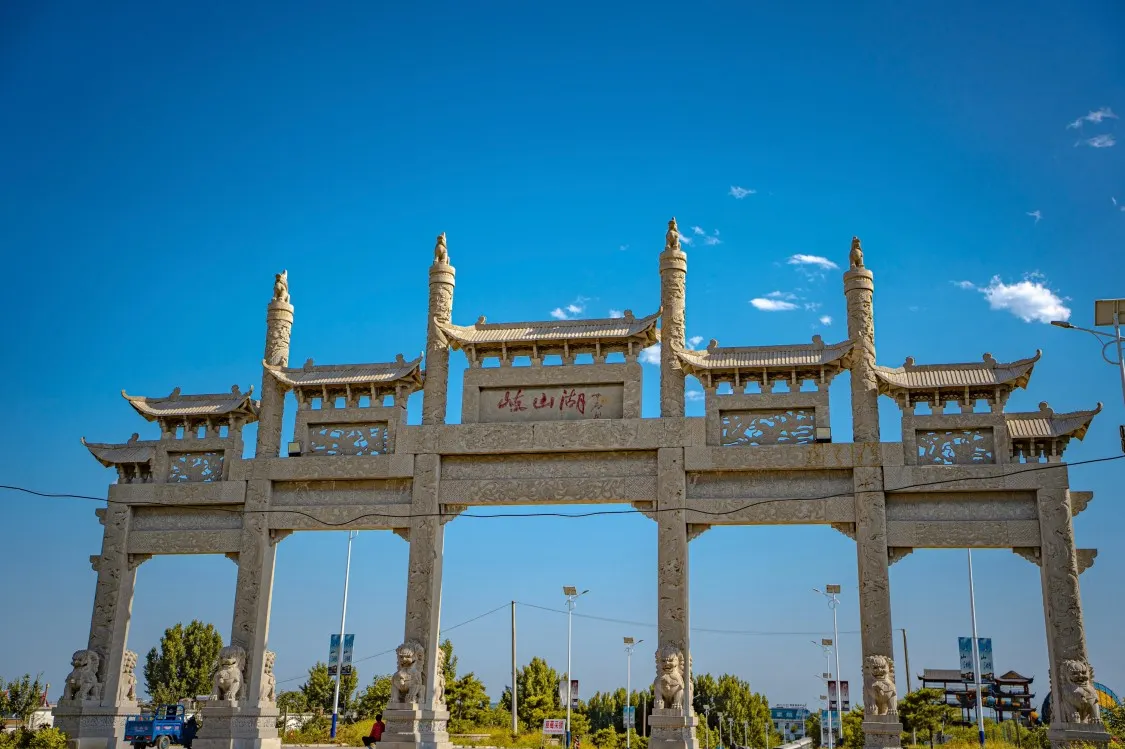
Qishan Lake Scenic Area

user-avatar
Shin泡泡29 October 2025
5.0
Upon arriving at the Xingtai Museum, the first thing that catches the eye is the four large 9.9-meter-high reliefs in the introductory hall. These vividly depict the development of Xingtai from the Neolithic Age to the late Qing Dynasty, featuring images of historical figures such as Song Jing, Liu Bingzhong, and Guo Shoujing, as well as precious artifacts like the Xinghou Gui (a bronze vessel) and a Shang Dynasty jade dagger, instantly conveying the profound historical heritage of Xingtai. Next, I visited the "Well-Landed Winds—Xingtai History and Culture Exhibition" hall. Here, arranged chronologically, the exhibition details the historical changes of Xingtai in various periods. From prehistoric stone tools and pottery to bronzes from the Shang and Zhou Dynasties, and Xing kiln white porcelain from the Sui and Tang Dynasties, each artifact seems to tell a story of the past, giving me a clearer understanding of Xingtai's history. In the "Millennial Xing Kiln—Xing Porcelain Culture and Art Exhibition" hall, I was deeply attracted by the exquisite Xing kiln white porcelain. Diverse in shape and exquisitely crafted, these pieces are hailed as one of the representatives of "Southern Green and Northern White," showcasing Xingtai's superb ceramic-making skills. The Xingtai Museum not only boasts a rich collection of exhibits but also features a unique architectural style, blending Tang and Yuan dynasty aesthetics with modern elements. Visitors can appreciate both historical culture and the charm of architectural art. This visit was very rewarding and deepened my love for this land with its long history.

Xingtai Museum

Trip Moments in Xingtai
Popular cities near Xingtai

Frequently asked questions

As of 30 November 2026, the reference price for day tours and activities in Xingtai is around EUR 35.4 – EUR 179.24. Rates vary by duration, group size, transport, tickets, meals, and any special admission requirements. Before you book, please confirm the billing currency and whether the price is quoted per person or per group.

Get help anytime, anywhere within 30 secondsContact customer support

Change and cancellation policies vary by attractions and tours. Please check the product details page for more information.

Ticket prices may vary between weekdays and weekends, as well as during peak and off-peak seasons. When booking with Trip.com, you can also use Trip Coins to get extra savings. For more tips on booking discounted tickets, please visit Trip.com for the latest information.