Things to do in Wangjiang
Explore top experiences
Top 10 attractions in Wangjiang


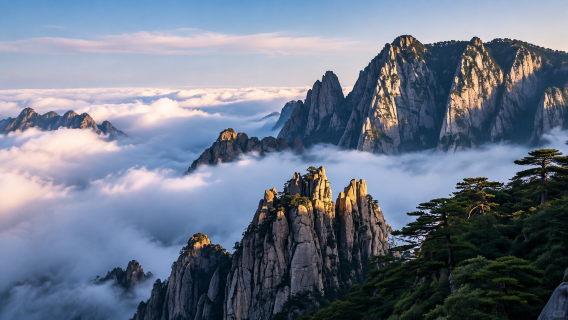
Mount Huangshan Scenic Area
Mount Huangshan is famous for its long history. "You would not want to visit mountains after visiting the Five Sacred Mountains, and you would not want to visit the Five Sacred Mountains after visiting Huangshan." Xu Xiake, a great traveler and geographer of the Ming Dynasty, twice ascended Huangshan to witness its magnificence, exclaiming it as "a wonder in life." Dramatic Pines, grotesque rocks, sea of clouds, and hot springs are known as the “Four Musts” of Huangshan. They are the uncanny workmanship of nature and cannot be missed. In addition, the haze, snow scene, and sunrise are unique landscapes of Huangshan. Each landscape has its unique beauty and makes you feel like you are in a fairyland.China · Huangshan City

Wangxian Valley
Vagoo is located in Wangxian Township, Guangxin District, Shangrao City, Jiangxi Province. It is a national AAAA-level scenic spot. It belongs to the Lingshan Mountains, just at the foot of the seventy-two peaks of Lingshan. The valley is remote and quiet, the stream is jubilant, and the pebbles are flying waterfalls. There are rammed earth walls, bluestone roads, yellow walls and black tiles, and original village houses unique to Jiangxi folk houses; there are also pines and bamboo seas and the unique Ganjia market. In the Vagoo, you can enjoy the folk customs, landscape and humanities of the Gan family, experience the long farming culture of our country, taste delicious food, and live a slow life for a few days. It is a good place for leisure, vacation, and parent-child study.China · Shangrao

Wuyuan Huangling Scenic Area
Huangling Ancient Village is a typical mountain village, Souvenir by thousands of ancient trees and tens of thousands of acres of terraced fields, creating a idyllic mountain life like a paradise. It has a beautiful natural environment and rich history and culture. It is a famous historical and cultural village in ancient Huizhou. The ancient village of Huangling hangs on the cliff, and the ground is not flat for three feet. For hundreds of years, the villagers have been accustomed to "communicating" with the rugged terrain with a peaceful mentality, painting a picture of "people drying their crops in the sun in autumn". In March, rapeflowers are in full bloom on tens of thousands of acres of terraced fields in Huangling, dotted with pink peach blossoms and snow-white pear blossoms, forming a beautiful ink painting. Here, you can become one with nature and have close contact with the sea of flowers. At the end of March, the second phase of Huangrapeling Gaoling Terraced Fields Flower Sea came online. Due to the large altitude difference, low temperature, and late-maturing rapeseed varieties, the flowering period is relatively late, and the second phase of the flower sea can last until mid-April. Come to Huangling in summer and start a wonderful summer night trip. Take a look at the night view of the ancient village, feel the sunset glow of Huangling, the lights of thousands of houses, walk on the country road with the dancing and circling 100-meter-long dragon, stroll in the quaint streets with a lantern, feel the romance of the magic forest, watch a retro old movie at the entrance of the village, and visit the cool market in the countryside. As soon as the beginning of autumn arrives, the ancient village of Huangling becomes a drying field. Come to the people who dry autumn leaves to admire the red maple leaves, enjoy the autumn leaves drying on the roof, the maple forest is dyed red, experience the folk customs, hand-cranked windmills, pumpkin traps, etc., and feel the nostalgic charm of the people who dry autumn leaves. In winter, every household in Huangling is busy drying and processing traditional local specialties for New Year's goods. The roofs are full of preserved meat customs, "drying" folk customs and "celebrating" the harvest, which means a bumper harvest in the New Year. With the arrival of the Winter Solstice, the Huangling Folk Culture Festival begins and lasts until the Lantern Festival next year. Here, you can listen to operas, visit the market, taste food, and taste the folk customs of the New Year; bask in the warm sun, cook tea around the stove, enjoy the elegant winter things, invite family and friends to take a health-preserving warm soup, and enjoy a winter-limited snow scene. In Huangling, you can enjoy the beautiful rural scenery and experience the modern urban life. You can see the exquisite and simple Huizhou century-old houses as well as the fashion and elegance of star-rated hotels. In Huangling, tourists can not only taste authentic folk snacks such as steamed cakes, Qingming fruit, gray juice fruit, etc., but also participate in the whole process of making folk snacks and handicrafts.China · Wuyuan

Yellow Crane Tower
Yellow Crane Tower is a landmark building of Wuhan. It is located on the bank of the Yangtze River and above Snake Hill in Wuchang. Many celebrities have written famous poems about the tower. Yellow Crane Tower was built during the Three Kingdoms period, but it was destroyed many times. What we see now is the reconstructed version built in 1985. When you climb the Yellow Crane Tower, you can see the spectacular view of the Yangtze River and Wuhan's three districts.China · Wuhan

Lushan National Park
Mount Lu is known as one of China's “four great summer retreats,” together with Jigongshan, Beidaihe, and Mount Mogan. Mountain peaks, waterfalls, unique views of “cloud oceans,” and garden architecture all lend Mount Lu its rich charm. The mountain climate allows visitors to feel the cool and comfortable feel of spring even in the summertime, and has secured Mount Lu's position as a famous scenic area and historic vacation spot and retreat.Lushan City · 96.6km from Wangjiang

Tengwang Pavilion Tourist Area
Tengwang Pavilion Tourist Area is located on the east bank of the Gan River in Nanchang, with the riverside Tengwang Pavilion as its centerpiece. Originally built in the fourth year of the Yonghui era of the Tang Dynasty by Li Yuanying, Prince of Teng and son of Emperor Gaozu of Tang, it gained eternal fame through Wang Bo's "Preface to Tengwang Pavilion." Alongside the Yellow Crane Tower and Yueyang Tower, it is hailed as one of the "Three Great Towers of Jiangnan." Historically destroyed and rebuilt nearly thirty times, the current structure is a Song-style replica completed in 1989, designed based on Liang Sicheng's reconstruction sketches. With its green tiles and layered eaves, it remains a landmark of Nanchang to this day. The main pavilion follows a "three visible, seven concealed" layout: appearing as a three-story structure with encircling corridors from the outside, while actually containing seven interior floors—nine levels including the two-tiered base symbolizing ancient city walls. Turquoise-roofed galleries extend north and south from the base's flanks, connecting at their ends to auxiliary pavilions named "River-taming" and "Greenery-embracing," forming a mountain-shaped silhouette with the main tower. Below, an artificial lake and the nine-bend wind-and-rain bridge add classical garden charm to the majestic architecture. Each floor of the pavilion offers something remarkable. The white marble relief "A timely wind delivers Tengwang Pavilion" in the first-floor preface hall depicts the legend of Wang Bo riding the wind to compose his famous preface. The second-floor mezzanine features the long scroll painting "Gallery of eminent figures," gathering Jiangxi's historical luminaries like Tao Yuanming, Ouyang Xiu, Wang Anshi, and Tang Xianzu in one artwork. The third-floor mural "Linchuan dream" recreates Tang Xianzu's staging of "The peony pavilion" here. The fourth-floor "Land of wonders" painting compresses Jiangxi's iconic landscapes—Mount Lu, Sanqing Mountain, Dragon-Tiger Mountain, and Poyang Lake—into a single masterpiece. The fifth floor is the highlight for panoramic views: its central hall displays a bronze tablet inscribed with Su Dongpo's calligraphic version of "Preface to Tengwang Pavilion," while the east hall exhibits a scale model of the pavilion. Strolling the veranda offers sweeping views of the Gan River and modern skyline across the water. The top floor bears the plaque "Ninth heaven," with its west hall housing an antique-style theater flanked by replica ancient instruments like chime bells and stone chimes. Above, spiral-arranged bracket sets adorn the caisson ceiling, and between the double eaves hangs Su Dongpo's gilded "Tengwang Pavilion" plaque. After descending from the main pavilion, take time to explore the garden area: the square in front of the pavilion, the grand Song-style archway, the antique street lined with calligraphy and antique shops, and the small Suzhou-style garden Fuchang Garden with its lake reflections and bridge views—perfect for slowing your pace. To experience the poetic scene of "a solitary wild duck flying with the sunset glow, while the autumn water blends with the vast sky," an evening ascent to the pavilion is ideal. The fifth-floor corridor offers an expansive view, making it a prime spot to admire the sunset over the Gan River.China · Nanchang

Hongcun Village
Hongcun Scenic Area is a typical Huizhou ancient village, and renowned as a “village of Chinese paintings.” Visit Hongcun to see the ancient irrigation system, including its lakes Yuezhao (Moon Pond) and Nanhu (South Lake). Visitors can also observe the “three carvings” of Huizhou: brick carving, stone carving, and wood carving. With the same detail as paper cutting, the human landscape blends perfectly with the natural landscape. The scene is perfect for visiting students of art to sketch.China · Yi County

Sanqingshan Mount Scenic Area
Located in the northeastern part of Shangrao City, Sanqingshan Scenic Area is a national-level geological park and a world natural heritage. Sanqingshan Scenic Area is a famous Taoist mountain. It is known as the “Little Huangshan Mountain” and includes three peaks: Yujing, Yuxu and Yuhua. Their shapes resemble three Taoist gods, Yuqing, Shangqing and Taiqing, sitting on top of the mountain. In Sanqingshan, you can watch the beautiful sunrise amid the sea of clouds, admire the peculiar stones in the mountains, and walk the high-altitude plank path. The scenery is even more beautiful when the azaleas are in bloom during May and June.China · Yushan

Niushou Mountain Cultural Tourism Zone
Niu Shou Shan, also known as Tianque Mountain, is named after the twin peaks on the top of the mountain that resemble the double horns of an ox's head. The Niu Shou Shan has beautiful scenery and is known as the "Spring Niu Shou". In ancient times, there were beautiful Jinling scenery such as Niu Shou Yanlan and Zutang Zhenxi. There are also many historical sites, such as Yue Fei's Anti-Jin Fortress and Zheng He Cultural Park. Buddha's Peak Palace The Buddha's Crown Palace is themed on the worship of the Buddha's skull relic. It is divided into two parts, the large dome and the small dome, which represent external and internal worship. The Buddha's Crown Palace uses the original mine pit to build an underground palace with six floors underground and three floors above ground, which is very solemn and majestic. In recent years, the Buddha's skull relic of Sakyamuni will be worshipped in Niu Shou Shan for a long time. Tourists can visit the Buddha's Crown Palace on special Buddhist festivals. For the specific time of worshipping the relic, please call the Attraction for consultation. Thousands of years of history Niu Shou Shan is a Buddhist holy place. The Buddhist Cave Temple built by Sikong Xu Du in the second year of Tianjian in Liang Dynasty (503) was the first temple in Niu Shou Shan. Li Yu, the last emperor of Southern Tang Dynasty, renamed it Hongjue Temple. Emperor Daizong of Tang Dynasty "once dreamed of the Pratyekabuddha from Niu Shou Shan coming to see him", so there is a Pratyekabuddha Pagoda. In the Tang Dynasty, Master Fa Rong, who was known as "Dharma of Dongxia", founded the Niutou Zen Sect in Niu Shou Shan, which was called "Niutou of Jiangbiao" in ancient times. The establishment of the Niutou Zen Sect played an important role in bridging the transformation of Indian Zen into Chinese Zen! Peach Blossom Creek Taohua Creek is located at the eastern entrance of Niu Shou Shan, covering a total area of 14.87 hectares, or about 220 mu. The peach blossom varieties selected are 26 kinds of peach blossoms suitable for growing in Nanjing. It is a new landscape created by Niu Shou Shan Attraction. A stream meanders down from Yinlong Lake, with gurgling water and peach blossoms planted on both sides. In spring, the flower buds gradually bloom, and the sea of flowers is intoxicating.China · Nanjing

Taoyangli Historical and Cultural District
Taoyangli Historical and Cultural District is located in the heart of Jingdezhen's old town, a historic neighborhood that grew around the ruins of the imperial kiln from the Ming and Qing dynasties. The old saying "Taoyang thirteen li, with tens of thousands of households" refers to this area. The imperial porcelain used by the royal families of the Ming and Qing dynasties was exclusively produced by the imperial kiln here, while rejected tribute items were shattered and buried on-site. The layers of underground porcelain fragments share the same origin as the collections in the Palace Museum, making this place often referred to as the key to understanding the porcelain capital. The core attractions of the district are concentrated around the ruins of the Taoyangli Historical and Cultural District and the imperial kiln museum. The ruins of the Taoyangli Historical and Cultural District have now been transformed into an archaeological site park, preserving relics such as kilns and workshops. The Longzhu pavilion, perched atop Zhushan hill, has been the iconic structure of the imperial kiln since the Ming dynasty and later became the symbol of Jingdezhen. The Zhushan hill beneath it was formed by layers of discarded porcelain fragments from imperial kilns throughout history. Nearby, the imperial kiln museum draws inspiration from traditional egg-shaped wood-fired kilns, featuring multiple brick arches arranged in a staggered layout. Many exhibits in the museum are restored from porcelain fragments unearthed at the site, including the Ming dynasty blue-and-white dragon jar—a signature exhibit pieced together from tons of discarded dragon jar fragments. Adjacent to the museum, the Xu family kiln, an old wood-fired kiln, still operates periodic firings. During kiln openings, the gate is wide open, allowing visitors to watch artisans retrieve freshly fired porcelain from saggars. The district also features winding alleyways lined with kiln-brick residences, guild halls, porcelain shops, and remnants of modern ceramic industry. The restored South goods street and Red shop street now host old teahouses, taverns, music bars, and craft workshops where you can observe traditional processes like clay throwing and porcelain painting, with some workshops offering hands-on experiences. It's recommended to set aside half a day for the visit—start with the kiln site and museum, then meander through the streets around Zhongshan north road and Longgang lane, where many historic courtyard houses hidden in deep alleys await patient discovery.China · Jingdezhen
Experiences you can't miss in Wangjiang
Featured Day tours in Wangjiang
View all Day tours
Free cancellation
Instant confirmation
Book now for tomorrow
FromAU$46.66

Free cancellation
Instant confirmation
FromAU$135.05

Free cancellation
Instant confirmation
FromAU$44.20

Free cancellation
Instant confirmation
Book now for tomorrow
FromAU$213.19

Free cancellation
Instant confirmation
Book now for tomorrow
FromAU$66.54
Free cancellation
Instant confirmation
Book now for tomorrow
FromAU$173.10
Free cancellation
Instant confirmation
Book now for tomorrow
9% off
Limited-time sale
FromAU$123.24AU$136.93
Featured Cultural experiences in Wangjiang
View all Cultural experiences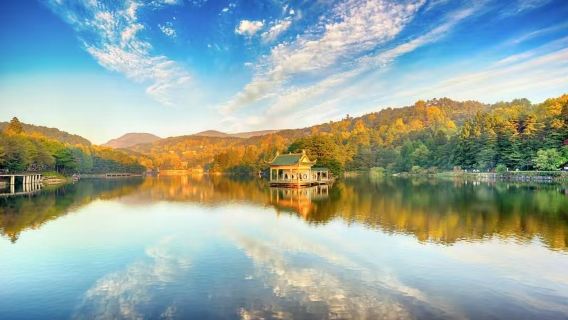
FromAU$309.74

5.0/5
· 1 reviewFree cancellation
Book now for tomorrow
FromAU$169.92
5.0/5
· 1 reviewFree cancellation
Book now for tomorrow
FromAU$84.48

FromAU$213.62
Free things to do in Wangjiang

Jingdezhen China Ceramics Museum
China · Jingdezhen
Nanjing Museum
China · Nanjing
Huizhou Ancient City
China · She County
Confucius Temple-Qinhuai Scenic Area
China · Nanjing
Jiangxi Provincial Museum
China · Nanchang
Sanhe Ancient Town
China · Feixi
Ancient Huizhou Cultural Tourism Area
China · She County
Dr. Sun Yat-sen's Mausoleum
China · Nanjing
East Lake Scenic Area
China · Wuhan
What travellers say about Wangjiang

sharex25 October 2026
5.0
Highly recommended to anyone seeking nature in its most dramatic, mythic form. Standing above a churning sea of clouds as jagged granite peaks pierced the mist felt like entering a classical scroll painting come alive. One of the sights that left an impression was the quiet poetry of the ancient Huangshan pines that clung impossibly to bare vertical rock faces. Mist swirling through the valleys below was an unforgettable, almost meditative spectacle that made every single step worth the climb.
Mount Huangshan Scenic Area

曾弈然23 October 2026
4.0
It's worth a visit. Although it's a small, undeveloped scenic area, the natural scenery is still beautiful and perfect for taking photos. The lights are quite lovely at night. The area is large, and going up and down the mountain requires some physical exertion.
Wangxian Valley

Anonymous user26 October 2026
4.0
Huangling's autumn sun-drying scene lives up to its name. The ancient Hui-style village with white walls and black tiles is built against the mountain. Red peppers and yellow corn are spread all over the drying racks, creating a strong atmosphere. The cable car is very convenient to take you up the mountain. Every shot you take is a masterpiece. It is definitely worth checking out.
Wuyuan Huangling Scenic Area
Anonymous user26 October 2026
5.0
Taking children up the Yellow Crane Tower offers a direct experience of the romance of the ancients. Standing atop the tower at dusk, overlooking Wuhan, I suddenly understood the meaning of climbing high and gazing into the distance. As the lights come on, the night view of the Yellow Crane Tower is breathtaking!
Yellow Crane Tower
320***8826 October 2026
5.0
This shuttle bus ticket is practically a must-buy when visiting Lushan Mountain. It's incredibly cost-effective, including a combined round trip up and down the mountain, and unlimited shuttle bus rides within the scenic area for seven days. It only costs an average of ten yuan per day, cheaper than taking several subway rides in the city. There's no reason not to buy it.
Lushan National Park
Anonymous user26 October 2026
4.0
The performance was impressive, but I didn't understand it. It was outdoors, and even though I bought a VIP ticket and sat in the front row, the performance area was quite far and high up; the view wasn't as clear as from a regular ticket. It got a bit chilly at night. The Tengwang Pavilion is very large, and the night view is beautiful. You should allow plenty of time to explore; it's a great place for taking photos.
Tengwang Pavilion Tourist Area

232***0625 October 2026
5.0
Hongcun is definitely worth a visit. The lighting was great in the afternoon, and the photos taken at Nanhu Lake were particularly beautiful. The golden rice paddies outside the scenic area exceeded my expectations. Hongcun is a great place for taking photos and checking in.
Hongcun Village
Anonymous user26 October 2026
5.0
Stepping into Sanqing Mountain is like entering a flowing landscape scroll. Strange peaks and rocks rise abruptly from the ground, with natural sculptures like the Giant Python Emerging from the Mountain and the Eastern Goddess creating breathtaking views, all shrouded in mist and clouds, exuding an ethereal and otherworldly atmosphere. Strolling along the high-altitude walkways feels like walking on clouds, with sheer drop below and the sound of pine trees whispering in the wind—a blend of thrill and grandeur. The mountain air is crisp and refreshing; every breath is invigorating. Sanqing Mountain not only dazzles the eye with its spectacular scenery but also nourishes the soul with its profound Taoist culture. Looking out from the summit, the hustle and bustle of the world vanishes, leaving only the vastness of heaven and earth and a sense of inner peace. This trip is not only a visual feast but also a spiritual cleansing, allowing one to deeply experience the essence of "a peerless blessed land, detached from worldly noise and chaos."
Sanqingshan Mount Scenic Area

kang kang26 October 2026
5.0
No one can help but be awestruck by the architecture and splendor of Niushou Mountain. It houses the Buddha's skull relic, a supreme Buddhist treasure. The mountain is also very accessible for the elderly; after disembarking from the sightseeing bus, an extremely long escalator leads directly to the Buddha's Palace. Every detail is worth exploring. A sacred Buddhist site, faith nourishes all things. It's recommended to start with the underground palace, which is open to the public for approximately 21 days each year.
Niushou Mountain Cultural Tourism Zone

anxinlsx26 October 2026
5.0
The core site of the Ming and Qing imperial kilns was a place dedicated to firing porcelain for the imperial court. The imperial court dispatched supervisors to oversee the production, and the site gathered the nation's top porcelain craftsmen. The resulting porcelain was exquisitely crafted, elegantly shaped, and represented the highest level of Chinese porcelain-making techniques. The archaeological excavations and layers upon layers of broken porcelain fragments at the site tell a story of a prosperous era, with kilns burning continuously, artisans gathering, and meticulous porcelain production.
The scenic area is vast; a full day is not enough to see everything. One ticket is valid for three days, and with the Jiangxi cultural tourism consumption voucher, the price was 50% off.
Taoyangli Historical and Cultural District


