
Things to do in Jincheng
Explore top experiences
Top 10 attractions in Jincheng


Gaoping Tiefo Temple
Gaoping Tiefo Temple is located in Mixi Village, Mishan Town. Facing south, it covers an area of approximately 667 square meters. The exact founding date is unknown, but iron Buddha statues were cast and the temple rebuilt in the 7th year of the Jin Dynasty's Dading era (1167). Renovations were carried out during the Ming Dynasty in the 1st year of Jiajing (1522), the 3rd year of Wanli (1575), and during the Qing Dynasty. The temple features a single courtyard layout with a south hall and main hall along the central axis, flanked by side rooms, and a mountain gate positioned at the southeast corner. The main hall has three bays wide and six rafters deep, with a single-eave overhanging gable roof, glazed ridge decorations, and a seven-purlin front corridor structure. The column-top brackets feature double cantilevers with five-step corbelling. Inside the hall, Buddhist altars are arranged in the central bay and along the east-west gable walls, featuring a central Buddha flanked by two bodhisattvas, twenty-four heavenly guardians on either side, Guanyin sculptures on the screen wall, and backside hanging sculptures depicting Journey to the West stories. The temple preserves a stone inscription from the 3rd year of Wanli (1575).Stele of the Reconstructed Iron Buddha TempleIt features one cave and over 30 colored sculptures from the Ming Dynasty. It was designated as an 8th batch National Key Cultural Relics Protection Unit on Oct 7, 2019.Gaoping · 5.8km from downtown

Yuhuang Temple Painted Sculpture and Mural Museum
The Jade Emperor Temple is located in Fucheng Village, Zezhou County. It was a large-scale and influential Taoist temple in ancient Zezhou. It is unknown when the temple was founded. It was rebuilt on the original site in the ninth year of Xining in the Northern Song Dynasty (1076), and was titled "Jade Emperor's Palace". The main existing buildings are the Jade Emperor Hall built in Song Dynasty, Tang Emperor Hall built in Jin Dynasty, the left and right Duo Hall in the backyard and the east and west side buildings were built in Yuan Dynasty, and the rest were built in Ming and Qing Dynasties. The temple faces south, the building layout is a three-entry courtyard, and the plane layout is rectangular. On the central axis from south to north, there are Toudao Mountain Gate, Yimen, Chengtang Hall, Xianting Pavilion, Jade Emperor Hall, and East and West Side Halls; Liangyu Twenty-eight Sus Halls, Twelve Chen Halls, Thirteen Yaoxing Halls, and Guandi Halls. , Silkworm Temple and wing rooms, the second floor of the bell and drum. The shape of the mountain gate is a single eaves hanging on the top of the mountain, decorated with colored glaze, and the glazed peacock orchid components on the top of the Bell and Drum Tower are very bright. The Temple of the Gods is located in the middle of the middle courtyard. It is a wooden pavilion, three rooms wide, six rafters deep, and a single eaves overhanging the top of the mountain. It is quaint and simple, with a soup image. There are statues of Dongyue and the Three Kings in the east and west side halls. On the east and west sides are Yaowang Hall, Wudao Hall, and Gaomou Temple. The south hall, the Ksitigarbha Bodhisattva Hall in the west, has the Ten Halls of Lord Yan; the east is the Hall of Six Plagues, and the statues of the gods of six plagues are in the east. The main hall in the backyard is the Jade Emperor Hall, with a single eaves on the top of the mountain, three rooms in width, six rafters in depth, and straight mullioned windows. The painted sculptures of the Song, Jin and Yuan periods collected in the Jade Emperor Temple have extraordinary ornamental value and cultural relic value. The glazed components, murals and wood carvings in the temple are all outstanding; its twenty-eight constellation painted sculptures are even more unique in the world.Zezhou · 1km from downtown

Qinglian Temple
Originally known as Kipishi Temple, it is located on the hillside of Kipishi Mountain in Zezhou County, 17 kilometers southeast of Jincheng City. Looking at Fushan Mountain in the east, the giant peaks are lined up in a row, and it is magnificent; looking at Jue Mountain in the south, the twin peaks are towering into the sky, beautiful and tall. The Danshui at the foot of the mountain is rippling, like a jade belt floating away from the northeast to the southwest; looking back at the peaks of the Kipstone, the cliffs and splendid shores seem to be cut by magic. Because the Sakyamuni in the temple sits on the lotus seat, it is named Qinglian Temple and is a national key cultural relic protection unit. The temple is divided into two ancient temples and new temples. The new temple was named "Fuyan Temple" in the third year of Taiping Xingguo in Song Dynasty (978), and it was called Qinglian Temple in Ming Dynasty.Zezhou · 10.2km from downtown

Kaihua Monastery
The monastery is located on the hillside of Sheli Mountain, 17 km northeast of Gaoping County. It was first built during the reign of Emperor Zhuangzong of the Later Tang Dynasty (Five Dynasties period) and was named Qingliangruo. It was renamed Kaihua Monastery during the Song Dynasty and is a famous ancient monastery in Shanxi. The monastery has two courtyards. In the front is the Bell Tower, in the middle is the Mahavira Hall, and in the back is the Yanfa Hall, all built in the sixth year of the Xining era of the Northern Song Dynasty (1073). It has been renovated in subsequent dynasties, but the bracket sets of the Mahavira Hall still retain their Song Dynasty style. The four walls inside the hall are covered with Buddhist stories, painted with fine brushwork and superb skill, completed in the third year of the Shaosheng era of the Northern Song Dynasty (1096). The stone tablets from various dynasties inside the monastery and the three stone tomb pagodas of eminent monks outside the monastery are also well preserved.Gaoping · 13.5km from downtown

Taihang No.1 Tourist Highway
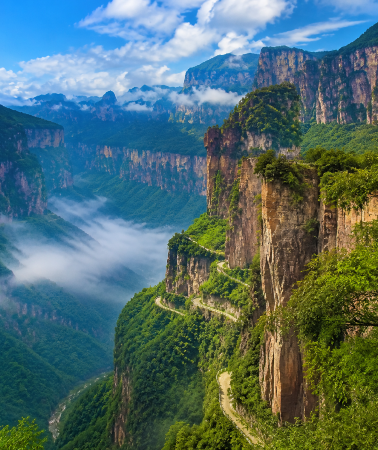
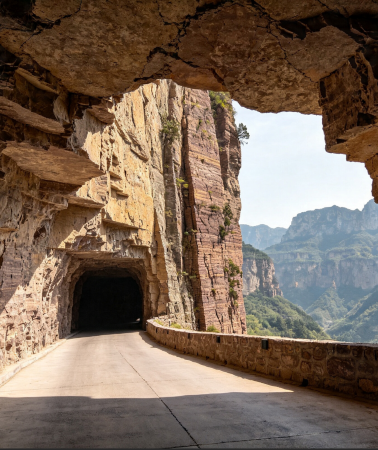
Taihang No.1 Tourist Highway is over 1,000 km long, with beautiful scenery along the way, making it perfect for a road trip. The road passes through many ancient villages and many well-known attractions, such as Niangzi Pass Scenic Area, Wangmangling Scenic Area, and more.Lingchuan · 20.5km from downtown

Jincheng Museum
Jincheng Museum is a local comprehensive history museum, formerly known as Jincheng Ancient Architecture Art Museum. It is located at the northwest corner of the intersection of Fengtai East Street and Wenbo Road in Jincheng City, Shanxi Province, covering an area of 1.6 hectares and a construction area of 10,282 square meters. It is affiliated to the Jincheng Tourism and Cultural Relics Bureau. A total investment of 38.87 million yuan was made. The museum is a modern building with a double eaves and wing corners of traditional buildings, and a pointed glass roof at the four corners. It incorporates a lot of traditional Chinese architectural culture. There are more than 20,000 cultural relics in existence, including more than 200 cultural relics of level three or above. The collection of cultural relics with very local characteristics are pottery figurines from various dynasties and glazed servant figurines and funerary objects from the Ming and Qing dynasties.Jincheng · 1.5km from downtown

Mausoleum of Emperor Yan
The Yan Emperor's Mausoleum is located in Zhuangli Village, 17 kilometers northeast of Gaoping City. It is a place with beautiful mountains and rivers and beautiful scenery. The mausoleum is surrounded by gullies on the east, west and south sides, and the north side is undulating with hills and green mountains. The Yan Emperor's Mausoleum in Zhuangli Village is commonly known as the "Emperor's Tomb". There is a temple behind the mausoleum, called the Five Grain Temple. The founding time of the Five Grain Temple is unknown, but it has existed as early as the Song Dynasty. The temple faces north and south, with a large scale and a city wall around it. It is divided into two courtyards, the upper and lower courtyards. On the axis of the temple, there are stage, offering platform, mountain gate, south road and main hall. Originally, there were about 40 or 50 steles in the temple courtyard. Now there are only five main halls and more than a dozen east and west wing rooms. On the back wall of the east wing room, there is a stone tablet with the words "Yan Emperor's Mausoleum", which was erected by Shen Daotong in the 39th year of Wanli in the Ming Dynasty (1161). There is a corridor (now sealed) behind the stone tablet of "Yan Emperor's Mausoleum" that leads to the tomb. There is a perpetual lamp in the tomb that never goes out. Yangtou Mountain is the place where Emperor Yan Shennong tasted grains. The remains of Shennong City, Shennong Spring, Grain Fields, Shennong Temple and other sites still exist on the mountain.Gaoping · 13.3km from downtown

Fucheng Guandi Temple
府城关帝庙 consists of upper, lower, outer, middle, and front courtyards and faces south. Major structures include theGuandi Hall, Sanyi Hall, corridors,Bell and Drum Tower, and monks' quarters, all of which were built during the Ming and Qing dynasties. The main hall is theGuandi Hall, which is three bays wide and eight rafters deep, featuring a single-eave gabled roof and a nine-rafter front corridor design. The four dragon-carved pillars in the front corridor are exquisitely crafted. The Sanyi Hall is three bays wide and six rafters deep, featuring a single-eave hip-and-gable roof and a seven-rafter front corridor design, with murals painted on the inner eaves of the two side walls. The four figure-carved pillars in the front corridor depict stories from Confucianism, Buddhism, and Taoism. The stone carvings are a highlight of the scenic area, with each courtyard featuring unique designs. The stone carvings in the second courtyard are full of childlike charm, with goats and horses carved onto the pillars of the north pavilion. The architecture strongly reflects the folk style of the Ming and Qing dynasties in Shanxi, and the stone and wood carvings are rich in traditional, auspicious, and even didactic themes.Zezhou · 470m from downtown

Tianguan Wang Residence
Tianguan Wang Residence is a large-scale official residence group built by distinguished politician and social reformer Wang Guoguang and his family in the Ming Dynasty. It has a history of nearly one thousand years. The interior of the loft is towering, the ancient temple is deep and solemn, and the houses are very elegant. There are more than 40 official residences that have been basically preserved, covering different types such as residential, religious and ritual buildings. Its residential culture includes many still habitable buildings from various dynasties in China's history. It is regarded as an outstanding example of ancient village preservation.Yangcheng · 13.6km from downtown

Jade Emperor Temple
Jade Emperor Temple is divided into three courtyards, with the First Mountain Gate, Second Mountain Gate, Pavilion for Gods' Offerings, and Jade Emperor Hall built along a central axis. The layout is rectangular, 110m long from north to south and 32m wide from east to west, with 110 halls and pavilions, covering an area of 3,520 square meters. The overall architectural structure is rigorous, with exquisite carvings, showcasing the unique style of Song-dynasty temple architecture and the artistic talent of the ancestors of Zezhou.Zezhou · 10.1km from downtown
Experiences you can't miss in Jincheng
Featured Day tours in Jincheng
View all Day tours
5% off
Limited-time sale
From€144.01€151.59

5% off
Limited-time sale
From€172.81€181.91
5% off
Limited-time sale
From€145.67€153.34

5.0/5
· 1 reviewInstant confirmation
Save €0.6
Limited-time sale
From€59.20€59.8
5.0/5
· 1 reviewInstant confirmation
Save €0.57
From€56.17€56.74
![[Private Group Tour] Yuntai Mountain One-Day Tour | Hongshixia + Xiaozhaigou + Macaque Valley / Includes Scenic Area Shuttle Bus](https://ak-d.tripcdn.com/images/0354o12000t4ut83vD7A7_C_568_320.jpg?_fr=wc)
Free cancellation
Instant confirmation
Book now for tomorrow
From€66.70
5.0/5
· 1 reviewFree cancellation
Instant confirmation
Book now for tomorrow
9% off
Limited-time sale
From€79.57€88.41
![Luoyang White Horse Temple + TRACING LUOSHEN FU Day Tour [Luoyang Dahehui Attraction]](https://ak-d.tripcdn.com/images/0351912000ogcg9fb6ED4_C_568_320.jpg?_fr=wc)
From€98.45
Featured Food & drink in Jincheng
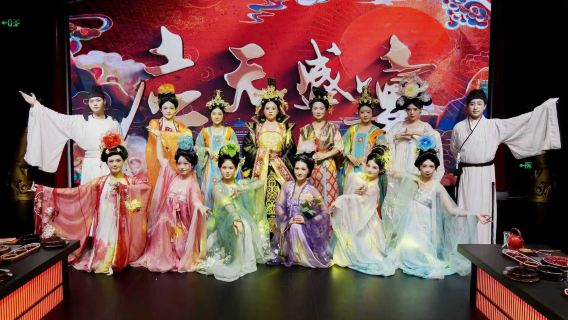
View all Food & drink![Luoyang Palace Banquet • A Feast Through the Centuries [Yingtianmen Branch] (Immersive Imperial Feast + Audiovisual Extravaganza + Ancient-style Music and Dance)](https://ak-d.tripcdn.com/images/0350812000q184to00E40_C_568_320.jpg?_fr=wc)
4.9/5
· 24 reviews· 556 bookedFree cancellation
Book now for tomorrow
24 bookings in 7 days
From€26.42
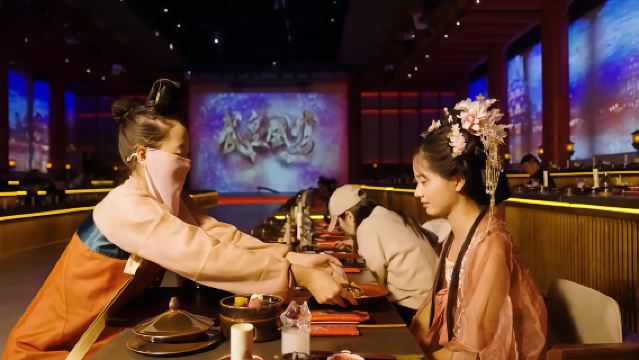
4.8/5
· 4 reviews· 28 bookedFree cancellation
Instant confirmation
Book now for today
From€25.08
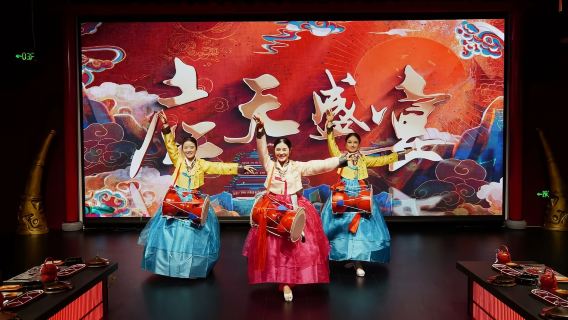
Free cancellation
Instant confirmation
Book now for tomorrow
From€50.43

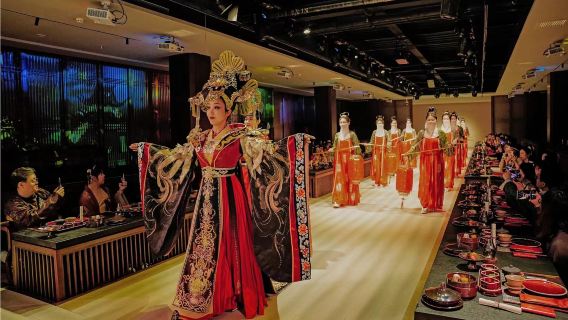
Free cancellation
Book now for tomorrow
From€30.42
5.0/5
· 1 reviewFree cancellation
Instant confirmation
Book now for tomorrow
From€13.34
Featured Cultural experiences in Jincheng
View all Cultural experiences
Free cancellation
Instant confirmation
Book now for tomorrow
From€39.89
![Luoyang Sui-Tang Dynasties Grand Canal Cultural Museum + TRACING LUOSHEN FU Day Tour [Luoyang Dahehui Attraction]](https://ak-d.tripcdn.com/images/0355e12000ogc6eibDBCB_C_568_320.jpg?_fr=wc)
Free cancellation
Book now for tomorrow
From€105.12
![Luoyang Erlitou Site Museum of The Xia Capital + TRACING LUOSHEN FU day tour [Luoyang Dahehui attraction]](https://ak-d.tripcdn.com/images/0356412000qmutf26043E_C_568_320.jpg?_fr=wc)
Free cancellation
Book now for tomorrow
From€102.46
10% off
Limited-time sale
From€151.80€168.67
Save €0.24
From€23.48€23.72
Free things to do in Jincheng
Gaoping Tiefo Temple
Gaoping · 5.8km from downtownYuhuang Temple Painted Sculpture and Mural Museum
Zezhou · 1km from downtownQinglian Temple
Zezhou · 10.2km from downtownKaihua Monastery
Gaoping · 13.5km from downtownTaihang No.1 Tourist Highway
Lingchuan · 20.5km from downtownJincheng Museum
Jincheng · 1.5km from downtownMausoleum of Emperor Yan
Gaoping · 13.3km from downtownFucheng Guandi Temple
Zezhou · 470m from downtownTianguan Wang Residence
Yangcheng · 13.6km from downtownJade Emperor Temple
Zezhou · 10.1km from downtown
More ways to travel from Jincheng
Private Tours in Jincheng
View More Private Tours in Jincheng

Group Tours in Jincheng
View More Group Tours in Jincheng


What travellers say about Jincheng

山在穷游13 June 2026
4.0
This was my second visit to Tiefo Temple, and this time I felt much better than before. This time, some time had passed since its peak popularity, and there weren't many people, so I could spend more time there and properly explore the place. The lighting was better in the morning, but when I arrived in the afternoon near closing time, the lighting inside the large store was noticeably dim.
Gaoping Tiefo Temple

行走毛毛9 April 2026
4.0
If you had visited Jincheng many years ago, this attraction might not have been highly recommended by many people. After all, its location is relatively remote, and there wasn't much promotion. However, after the Black Monkey King Myth became popular, you'll find that it's really worth a visit.
Yuhuang Temple Painted Sculpture and Mural Museum

弘扬师兄3 August 2025
4.0
An ancient temple as famous as Shaolin Temple, Qinglian Temple, named after the Buddha Shakyamuni seated on a lotus throne within, is a National Key Cultural Relic Protection Site. Not only is the area scenically stunning, but it also boasts the "Six Wonders of Qinglian": painted sculptures, steles, Song Dynasty architecture, the Shadowless Pagoda, the Rudou Spring, and the Mother-and-Child Cypress.
Founded during the Tianbao period of the Northern Qi Dynasty, Qinglian Temple has earned the reputations of "the Capital of Buddhism," "Literary Qinglian, Martial Shaolin," and "the First Temple in the Mountains and Rivers of the Jin and Wei Dynasties." Its founder, the renowned Buddhist genius Tanshi, was the first Chinese missionary to Goguryeo, one of the founders of the Pure Land religion in northern my country, and a pioneer of Chinese Buddhist martial arts. Therefore, Qinglian Temple holds a crucial position in the history of Chinese Buddhism.
Qinglian Temple is divided into two buildings: the lower one, known as the "Ancient Qinglian Temple," dates back to the early period; the upper one, known as the "New Qinglian Temple," dates from a later period.
The main hall of the ancient Qinglian Temple is also known as the "Big Buddha Hall". On the waisted Sumeru-style square altar in the hall, there are 7 Tang Dynasty colored sculptures including Sakyamuni. "The essence of Qinglian Temple lies here." The sculptures were probably made no later than the eighth year of Tang Xiantong (867 AD). It is the only one of its kind in the country and has extremely high artistic value.
Qinglian Temple

Danielwwh31 October 2025
5.0
The temple is located on a very quiet mountainside, requiring a long climb up a flight of stairs 😴. The main hall containing the murals is inaccessible; you can get a general view from the entrance, and for more details, see the replicas in the side halls.
It closes at 12 noon and may reopen at 2 pm, so please be aware of the time.
Kaihua Monastery

997***5513 April 2026
5.0
It feels so worthwhile to drive along the Taihang No. 1 Tourist Highway once in my life. I was even moved to tears while driving through the Taihang Grand Canyon. The rivers of our motherland are so magnificent!
Taihang No.1 Tourist Highway

鱼游天下33320 May 2025
5.0
I think the highlight of Jincheng Museum is not the number of cultural relics in its collection, nor the profound historical culture and the superior geographical location in ancient times. What impressed me most in Jincheng Museum were the volunteer tour guides. Although they spoke in dialect, they spared no effort in explaining. Especially the elderly people over 50 years old, they paid attention to interaction and listening. While explaining the historical anecdotes of the cultural relics, they also explained that the cultural relics in the museum specifically corresponded to the current geographical location of Jincheng, the traffic conditions, and how to get there as soon as possible. They mobilized the emotions and learning desire of us tourists very well. In many museums, I appreciate them by myself, and when I encounter tour guides, I cover myself for fear of being heard by others. This is the first time I have encountered such an open explanation like Jincheng, with interaction and discussion. It is great!
Jincheng Museum

M49***3013 February 2025
5.0
There is a parking lot with poles at the Yan Emperor's Mausoleum in Gaoping, Jincheng. Fortunately, parking lots in Shanxi usually charge by the time rather than by the hour. It's 2502. I didn't see any tickets for sale. There is also a Spring Festival temple fair, a flat road with many huge pillars, and then steps up to a huge hall. When I went there, I saw people coming back from burning incense and offering sacrifices.
Mausoleum of Emperor Yan

单反小大爷7 December 2024
4.0
The Guandi Temple in Jincheng, Shanxi, namely the Fucheng Guandi Temple, is an ancient building with a long history and rich cultural connotations. The following is some information about the Jincheng Guandi Temple: 1. Location and scale:
The Fucheng Guandi Temple is located in Fucheng Village, Jincun Town, Zezhou County, Jincheng City, Shanxi Province. It faces south and is a group of huge buildings consisting of upper, lower, outer, middle and front courtyards, covering an area of dozens of acres [^0^]. On the central axis are the mountain gate, stage, Guandi Hall, Sanyi Hall, and the west side buildings include corridors, bell and drum towers, and monk buildings [^1^]. 2. History and protection:
The Fucheng Guandi Temple has a history of at least 800 years. It was awarded the "Shanxi Provincial Cultural Relics Protection Unit" in January 1996 and the "National Key Cultural Relics Protection Unit" in March 2013. 3. Architectural features: • Stone carving art: Guandi Temple is famous for its exquisite stone carvings, and the stone carvings in each courtyard are unique. The stone carvings in the second courtyard are particularly childlike, such as the carvings of goats and horses, as well as the stone carvings of a lion family[^2^]. • Dragon pillars: Each stone dragon pillar in the Guandi Shengjun Hall in the third courtyard is entwined with two giant dragons, and the entire hall seems to have become a dragon palace on the water[^3^]. • Figure pillars: The four figure pillars in the front porch are carved with stories and figures from the three religions of Confucianism, Buddhism, and Taoism, showing a rich cultural integration[^4^].
Fucheng Guandi Temple

110***6822 October 2023
4.0
It's just a general scenic spot.
There are still many residents in the scenic area.
The scenic area is not very popular and the signs are not clear.
There is mainly one street (Guhe Street) with some old houses on both sides.
Wangfu is the residence of Wang Guoguang in the Ming Dynasty.
Go there when you have time, no need to go specially.
It's not far from the Imperial City Xiangfu, about 15 minutes by car.
Tianguan Wang Residence

吃猫的冰棍123 June 2025
5.0
The essence of the Jade Emperor Temple in Jincheng, Shanxi, lies in its Yuan Dynasty colored sculptures! Especially the statues in the Twenty-Eight Mansions Hall, which are unique in China. These masterpieces of the Yuan Dynasty personify the gods of the stars, with distinct personalities, vivid postures, flowing clothes, and lifelike, and have extremely high artistic value. The entire temple has a rigorous layout, and the Song, Jin, and Yuan Dynasty architecture and exquisite colored sculptures complement each other. It is a treasure house for studying ancient sculptures, architecture, and Taoist art. Although it is not the largest in scale, this group of peerless colored sculptures alone is absolutely not to be missed. It can be called a pearl in the history of ancient Chinese sculpture!
Jade Emperor Temple


