


▲ For guests selecting a flight itinerary, please reserve the correct name and weight for each person when placing the booking. Otherwise, the booking cannot be confirmed. Each seat on the aircraft can support 125 kg. If there is a significant discrepancy between the weight provided when you book and the actual weight at the airport, you may be refused participation in the flight activity. Individuals with neck or back discomfort, pregnancy, those taking medication that may affect consciousness, epilepsy, diabetes, heart conditions, or non-swimmers are not recommended to participate in the activity.
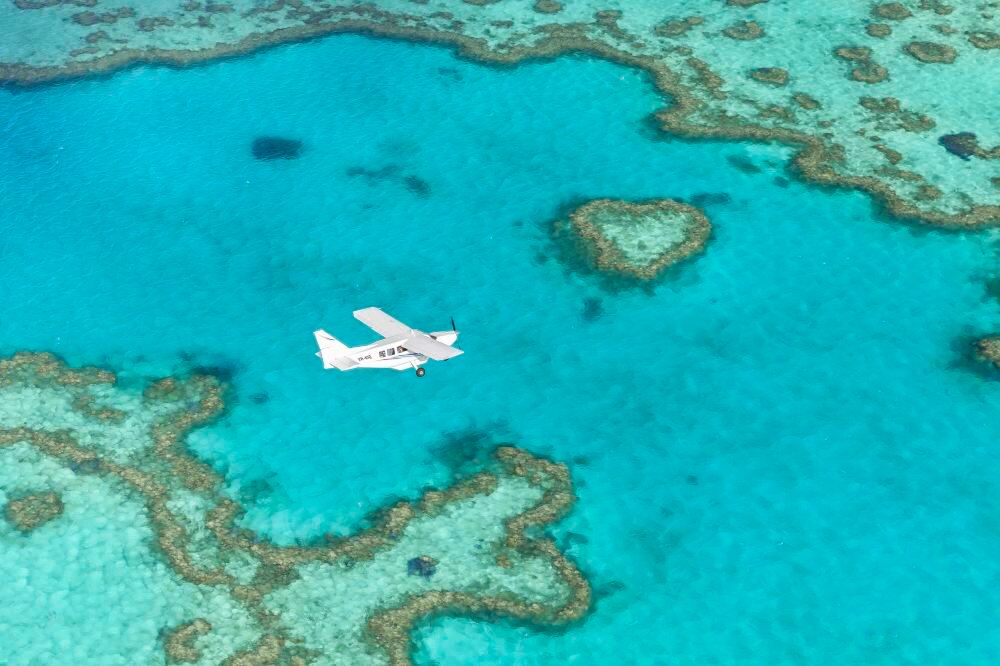
▲ A: 60 min Heart Reef sightseeing flight + southern route (more beach time) Sample Itinerary (Times are for reference only and subject to change based on actual arrangements): 08:15 bus pick-up to the airport 08:40 Arrive at airport and check in 08:45 60-min scenic flight over the Whitsundays 09:45 proceed to pier for boarding procedures 10:00 - Depart by speedboating 10:20 Go to the snorkeling spot for snorkeling 11:30 AM visit the northern part of whitehaven beach and hill inlet, with free time on the beach 1:00 pm Beach lunch, free time 15:00 Arrival pier 16:30 Return to the departure hotel in sequence
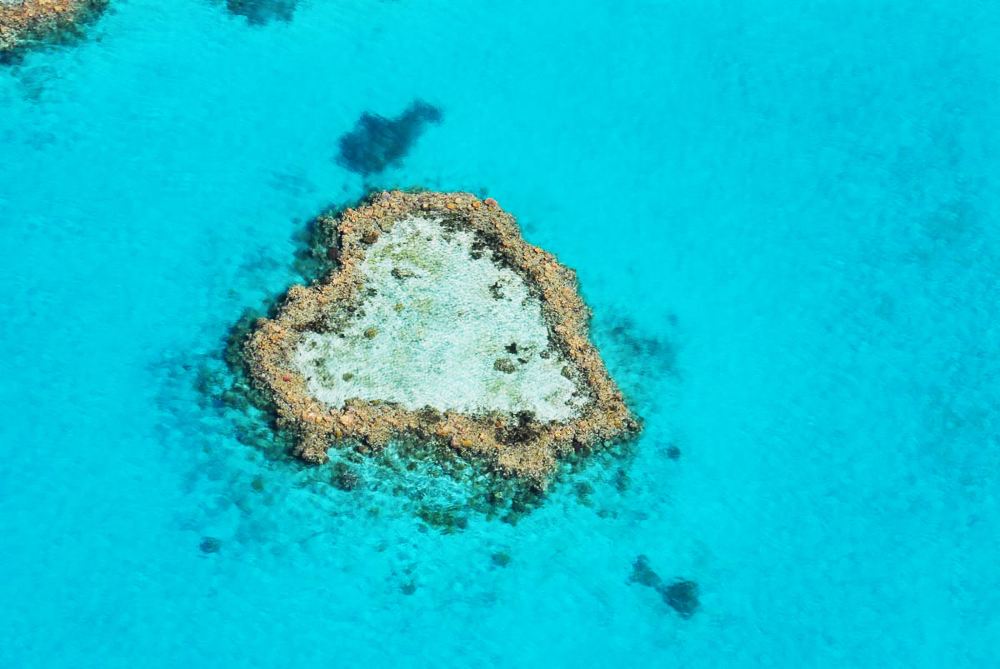
▲ B: 60 min Heart Reef sightseeing flight + northern route (long diving time) Note: Guests who cannot swim are not allowed to book this itinerary The schedule is for reference only and subject to change based on actual conditions on the day. Departure time: 7:00 AM Return time: 3:30 PM Sightseeing flight: 7.00am-8:00am, speedboating tour: 8.45am-3.30pm Note: Each snorkeling session lasts approximately 45 mins
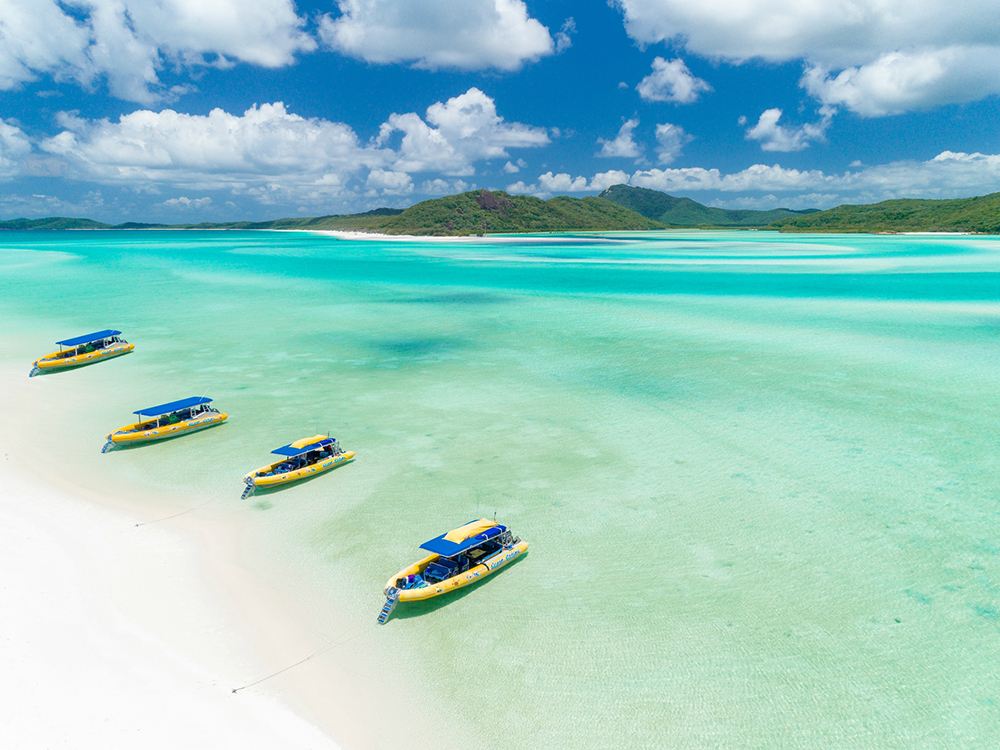
▲ C: South route (no flightseeing, more beach time) reference itinerary: 08:15 Bus pick-up to the pier 09:00 Arrive at the pier 10:00 Take a fast inflatable speedboat out to sea and experience the thrill on the water 10:20 Head to the snorkeling spot near Dumbell Island for snorkeling 11:30 Explore the northern end of Whitehaven Beach and the Hill Inlet entrance, then enjoy free time on the beach 13:00 Lunch, followed by free time 15:00 Return to the departure pier 16:30 Drop-off at departure hotel
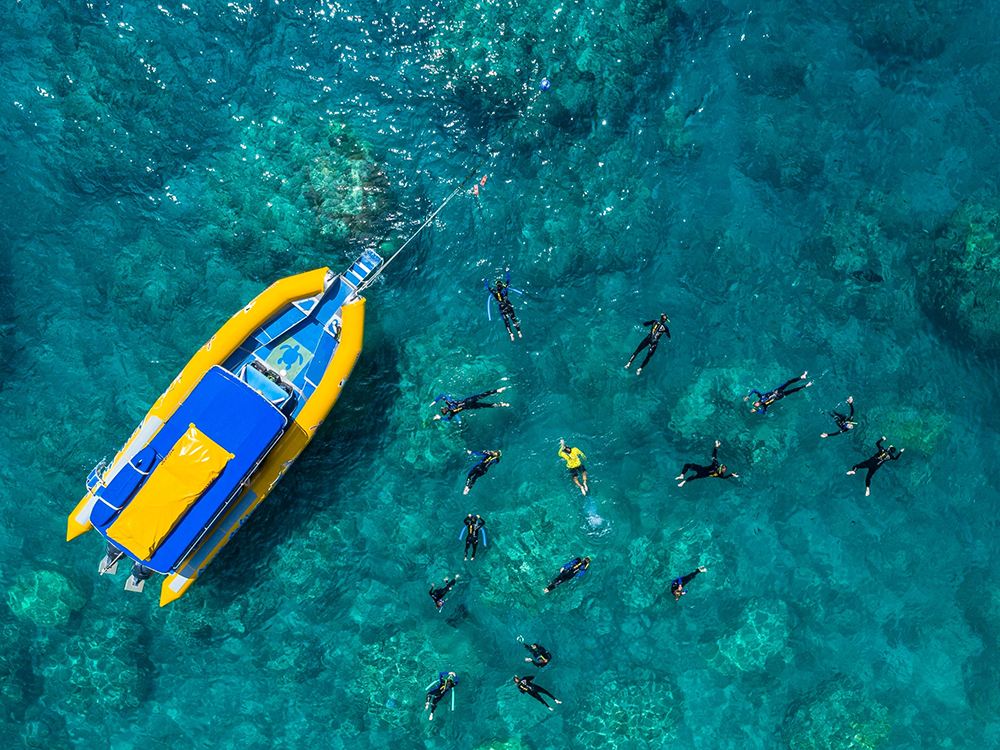
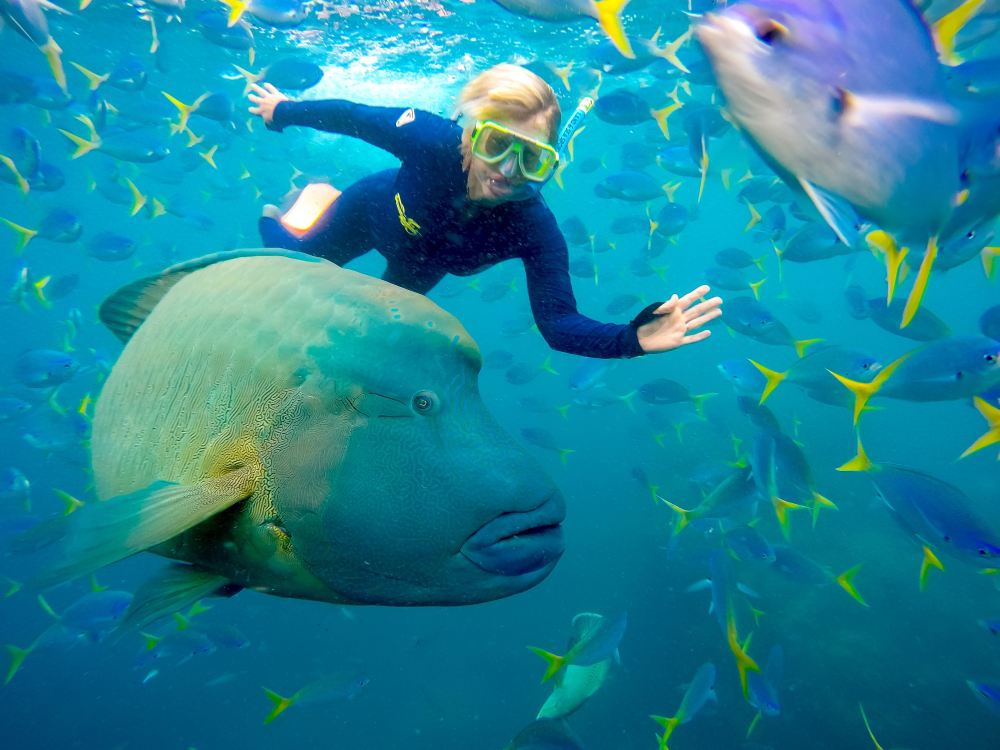
▲ D: North route (no flightseeing, more snorkeling time) reference itinerary: 07:00 Bus pick-up to the pier 07:45 Arrive at the pier 08:45 Take a speedboat out to sea and head to the snorkeling spot near Mantaray Bay for snorkeling 10:00 Head to the snorkeling spot near Border Island for snorkeling 11:20 Visit the northern part of Whitehaven Beach and the Hill Inlet mouth, then enjoy free time on the beach 13:00 Lunch, followed by free time 14:00 Return to the departure pier 15:30 Drop-off at departure hotel
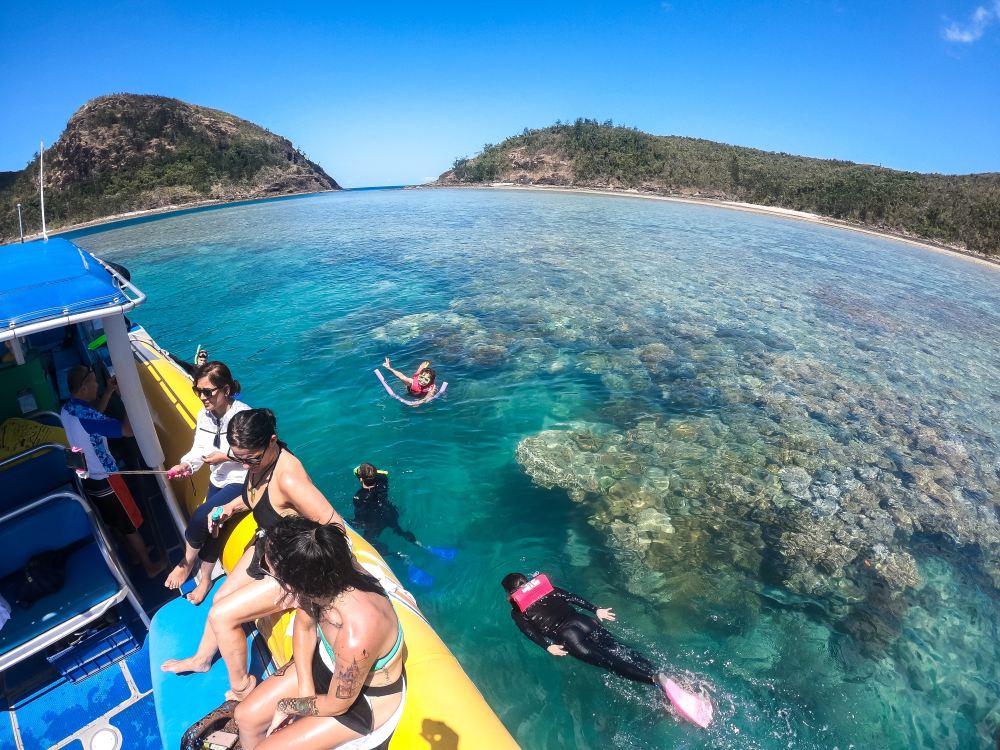
▲ If going to the marina by yourself, marina address: Coral Sea Marina North, Airlie Beach If you choose pick-up & drop-off, the pick-up & drop-off area covers hotels in the Airlie Beach urban area. For some hotels where parking is not available at the entrance, or homestays, hotels and apartments not within the pick-up & drop-off area, a nearby boarding location will be arranged.
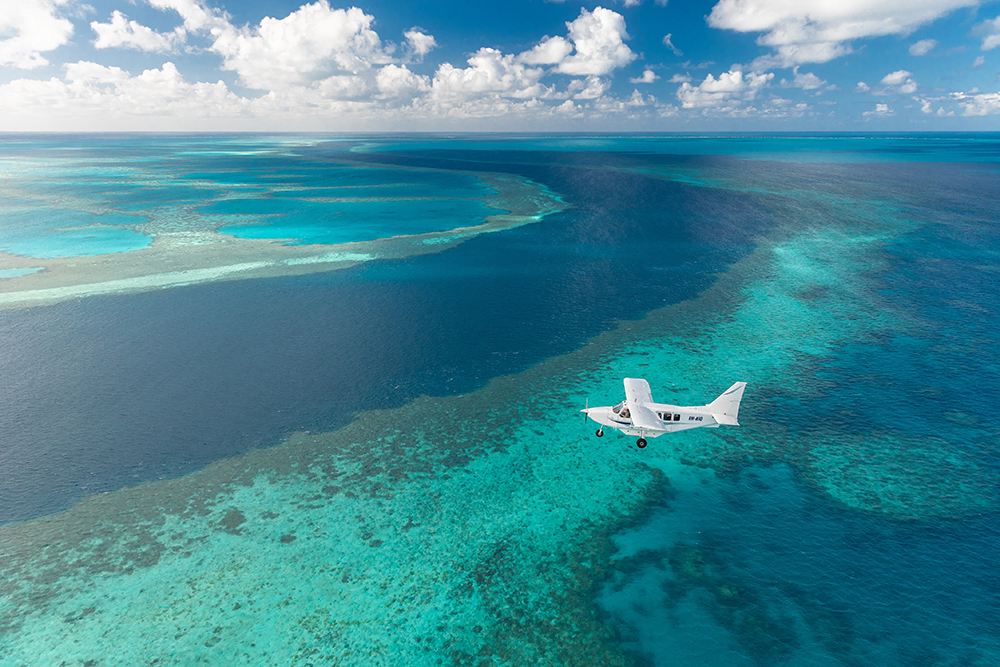
▲ Inclusions: 1. 60 min window seat sightseeing flight (only for guests who purchase the itinerary with flight) 2. Whitehaven Beach and Hill Inlet tour 3. Guide-led hiking 4. Inner Reef Snorkeling 5. Fresh Tropical Lunch Package 6. Snorkeling Guidance 7. Snorkeling equipment 8. Sun protective clothing/Diving suit
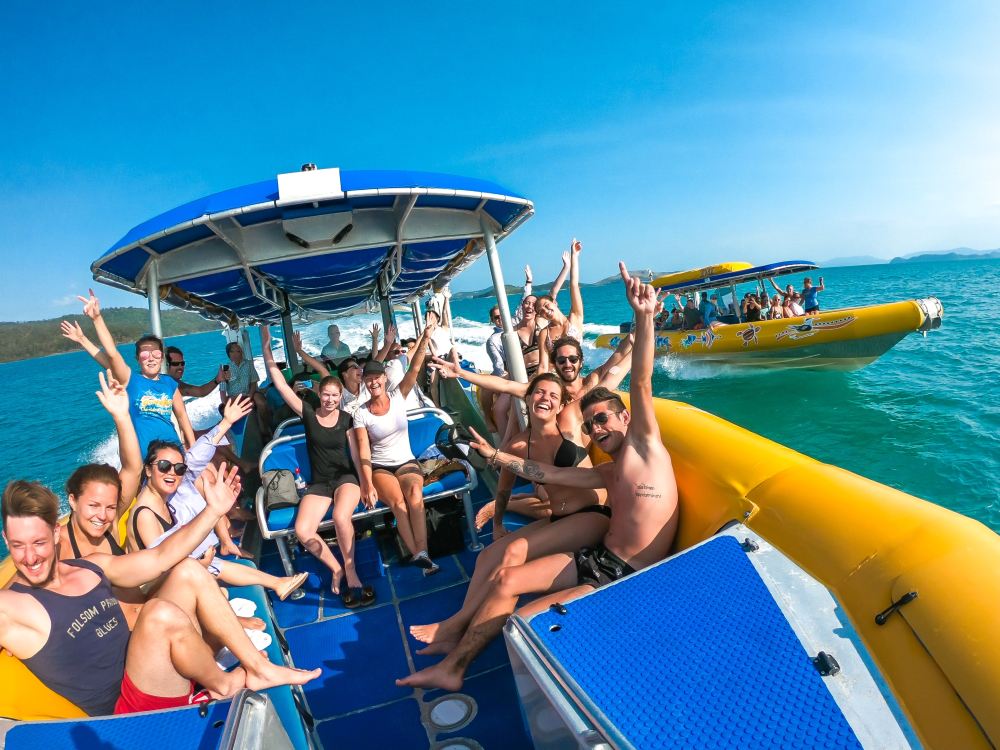
▲ How to Use: Please arrive at the meeting point specified on the confirmation sheet 5-10 minutes in advance and wait for the bus. Late arrivals due to personal reasons resulting in failure to participate in the activity will be considered as voluntarily giving up, and no refund will be issued. 2. The pick-up time and location may change. Please call to confirm the pick-up time and location at least 48 hours in advance (contact info can be found on the booking confirmation). Additional fees apply on Queensland public holidays: AUD$20/adult, AUD$10/child, AUD$50/family (2 adults + 2 children), payable on-site. (Prices subject to change without notice, please refer to on-site pricing.)
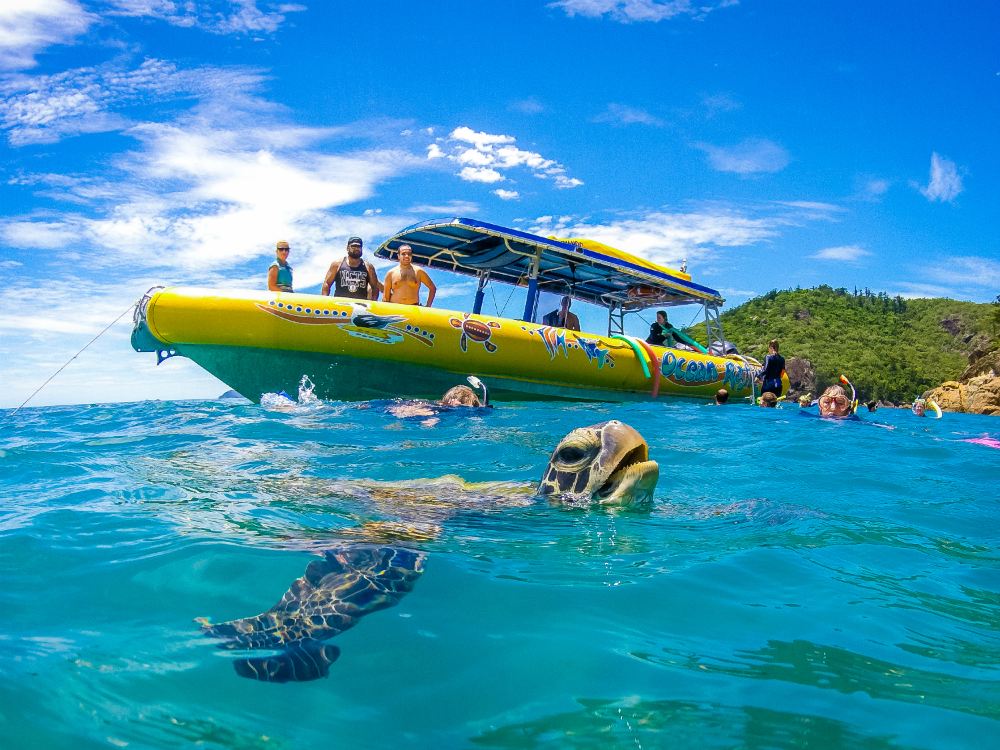
▲ Please note: 1. Minors participating in this activity must be accompanied by an adult. 2. Each sightseeing aircraft accommodates 7 or 11 passengers (subject to the day's operating conditions, all window seats). If you are traveling with family or friends and wish to be arranged on the same aircraft, you must place your booking together (under the same booking number); otherwise, you will be arranged on different aircraft based on the day's booking situation. 3. Each seat can accommodate a weight of 125 kg. If the weight provided at the time of booking differs significantly from the actual weight, it may result in being unable to travel without a refund. 4. Staff will assess your swimming ability to determine whether you can participate in the snorkeling experience. For your safety, the staff's judgment shall prevail. If the snorkeling experience does not take place, no refund will be provided. 5. In rare cases, the group tour may be canceled (severe weather, road or park closures, insufficient number of participants). If this happens, you can reschedule or request a refund 6. Flight arrangements are subject to pilot judgment, weather conditions, and air traffic control. 7. Due to flight weight restrictions, the full name and exact weight of each passenger must be provided at the time of booking. 8. The listed play duration is an estimated time and is subject to the actual arrangement on the day. 9. To ensure your travel safety and experience, this activity requires you to sign a safety disclaimer before the itinerary begins or on-site at check-in on the day of the trip. Please cooperate and complete it; you may only join the tour after signing. If you do not sign, you may be unable to participate, and we appreciate your understanding. By submitting your booking, you are deemed to have read and agreed to the above arrangements and terms. Please confirm in advance that your health condition is suitable for participation, follow safety guidelines, and comply with staff instructions. Thank you for your understanding and cooperation.
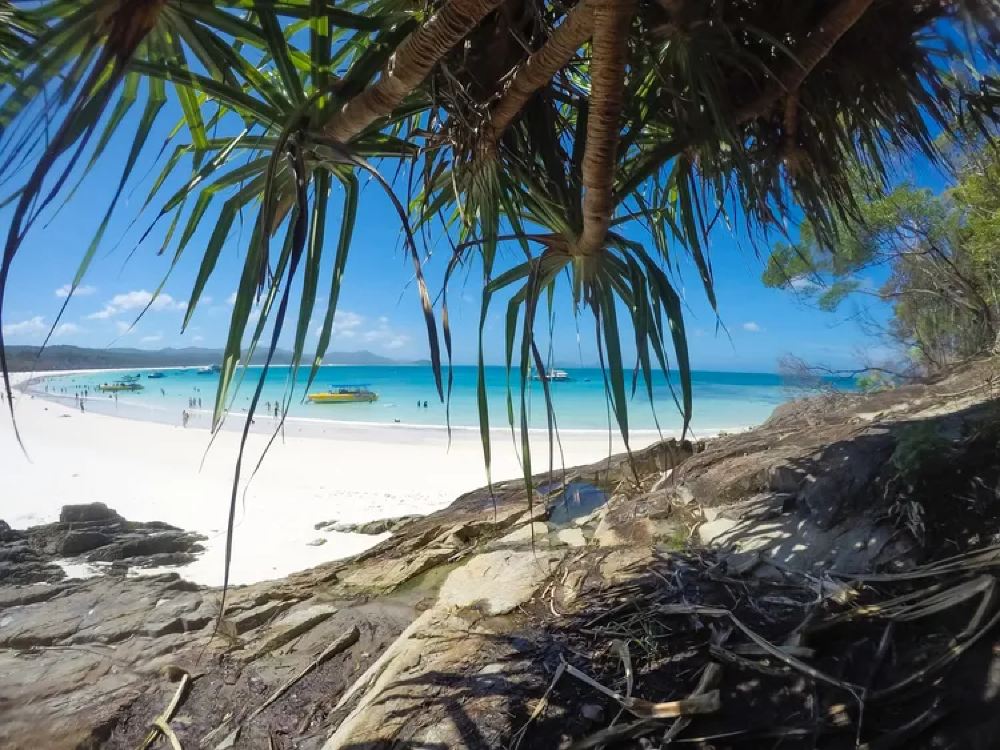
▲ Safety notice: [Vehicle (boat) safety precautions] 1. During the itinerary, we will use different transportation methods, including traveling by vehicle and by boat, and the types of vehicles and boats may vary. Regardless of what vehicle/boat you are on, please pay attention to safety while riding. Be sure to fasten your seatbelt when in a vehicle, and be sure to wear a life jacket when on a boat. 2. Do not take vehicles, boats, or other means of transportation without operating qualifications, to avoid accidents. 3. When taking a bus/boat, please keep your belongings safe to avoid leaving them behind or losing them. 4. When boarding a vehicle/boat, please board in an orderly manner. Do not crowd to avoid accidents. Do not carry prohibited items. Only get on or off the vehicle/boat after it has come to a complete stop. 5. Sit securely when riding. When riding, be sure not to sit at an angle or lie down sideways, to avoid falling and getting injured when the vehicle brakes suddenly. Try not to sleep while riding. Sleeping is very disadvantageous for coping with emergencies, and facts have proven that in traffic accidents, passengers who are awake at the time suffer less severe injuries and casualties than those who are asleep. When encountering particularly bad roads, especially accident-prone sections such as mountain roads, steep downhill slopes, sharp turns, and so on, please stay awake and constantly observe the situation ahead and outside the vehicle. 6. It is recommended not to eat foods such as candy, beans, or peanuts during the ride, as they can easily cause choking in the trachea when the vehicle shakes. 7. During the temporary stop of the vehicle/boat, please pay attention to the stop duration; before leaving the vehicle, please check your personal belongings and do not leave them behind in the vehicle. 8. When stopping to rest, pay attention to passing vehicles and cross the road where there are no blind spots; do not take road photos on the highway to avoid traffic accidents. 9. While the vehicle is moving, do not stand or walk around inside the cabin, and keep your seat belt fastened at all times. Please do not talk to the driver or urge the driver to speed up; do not put your head or hands out of the window, and do not throw anything out of the window, to prevent accidents. 10. What issues should be noted when getting off the vehicle (boat) after arriving at the destination: (1) When the car (boat) has not yet come to a complete stop, do not rush to jump off the moving car (boat) to avoid accidents; you must wait until the car (boat) has come to a complete stop before getting off the car (boat) in order. (2) When getting off the car, do not crowd; first check for oncoming vehicles in front and behind to avoid scraping; when getting off the boat, do not crowd; make sure you see the gap clearly before getting off the boat to avoid falling into the water. (3) When a motor vehicle breaks down or is involved in a traffic accident and must stop in the roadway, passengers must promptly exit the vehicle and the roadway, except for rescue purposes. 11. For off-road vehicles, four-wheel-drive vehicles, and similar, please hold on firmly when riding to avoid severe shaking. If open-top vehicles/boats are involved, please take precautions against wind, sun, and rain. 12. If you feel unwell, please inform our tour staff immediately. [Safety precautions for seaside activities] 1. The following individuals are not suitable to participate in the seaside activity: those who have consumed alcohol, those feeling unwell, and patients with mental illness, heart disease, high blood pressure, epilepsy, osteoporosis, etc. 2. The sunlight by the sea is particularly intense. Remember not to stay in the sun for long periods, and take appropriate sun protection measures in advance. 3. Before participating in water activities, please leave valuables and non-waterproof items with your companions or store them properly to avoid loss of property. 4. When participating in water recreation and seaside activities, please follow the arrangements of the staff. When taking water transport such as speedboats, water speeders, and bamboo rafts, be sure to wear a life jacket properly and do not take it off midway. 5. Do not enter the water to swim without authorization in sea areas where swimming is prohibited. When swimming at a beach, a lifeguard must be present on site. In the event of an accident, call for help from the staff promptly. 6. If special weather or other conditions affect the safety of seaside activities, we will adjust the itinerary; please follow the instructions of the staff. 7. If you feel unwell, please inform our tour staff immediately. [Safety precautions for going into the sea (open water swimming)] 1. The following individuals are not suitable to participate in the sea (open water swimming) activity: those who have consumed alcohol, those feeling unwell, and patients with mental illness, heart disease, high blood pressure, epilepsy, osteoporosis, etc. 2. The sunlight by the sea is particularly intense. Remember not to stay in the sun for long periods, and take appropriate (physical) sun protection measures in advance. 3. If there are onboard activities, you can take seasickness medication in advance. After boarding, you must learn the storage locations of safety equipment such as life jackets and buoyancy aids, as well as the correct way to wear and use life jackets and buoyancy aids. 4. Please leave valuables and non-waterproof items with your companions or store them properly to avoid loss of property. 5. Do not enter the water to swim without authorization in sea areas where swimming is prohibited. When swimming at a beach, a lifeguard must be present on site. In the event of an accident, call for help from the staff promptly. 6. Before going into the sea (open water swimming), warm-up exercises are required, and a life jacket must be worn or a buoyancy noodle carried. Diving is strictly prohibited. 7. If special weather or other conditions affect the safety of the sea (open water swimming) activity, entering the water is strictly prohibited; please follow the instructions of the staff. 8. If you feel unwell, please inform our tour staff immediately. [Hiking safety precautions] 1. The following individuals are not suitable to participate in the hiking activity: those who have consumed alcohol, pregnant women, those feeling unwell, and patients with mental illness, heart disease, high blood pressure, epilepsy, osteoporosis, etc. 2. Before the itinerary departs: 1) Exercise appropriately and rest well to build up your physical fitness for the hike. 2) Prepare the equipment needed for hiking according to the route webpage description. 3. During the hike: 1) Before starting the hike, please warm up properly to loosen important joints, prevent physical injury, and reduce body stiffness. 2) Team awareness: During the hike, you should have team awareness, follow the arrangements of the tour staff, and do not act alone, to avoid getting lost or having accidents. 3) The team members at the very front should follow behind the hiking guide/tour staff, and the team members at the very back should not fall behind the sweep. When encountering a fork in the trail, please stop and confirm the route before continuing, to avoid getting lost. 4) Rest: During the hike, do not push yourself too hard and walk with your head down. Find a companion with a similar pace to walk with and rest at appropriate times to avoid excessive fatigue; replenish water and energy in a timely manner, and when replenishing water, it is recommended to drink small amounts multiple times. 5) Special sections: If you encounter a narrow section, avoid walking side by side and pass through one after another. If you encounter shrubs and thorns, please avoid them appropriately to prevent scratches and snagged clothing. During the hike, when yielding to other pedestrians or livestock, please yield on the inner side as much as possible. 6) Taking photos: Avoid walking and taking photos at the same time to prevent slipping injuries and property loss. 7) Snake and insect hazards: You may easily encounter snakes and insects in the mountains, so please wear long sleeves and long pants as much as possible. If you encounter snakes or insects, please stay calm, do not disturb the animals, and walk carefully. 4. Weather: We will confirm the walking route based on weather conditions. If special weather affects the safety of the walking route before or during the hike, we will adjust the route; please follow the instructions of the tour staff. In ordinary weather, when the route can proceed as normal, please also pay attention to the trail conditions at all times during the walk. If rain causes the mountain path to become slippery, the soil to loosen, and visibility to decrease, you must walk along the mountain side and stay away from cliffs and other areas to avoid falling. During thunderstorms, do not take shelter under trees, and avoid metal facilities (railings, iron chains, etc.). [Snorkeling safety precautions] 1. Pay attention to weather conditions; overcast, rainy, or windy weather is not suitable for snorkeling. Because waves are mainly generated by wind, it is usually windier and the temperature is lower on overcast and rainy days. When the wind is strong and the waves are big, not only is snorkeling very uncomfortable, but it also drains your physical strength. In addition, low temperatures can also cause physical discomfort. 2. Before snorkeling, please understand the sea conditions and currents in the area. You should usually ask about the times of high and low tide, suitable snorkeling areas, and nearby current conditions. 3. The breathing method for swimming is different from that for snorkeling (swimming involves exhaling through the nose underwater and inhaling through the mouth above water; snorkeling involves inhaling and exhaling through the mouth via a snorkel while remaining underwater the entire time). Never become complacent about snorkeling just because you are a good swimmer. 4. Life jackets should be worn at all times for safety. 5. Pay attention to the direction of the ocean current. It is best to swim against the current when entering the water and with the current when returning, which can save energy. Since you are usually more exhausted on the way back, encountering a countercurrent again will inevitably accelerate the depletion of your energy and unnecessarily increase the danger. 6. Please think ahead about how to handle emergencies (such as drowning or rafting) and assess whether you have the ability to perform a rescue. 7. When choosing a snorkeling location, consider whether there are other people nearby or people who frequently pass by, so that it is easier to get help in an emergency. 8. Regardless of whether you can swim, please prepare buoyant auxiliary equipment for yourself, such as a life jacket, floating raft, or wetsuit. 9. The three essential items for snorkeling (diving mask, snorkel, and fins) are all indispensable. Most people may overlook the importance of fins, but in fact, fins can provide powerful thrust, easily generate upward buoyancy, and save energy. 10. Always snorkel with a buddy so you can look out for each other if something happens. 11. Please check the tightness of the diving mask in shallow water first (it should not be too loose or too tight), whether the diving mask easily lets water in (there should be nothing between the diving mask and the face; even hair can cause the mask to leak; applying sunscreen to the face can also reduce the mask's suction and cause water to enter), whether the snorkel easily lets water in, and whether the fins are comfortable, and adjust all equipment to an optimal condition. 12. If you feel unwell, please inform our tour staff immediately.