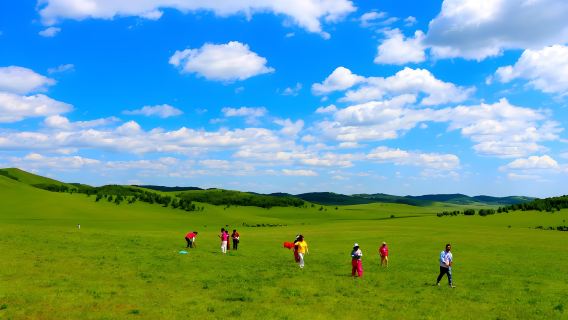
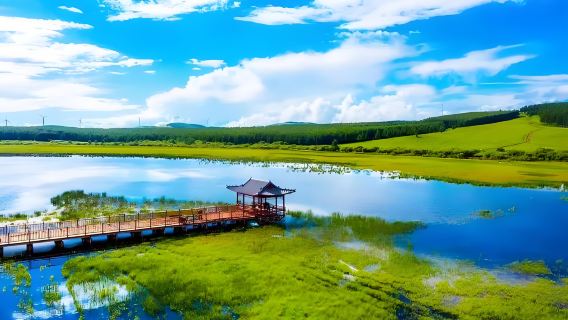
▲ The Bashang grassland is a geographical concept, which mainly covers parts of Hebei and Inner Mongolia to the north of Hebei in terms of tourism regions. It is primarily divided into areas such as Weichang Bashang (Mulan Weichang (“Hunting Ground”)), Fengning Bashang, Zhangbei Bashang, and Guyuan Bashang. Mulan Weichang (“Hunting Ground”) was where the Qing emperors conducted their "Mulan autumn hunting" activities. Today, it is no longer a royal hunting ground but has become a famous tourist destination. However, it is not a single attraction or scenic spot. Mulan Weichang is mainly divided into four major attractions: Saihanba, Yudaokou, Ulan Butong, and Hongsongwa. A boundary river further divides Mulan Weichang into two parts: Hebei and Inner Mongolia. The attractions in the Hebei section include Saihanba, Yudaokou, and Hongsongwa, while the attraction in the Inner Mongolia section is Ulan Butong.

▲ Saihanba is located at the northern end of Weichang county in Chengde, an ecological miracle right at Chengde's doorstep. It is not only a national forest park but also a "greener great wall" built by three generations with their youth on the desert.

▲ The charm of Ulan Butong lies in its undulating hilly terrain, renowned as the "European-style grassland scenic area" and also famous as an "open-air film set". Terrain features: A typical hilly grassland. Instead of endless flatlands, it consists of gently rolling meadows, vast birch forests, sandy areas, and lakes (paozi). This highly layered topography is particularly ideal for capturing stunning photographic masterpieces.