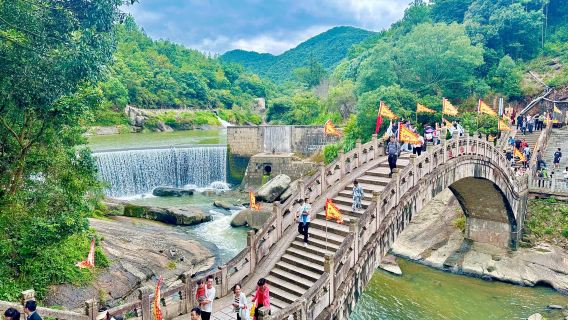
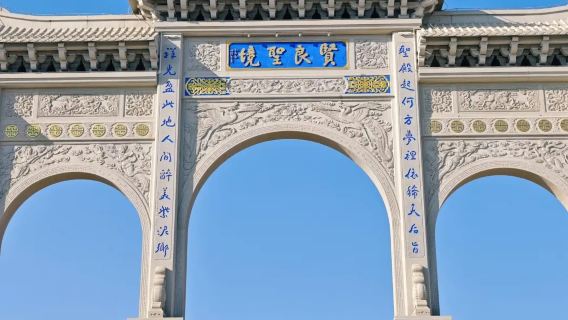
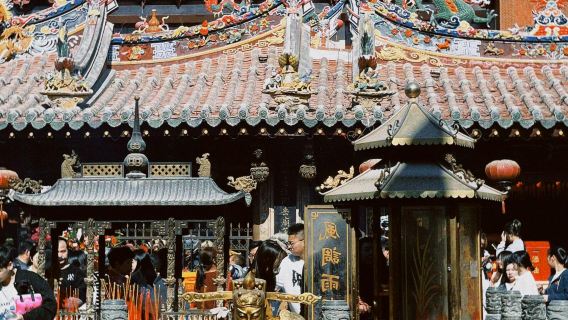
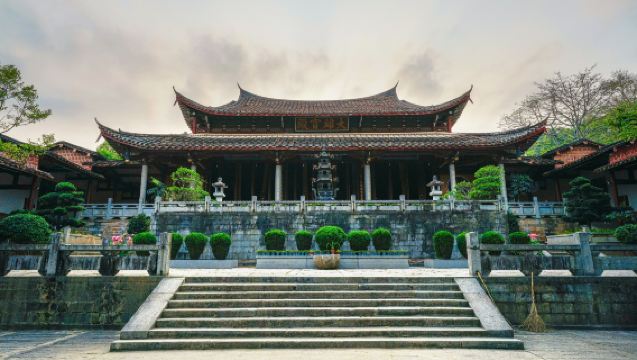
▲ Entrance of Mazu Gedianji The granite archway mountain gate, with "Mazu Gedianji" inscribed on the lintel, flanked by couplets, glazed flying eaves, and stone lions guarding the entrance, marks the starting point of the entire temple complex.

▲ Archway A three-bay, four-pillar soaring stone archway with stone lions standing at the base of the pillars serves as the second gate to the temple complex, representing a classic example of Lingnan stone architecture.

▲ First hall of the sacred mountain (main hall) The main hall of the A-Ma Temple, also known as the first hall of the divine mountain, features verifiable Ming Dynasty stone carvings and is dedicated to the sea goddess Mazu, with stone walls paired with stained glass windows.


▲ Zhengjue Chan Monastery A courtyard-style Lingnan architecture temple, with giant hanging incense coils and swirling smoke, serves as the primary worship site for local devotees.

▲ Hongren Hall The earliest small stone hall in the temple was directly carved from natural rock, featuring a compact and primitive space.

▲ Foreign ship rock & cliff inscriptions The temple's wonder stone features a Ming Dynasty stone carving of a Fujian-style sailing boat, inscribed with "favorable for crossing great rivers"; the stone wall is covered with inscriptions by literati of successive dynasties, bearing witness to maritime trade.

▲ Guanyin temple Located at the highest point of the temple area, it enshrines Guanyin and offers a panoramic view of the inner harbor from above.

▲ ## Praça da Barra (Wave pebble square) The Portuguese-style black and white cobblestone pavement with wave patterns is a symbolic square representing the fusion of Chinese and Western cultures, where the Portuguese once landed in nearby waters.