
Things to do in Dangtu
Explore top experiences
Top 10 attractions in Dangtu


Tianmen Mountain
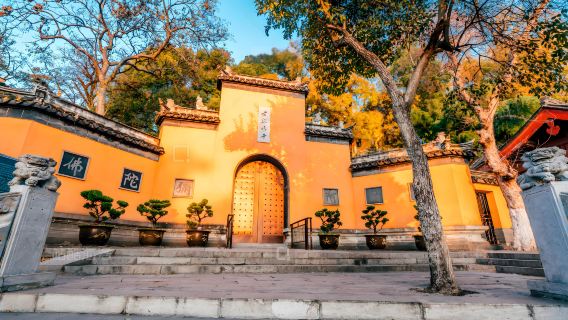
Tianmen Mountain is located in Daqiao Town, Jiujiang District, Wuhu City. For thousands of years, Tianmen Mountain has attracted celebrities and poets of all dynasties with its unique mountain-shaped water potential and rich historical and cultural heritage. When I traveled here, I left the well-known quatrain "Looking at Tianmen Mountain": "Tianmen interrupts the opening of the Chu River, the clear water flows eastward here, and the green mountains on both sides of the strait face each other, and the lonely sails come to the edge of the sun." There are two rare cultural landscapes at the foot of Tianmen Mountain. The first is Tianmen Academy with a long history. It was founded in 1246 AD. It is equally famous as Jixi Guizhi Academy, Yingzhou West Lake Academy and Shexian Ziyang Academy. The second is the unique Bronze Buddha Temple, which is surrounded by mountains and rivers and has excellent scenery. For many years, it has attracted believers from all over the country to come to burn incense and worship Buddha. Therefore, it was rated as one of the new ten scenic spots in Wuhu City, "Tianmen Smoke Waves" Tianmen Mountain is the collective name of East and West Liangshan.Wuhu · 14.7km from Dangtu

Ma'anshan Museum
Ma'anshan City Ma'anshan Museum is located in the beautiful Municipal Park Cultural Center, integrated with the library and the Grand Theater. Its exquisite architectural design blends with the ecological environment and is shaded by greenery. The museum was established in 1989 and is a local comprehensive museum integrating collection, research and exhibition. The construction of the new museum started in 2006 and opened on October 1, 2008. The building area is nearly 11,000 square meters, including 3,000 square meters of exhibition area, 400 square meters of cinema area, and 3,000 square meters of leisure auxiliary building. There are nearly 10,000 pieces (sets) of various cultural relics in the collection. In September 2018, the China Museum Association decided to agree that Ma'anshan Museum was a national second-level museum.Ma'anshan · 10.4km from Dangtu

West Lake
West Lake is undoubtedly the epitome of Hangzhou's beauty. The famous "Ten scenes of West Lake" surround its shores, where nature and culture complement each other, forming the core area of Hangzhou tourism. You don't need to visit every attraction - instead, spend half a day or a full day strolling along the lake. However you choose to enjoy it, the experience will surely lift your spirits. West Lake is the core attraction of Hangzhou, surrounded by clouds and mountains on three sides and the city on one side. The Su Causeway and Bai Causeway stretch across the lake, dividing it into several water areas. The lakeside scenery is highlighted by the "Ten Scenes of West Lake" from the Southern Song Dynasty, along with the later "New Ten Scenes" and "Three Additional Scenes," featuring over a hundred attractions along the shore and mountains. Pavilions, temples, pagodas, gardens, causeways, and islands complement the distant mountains and nearby waters, while legends like the Broken Bridge where Lady White Snake met Xu Xian add a layer of storytelling to the landscape. West Lake extends east from Songmuchang in Hangzhou and the north of Baolu Road turning to Shaoniangong Square, passing Baisha Road, Huancheng West Road, Hubin Road, and Nanshan Road to the south of Wansong Ridge, covering all attractions including Wu Mountain, Ziyang Mountain, and Yunju Mountain. To the south, it stretches from Gulou along the eastern foothills of Wu Mountain, Ziyang Mountain, and Yunju Mountain, passing Fengshanmen and Fenghuangshan Road, then following the West Lake water diversion channel to the north bank of the Qiantang River, turning to the Coral Sand Reservoir and ending north of Liufangling. To the west, it runs from Liufangling, Zhugan Mountain, Jiuqu Ridge, and Mingren Ridge to Meiren Peak, Beigaofeng, Lingfeng Mountain, and east of the ridge line of Laohe Mountain. To the north, it follows the foothills of Laohe Mountain (west wall of Zhejiang University), turns 30 m north of Qingzhiwu Road, connects to Yugu Road, Zhejiang University Road, and Shuguang Road, ending south of Songmuchang. West Lake has over 100 attractions, renowned for its "Ten scenes of West Lake", "New ten scenes of West Lake" and "Three reviews · Ten scenes of West Lake". West Lake overview You can explore West Lake on foot, by cruise, on electric bikes, via self-drive, or by riding. Among these, electric bikes are the most convenient and effortless option, with hop-on-hop-off sightseeing vehicles circling the entire lake. Riding along the lakeshore is romantic and leisurely, with many public bike rental spots available. For a boat tour, there are nearly 10 docks around the lake offering various vessels and routes. We highly recommend taking a cruise to Three Pools Mirroring the Moon at the lake center while enjoying the scenic views. Alternatively, you can hail a hand-rowed boat for a more flexible experience with a boatman guiding your tour. North line scenery The north shore of West Lake gathers quite a few attractions, usually starting from the remnant snow on broken bridge at the northeast corner and heading west all the way to Yuewang Temple. You can walk along Bai Causeway to Solitary Hill, visiting cultural attractions like Xiling Seal Engravers' Society, Zhejiang Provincial Museum, Chinese Seal Art Museum, and Zhongshan Park's Crane Pavilion. Enjoy authentic West Lake vinegar fish at Louwailou Restaurant, then cross Xiling Bridge to leave the island - Yuewang Temple and Breeze-ruffled lotus at Quyuan Garden are just a short distance away. If it's a summer day with strong sunlight, it is recommended to stroll along Beishan road, hiding under the dense shade of trees to admire the curve of Broken bridge and the swaying weeping willows on Bai causeway opposite. There are many entrances along the way leading to Precious stone hill, where you can hike for views, and descend to reach Yuewang temple. Yuewang square has many small shops for snacks, and the Impression West Lake show here in the evening is also worth watching. If you have ample time and energy, you can also head to Su causeway from here for a walk to enjoy the panoramic view of West Lake. Southeast coast (Lakeside-Nanshan Road) Another area with a concentration of attractions is the Hubin Road-Nanshan Road along the southeastern coast. Hubin Road is located at the junction between Hangzhou's urban area and the attraction, offering views of West Lake, a dock for West Lake cruises, and the iconic music fountain. The advantage of Hubin Road is its quick access from the attraction to the downtown business district, making it suitable for travelers with a tight itinerary to make a short stop. Head south from Hubin road and walk along Nanshan road, where you can visit attractions like Orioles singing in the willows, Long bridge, Leifeng pagoda, Evening bell at Nanping hill, and Viewing fish at flower harbor. The distance between adjacent attractions is not far, so you can walk or take a sightseeing bus or public transport, which are also convenient. You can arrange a day to visit a few of them according to your preference. Among them, Leifeng pagoda and Evening bell at Nanping hill can be visited in the evening. Listening to the bell at Jingci temple and overlooking the night view of West lake from Leifeng pagoda are both great experiences.China · Hangzhou

The Bund
The Bund is located along the Huangpu River, stretching approx. 1.5 km in length. As a symbolic attraction of Shanghai, it features a diverse collection of international architectural styles and the stunning night view of the Huangpu River as its highlights. The Bund stands with dozens of classical revival buildings in diverse styles, including the renowned Bank of China building, Shanghai Peace Hotel, Customs House, and HSBC building, recreating the former glory of the "Wall Street of the Far East." Surprisingly, these structures were neither designed by the same architect nor built in the same period, yet they possess a unique harmonious beauty. The Bund showcases various architectural styles, such as French classical, French chateau, and Gothic, which are significant historical sites and representative buildings of modern China, forming a stunning scenic line along the Huangpu River. As night falls, the neon lights on both banks illuminate the sky. Board a Huangpu River cruise or ferry and glide along the river, feeling the gentle breeze. On one side is The Bund, a witness to historical development, while on the other stands Lujiazui, Shanghai's modern landmark. The graceful silhouette of Waibaidu Bridge offers a fresh perspective to admire the beauty of this vibrant metropolis.China · Shanghai

Wuhu Ancient City
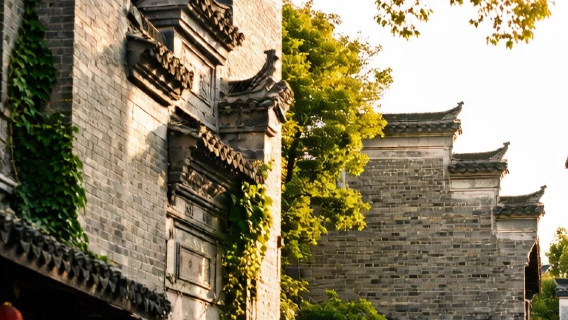
Wuhu Ancient Cityis situated in the old town on the north bank of the Qingyi River in Wuhu. The existing street layout largely retains the appearance from the reconstruction during the Wanli reign of the Ming Dynasty, where old houses and shops are intertwined with daily life. Old streets such as Huajie, Nanzheng Street, and Rulin Street preserve the Hui-style architecture with bluestone roads and white walls with black tiles. The carved doors and windows of the old houses along the streets are quite exquisite, with Nanzheng Street having been a bustling commercial street as early as the Ming Dynasty. The city is packed with sights: you can ascend the iconic Changhong Gate tower to overlook the rolling black-tiled roofs and the nearby Qingyi River; in the Wuhu County Yamen, you can see the main hall, the second hall, and the prison cells, where "courtroom trial" reenactments are often performed; the Rice Market Museum tells the story of Wuhu's past as one of China's "Four Major Rice Markets." The ancient city is ideal for admiring architectural details during the day, and the atmosphere becomes even more immersive at night when the lanterns are lit one by one. Consider entering around dusk to enjoy both the day and night views.Wuhu · 29.9km from Dangtu

Chang Jiang Ever-bright City
The Yangtze River City That Never Sleeps project integrates the development vitality and cultural characteristics of the Yangtze River Delta, and combines the unique landscape, cultural history, folk customs and intangible cultural heritage of Ma'anshan Caishiji Ecological Tourism Area. It is distributed in the "point-line-surface" of the block and revitalized through scene art performances. The Yangtze River City That Never Sleeps stands on the bank of the Yangtze River in Ma'anshan City, Anhui Province. The Attraction covers an area of 134 acres, with a total area of 89,332m and a total length of 1,100 meters. It is a comprehensive leisure tourism resort that integrates exquisite national trend scenes, light art interaction, performance art interpretation, technology experience, special food, Internet celebrity check-in, waterscape and water show naked-eye 3D hologram, and immersive parade performances. The Yangtze River Never Sleeps City project presents the culture, natural scenery and historical heritage of the 11 provinces in the Yangtze River Basin in a three-dimensional way through a new development thinking and model. Through the overall layout of one street, one volume, one park and four squares, the scene-based immersive experience creates an innovative scene space model with one scene and one entertainment at one step. It fully activates the night economy and makes Ma'anshan's "Yangtze River Never Sleeps City" bloom and dazzle.Ma'anshan · 10km from Dangtu

Zhuran Cemetery
Zhu Ran Cemetery, located in Yushan Township, south of the urban area, is the tomb of Zhu Ran, a general of the Three Kingdoms Soochow. Excavated in June 1984, many precious cultural relics were unearthed, and some lacquer wares filled the gap in the art history of the Three Kingdoms, and was listed as one of the top ten archaeological discoveries in China in the 1980s. There is a museum of cultural relics in the cemetery. The exhibition hall is an antique building in the style of the Han Dynasty. The museum is based on the tomb body, simple and dignified. The middle part of the hall in the museum is a tomb, and a coffin is placed in the cave. There are cultural relics unearthed from the tomb, pictures of Zhu Ran's tomb research, and Chinese and foreign documents. During the visit, tourists can appreciate the social style of the Three Kingdoms period more than 1700 years ago. The tomb passage is located in the south of the tomb pit and is stepped, with a total of 26 steps and a slope of 19 degrees. The tomb passage is 9.10 meters long, and the soil color is the same as that of the seal. The tomb pit is under the sealing soil, the upper mouth is 35 cm deep from the ground, and the shape of the tomb pit is irregular. The bottom of the pit is slightly smaller than the mouth of the pit, and it is 3.60 meters deep from the upper mouth of the tomb. The walls of the tomb are not smooth, and the pits are filled with gray-white soil. The tomb is located in the middle of the tomb pit and is built with bricks. Measured from the outside, the total length is 8.70 meters and the width is 3.54 meters. The floor tiles inside are paved with herringbone patterns, and the walls are laid in the "three-shun-one-ding" method. The "four-corner coupon entry" dome is lowered, and the altar is built with two layers of bricks on the left and right sides. A lacquered wooden coffin was placed in the room as a burial for his wife and concubines. The passage between the front and rear chambers is located on the left, and the shape and method of building are the same as the corridor. In the back room is a lacquered wooden coffin slightly larger than the front room, which is the burial utensil of the tomb owner Zhu Ran. The inner and outer surfaces of the wooden coffin are covered with a layer of linen, which is painted greasy. Black lacquer is used on the outside of the coffin, and red lacquer is used inside. More than 140 burial objects were unearthed in Zhu Ran's tomb, including lacquered wood, porcelain, pottery, and bronze, among which lacquered wood accounted for about 57 percent. Many lacquerware are painted with stories of characters and patterns of flora and fauna.Ma'anshan · 10.9km from Dangtu

Nanjing Confucius Temple
The Confucius Temple was originally built in the Song Dynasty to commemorate Confucius. It is located beside Gongyuan Street on the north bank of Qinhuai River. However the temple was destroyed and rebuilt several times. The current temple was rebuilt in 1987 after it was destroyed by Japanese Aggressors during WWII. Currently, the temple is the main scenic spot of the Qinhuai River Scenery. It also includes the China Imperial Examination Museum and Xue Gong (The Imperial Academy). At the Confucius Temple, you can admire a 6 meter high huge portrait of Confucius and 38 mural paintings reflecting the life story of Confucius.Nanjing · 57.1km from Dangtu

Confucius Temple-Qinhuai Scenic Area
The Confucius Temple-Qinhuai Scenic Area refers to the Qinhuai River area centered around the Confucius Temple, where the streets, alleys, residences, and historical sites along both banks form a continuous stretch. It has been a bustling and lively part of Nanjing since ancient times. The line "The swallows that skimmed by painted eaves in bygone days are dipping now among the humble homes' doorways" by Liu Yuxi describes this very place. The Wuyi Lane mentioned in the poem still lies hidden among the alleys near the Confucius Temple. Exploring history along the river is the highlight of this area: The Dacheng hall of Confucius temple stands by the water, with a towering screen wall across the Pan pond in front; the nearby Jiangnan examination hall was the imperial testing site for provincial exams during the Ming and Qing dynasties, now replaced by the China imperial examination museum; Zhan garden and Egret isle park both originated from the mansion gardens of Xu Da's family, a founding general of the Ming dynasty—the former also houses the Taiping heavenly kingdom history museum; scattered along both banks within walking distance are historical sites like Meixiang tower (former residence of "Peach blossom fan" heroine Li Xiangjun), the well-preserved Zhonghua gate with its urn-shaped defense system, Wu Jingzi's residence (author of "The scholars"), and ancient ferry relics like Taoye crossing, easily connected into a historical walking trail. Cuisine is also a signature feature of this area: "The eight Qinhuai delicacies" refer to sixteen famous dishes from eight time-honored snack restaurants, including Yongheyuan's crab-shell yellow sesame cakes and dried shrimp shreds, Qifangge's duck oil crispy cakes and sesame oil dried shreds, Jiangyouji's beef pot stickers, and Lianhu pastry shop's osmanthus-filled glutinous rice balls. The Confucius Temple area and Laomendong are lined with teahouses, snack shops, and various stores, offering plenty of opportunities to rest and grab a bite when tired, along with the chance to pick up some souvenirs. The highlight comes after nightfall: board a painted boat from the pier in front of the Confucius Temple, listen to the guide while admiring the white walls and black tiles illuminated by riverside lanterns—this is the classic "night mooring on the Qinhuai" experience. From Chinese New Year to the Lantern Festival each year, the Qinhuai River Lantern Festival (also known as the Jinling Lantern Festival), listed as a national intangible cultural heritage, takes place here. The Confucius Temple, Laomendong, and along the Qinhuai River are adorned with lanterns and decorations. "Visiting the Confucius Temple to see lanterns during New Year" remains a cherished tradition for Nanjing locals. Even on ordinary days, the area buzzes with cultural temple fairs, food festivals, and other celebrations, offering unique surprises in different seasons.Nanjing · 57.1km from Dangtu

Nanjing Museum
Nanjing Museum is located at the southern foot of Purple Mountain and north of Zhongshan Gate. The museum is one of the earliest to be established in China. Here, you can see ancient artifacts like gold-threaded robes such as those depicted in “Grave Robbers' Chronicles” and you can enjoy exquisite painting and calligraphy and Ming treasures such as a gold-plated stupa. You can take a trip through time and even walk along the streets of the Warlord Era.Nanjing · 60.7km from Dangtu
Experiences you can't miss in Dangtu
Featured Day tours in Dangtu
View all Day tours
5% off
Limited-time sale
FromMXN$3,358.53MXN$3,535.3
5.0/5
· 5 reviews· 105 bookedFree cancellation
FromMXN$542.93

5.0/5
· 10 reviews· 52 bookedFree cancellation
Instant confirmation
Book now for tomorrow
FromMXN$4,557.77
5.0/5
· 9 reviews· 28 bookedFree cancellation
Instant confirmation
Book now for tomorrow
FromMXN$4,557.77
5.0/5
· 3 reviews· 21 bookedFree cancellation
Instant confirmation
Book now for tomorrow
Save MXN$10.2
FromMXN$1,009.84MXN$1,020.04
10% off
Limited-time sale
FromMXN$2,961.38MXN$3,290.43
Free cancellation
Instant confirmation
Book now for tomorrow
Save MXN$16.38
FromMXN$1,622.26MXN$1,638.64
5.0/5
· 1 reviewFree cancellation
FromMXN$4,112.77
Featured Food & drink in Dangtu
View all Food & drink
5.0/5
· 1 review· 48 bookedFree cancellation
Book now for tomorrow
FromMXN$823.66
5.0/5
· 3 reviews· 31 bookedFree cancellation
Instant confirmation
Book now for tomorrow
67 travellers saved
FromMXN$331.68
FromMXN$2,139.31
23 booked
Free cancellation
Book now for tomorrow
FromMXN$309.57
FromMXN$1,923.72
5.0/5
· 4 reviews· 26 bookedFree cancellation
Instant confirmation
Book now for tomorrow
FromMXN$270.87
Featured Cultural experiences in Dangtu
View all Cultural experiences
4.4/5
· 5 reviews· 81 bookedFree cancellation
Instant confirmation
Book now for tomorrow
FromMXN$124.38
10% off
Limited-time sale
FromMXN$2,961.38MXN$3,290.43
10% off
Limited-time sale
FromMXN$3,405.6MXN$3,784

Free cancellation
Instant confirmation
Book now for tomorrow
FromMXN$1,755.12
Instant confirmation
Book now for tomorrow
FromMXN$4,557.77
Free things to do in Dangtu
Tianmen Mountain
Wuhu · 14.7km from DangtuMa'anshan Museum
Ma'anshan · 10.4km from DangtuWest Lake
China · HangzhouThe Bund
China · ShanghaiWuhu Ancient City
Wuhu · 29.9km from DangtuChang Jiang Ever-bright City
Ma'anshan · 10km from DangtuZhuran Cemetery
Ma'anshan · 10.9km from DangtuNanjing Confucius Temple
Nanjing · 57.1km from DangtuImmediate access, Book now for today, Cancel anytimeConfucius Temple-Qinhuai Scenic Area
Nanjing · 57.1km from DangtuNanjing Museum
Nanjing · 60.7km from Dangtu
What travellers say about Dangtu

小小导游爱旅游16 December 2024
4.0
Tianmen Mountain, a small scenic spot, is famous for Li Bai's poem "Looking at Tianmen Mountain". Here the mountains are majestic, the river is gurgling, and the scenery on both sides is endless. Standing on the top of the mountain, you can overlook the entire river and feel the poetic feeling of "the green mountains on both sides face each other, and a lone sail comes from the sun".
Tianmen Mountain

qiner133 August 2025
4.0
Most of the porcelain is from the same period as the Six Dynasties Museum. Geographically, it's very close, no wonder it's called Nan Ge's Little Pony. I was surprised to see so many pieces that weren't so rigid and had distinctly period-specific features. They were much more lively than what I saw in Nanjing. Perhaps the local customs here are more relaxed. Ma'anshan doesn't have many attractions, but this place is worth spending two hours exploring.
Ma'anshan Museum

Anonymous user14 October 2026
5.0
My second visit to West Lake was great; the boat tour was excellent. The dock was easy to find, the staff were very friendly, provided clear explanations, and helped with any issues. There were also sightseeing buses, which were nice but a bit pricey. Taking the boat tour and then walking around was both perfectly fine.
West Lake

Aлi13 October 2026
5.0
Shanghai After Dark — The Bund Never Sleeps ✨“Where the river reflects a thousand city lights and the future rises above a timeless waterfront. The Bund is more than a view — it’s Shanghai at its most magical, where elegance, ambition, and endless dreams meet.” 🌃❤
The Bund

溪蒻3 July 2025
5.0
One of my favorite small attractions in Wuhu Ancient City is Zhanchuan Bookstore, which was originally a government office in the late Qing Dynasty and is a two-story Western-style house. When you walk into the bookstore, it is hard not to be attracted by the brightly colored and beautifully patterned floor-to-ceiling glass windows. The Western-style windows and the undecorated mottled walls form an indescribable harmonious beauty. Standing there, holding a book in hand, you can quietly feel the flow of time and the precipitation of years.
Wuhu Ancient City

M49***625 May 2025
4.0
I went to see it during the May Day holiday. Some of the performances were nice, but they were too short. Almost all the activities inside were for children. I can only say that the performances were worth the money. It was still very beautiful at night, especially the fountain, which was really nice to see.
Chang Jiang Ever-bright City

M63***7319 September 2021
5.0
The Zhu Ran Tomb Museum in Ma'anshan, which is not even a popular attraction in the local area, should have been heard of by few people nationwide. But in the eyes of a poor student who once studied art history for five years, this museum can be regarded as one of the most low-key treasures of art history in China.
Zhu Ran, who participated in the operation to capture Guan Yu and set fire to Liu Bei with Lu Xun, was a little famous in the Three Kingdoms. But the importance of the museum does not lie in the identity of the tomb owner, but in the batch of lacquerware unearthed in the tomb.
We know that the history of Chinese painting is long, but the works that are really painted on paper or silk are basically no earlier than the Tang Dynasty because the materials are very difficult to preserve. There are many records of paintings from the Eastern Han Dynasty to the Three Kingdoms period in ancient books, and even many names of painters are left, but there has always been a lack of factual basis. The lacquerware in Zhu Ran's tomb directly fills the gap in the art history of this period.
This batch of lacquerware was a high-end handicraft at the time. One of them has the words "Shujun Zuolao" on the back, which should be a product customized by the Shu Han workshop for Dongwu customers at that time. Lacquer paintings are mainly based on figures, some depicting court banquets, singing and dancing, and aristocratic life scenes, as well as historical stories, which are a true display of the painting techniques of the time. The figures have rounded lines and different movements and expressions. Compared with the silk paintings or brick carvings of the Western Han Dynasty, they are more vivid and vivid. They are similar to the style of drum-beating and rapping figurines of the earlier period, allowing people to get a glimpse of the painting art style of the Eastern Han Dynasty and the Three Kingdoms period.
This time, we took advantage of the Mid-Autumn Festival holiday to visit. The museum is in the center of Ma'anshan, but it is unusually quiet. There were only two visitors throughout the whole process. Friends who are interested in art, if you travel to Ma'anshan, you must not miss it and go to the scene to appreciate the Chinese painting treasures 1,800 years ago.
Zhuran Cemetery

青水月19 September 2026
4.0
The Confucius Temple and Jiangnan Examination Hall along the Qinhuai River in Nanjing offer stunning nighttime views. A stroll through them in the gentle autumn breeze is incredibly pleasant. There are free performances and some attractions that charge admission, so you can choose what to do. In short, anyone visiting Nanjing should definitely check them out.
Nanjing Confucius Temple
Anonymous user7 October 2026
4.0
If you haven't been there, it's worth a visit. It's a famous spot in Nanjing, always packed with people. As for the boat tour, if you haven't been before, you can take a ride, but it's probably a one-time thing, so the price isn't great. It's a 40-minute round trip on the boat, listening to the announcements, watching the night view of the Qinhuai River, with its many bridges along the banks. You can learn about history, see the waterscape and night view, and soak in the atmosphere.
Confucius Temple-Qinhuai Scenic Area

summerchuan5 October 2026
5.0
This tour guide, Zhang Yi, was exceptionally dedicated. The scheduled 2-hour tour started at 9:30 AM, but actually lasted until around 12:30 PM. His explanations were very professional and detailed, and he interacted with the children throughout, answering questions and even giving them gifts.
The most expensive private tour I booked for Sanxingdui last time, featuring the character Sanmao, had a tour guide who rushed through the entire tour, barely touching the last minute. This small group of 15 was definitely superior.
Nanjing Museum


