
Things to do in Cangzhou
Explore top experiences
Top 10 attractions in Cangzhou


China Grand Canal Intangible Cultural Heritage Exhibition Hall
The China Grand Canal Intangible Cultural Heritage Exhibition Hall is located within the Cangzhou Garden Expo Park in Cangzhou City, Hebei Province. It serves as one of the main components of the "One Park, One Center" concept in the China Grand Canal Intangible Cultural Heritage Park and stands as one of the largest national-level intangible cultural heritage exhibition sites along the Grand Canal. With a total construction area of 31,000㎡ and an exhibition space of approximately 15,885㎡, the grand and well-proportioned Sui-Tang style architecture harmonizes beautifully with the park's winding streams and picturesque landscape, creating an open and artistic overall space that integrates "palace, garden, and water."Cangzhou · 3.9km from downtown

Nanchuan Old Street
The traditional buildings in Nanchuan Old Street are full of ancient elegance, with shops lining the street and tourists crowding on the streets, recreating the prosperous scene along the ancient canal.Cangzhou · 1.4km from downtown

Cangzhou Museum
Cangzhou Museum is located on Shanghai Road, Yunhe District, Cangzhou City, south of the Municipal Government Service Center, covering an area of 57 acres. It is 24 meters high and is divided into a semi-underground floor and the first to fourth floors. The overall layout is 11 exhibition halls from the first to the third floor.Cangzhou · 3.6km from downtown

Qingfeng Tower
Qingfeng Tower was rebuilt based on ancient records and completed in 1992. It has one underground floor and five above-ground floors, with 12 corner eaves on each of the second, third, and fourth floors. It is the only replica of an ancient building along the Cangzhou section of the Beijing-Hangzhou Grand Canal and one of Cangzhou's architectural and cultural landmarks.Cangzhou · 1.3km from downtown

Tiefo Temple
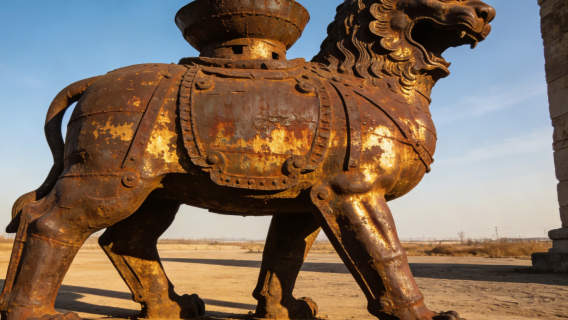
Dongguang Iron Buddha Temple is located in the county seat of Dongguang County, Cangzhou City. It is a famous Buddhist temple in Cangzhou with a history of thousands of years. In Cangzhou, there has been a saying that "Cangzhou Lion Jingzhou Pagoda, Dongguang County's Iron Bodhisattva" has been around since ancient times. Local people will choose this place to pray to Buddha. The Iron Buddha Temple was built in the Song Dynasty and was destroyed later. The monuments and ancient iron Buddhas in the temple have long since disappeared. Today's Iron Buddha Temple was rebuilt in the 1990s. However, the temple after construction is solemn and atmospheric, and there are many myths and legends during the construction, which makes the Tiefo Temple still flourishing today. When playing in the Iron Buddha Temple, you can focus on watching the huge Iron Buddha in the temple. The Iron Buddha is about 8 meters high, which is very spectacular. There are also many Buddhist halls in the temple, which can be visited one by one. In addition, there is the memorial hall of the famous Peking Opera star Xun Huisheng, which you can enter to find out. When offering incense and kowtowing in the temple, you are usually asked to give a little incense money, about 10-20 yuan per person.Dongguang · 1.4km from downtown

Shicheng Park
Lion City Park is located on Yingbin South Avenue in Cangzhou City. The park is about 600 meters long from north to south and 300 meters long from east to west. It covers an area of 251 mu and has a total investment of 130 million yuan. 72 plant species are planned to be planted in the landscape area, night scene lighting, etc., including precious trees and shrubs such as ginkgo, spruce and white bark pine.Cangzhou · 2.5km from downtown

National Museum of China
The National Museum of China is an institution that, on behalf of the country, collects, studies, displays and interprets representative material evidence that fully reflects China's fine traditional culture and advanced socialist culture. It is a national palace of history, culture and art and a cultural living room. The National Museum of China currently has more than 1.4 million collections, covering ancient cultural relics, modern and contemporary cultural relics, rare books and ancient books, and artworks. Among them, there are 815,000 pieces (sets) of ancient cultural relics, 340,000 pieces (sets) of modern and contemporary cultural relics, more than 240,000 pieces (volumes) of rare books and ancient books, and a total of nearly 6,000 first-class cultural relics. In recent years, especially since the 19th National Congress of the Communist Party of China, the National Museum of China has increased its efforts to collect representative material evidence reflecting contemporary advanced culture, and publicly collected cultural relics collections from the society, collecting an average of about 50 sets of ancient cultural relics and more than 1,000 sets of modern and contemporary cultural relics, physical objects and artworks each year. The exhibitions of the National Museum of China include three series: basic exhibitions, special exhibitions, and temporary exhibitions, forming a three-dimensional exhibition system covering theme exhibitions, basic exhibitions, special exhibitions, and temporary exhibitions. Among them, "Ancient China", "Road to Rejuvenation" and "Road to Rejuvenation in the New Era" are the basic exhibitions of the National Museum, and are also important positions for promoting Chinese traditional culture, advanced socialist culture, and cultivating and practicing the core socialist values. The special exhibitions are mainly based on the collection of cultural relics, including more than ten special exhibitions such as ancient Chinese bronzes, Buddhist statues, jades, porcelains, modern classic works of art, and African wood carvings. Temporary exhibitions include two categories: self-planned exhibitions and introduced exchange exhibitions, covering historical culture, fine cultural relics, archaeological discoveries, classic works of art, regional culture, international exchanges and other aspects, with an average of more than 40 exhibitions held each year. The National Museum of China has rich research resources, a solid research foundation and strong research capabilities, and is the industry leader in the development of the domestic museum industry. Since 2018, in accordance with the principle of "not seeking to collect but to exhibit, open cooperation, mutual benefit and win-win", we have established strategic cooperative relations with many cultural and museum institutions, institutes, universities and colleges at home and abroad, jointly carried out academic research, held high-quality cultural relics exhibitions, convened seminars, launched postdoctoral research workstations, and took the lead in establishing two international organizations, the BRICS Museum Alliance and the Silk Road Museum Alliance, striving to play a greater role and make greater contributions in promoting the core socialist values, enhancing cultural confidence, promoting exchanges and mutual learning between Chinese and foreign civilizations, and building a socialist cultural power.China · Beijing

Cangzhou Confucian Temple
Cangzhou Confucian Temple is located at No. 9, Xiaoshi Street, Canal District, Cangzhou City. It was built in the early Ming Dynasty. There are three existing buildings and east-west corridors. It is the only ancient building with beam-frame and bucket-arch structure in Cangzhou. It is a key cultural relic protection unit in Cangzhou.Cangzhou · 1.7km from downtown

Daming Lake Scenic Area
Daming Lake Scenic Area is located in the northeast of downtown Jinan, the northern part of the Old Town. It is a park that integrates bodies of water, garden landscape, and ancient architecture. Daming Lake is in the center of the park. Or one could say that the park is built along the lake. Daming Lake is a natural lake. The water source comes from many springs in the city. It has a long history, dating back to the Northern Wei Dynasty. In the park, you can visit the Lao She Memorial. In summer, you can enjoy the lotus blossoms in the garden.China · Jinan

Ancient Town of Qingzhou
Qingzhou is one of the ancient nine provinces of China. Since the early Western Han Dynasty, six cities—Guang County, Guanggu City, Dongyang City, Nanyang City, Dongguan Weizi City, and Qicheng—were successively built on this land, with a continuous urban history spanning over two thousand years. Today, the Ancient Town of Qingzhou has been comprehensively protected and restored, forming three major districts: the Beiguan ancient block in Dongyang City, the Ouyuan historical and cultural block and the South Gate block in Nanyang City, and the Zhaode ancient block in Dongguan Weizi City. Government buildings, traditional residences, and classical gardens are scattered across hundreds of ancient streets and alleys, such as North Gate Street and East Gate Street, with their blue bricks and dark tiles showcasing distinct Ming and Qing architectural styles. Unlike many entirely reconstructed ancient towns, this is a "living ancient town," where original residents still live in the old streets and alleys, and intangible cultural heritage items like the cuoqin are passed down on the streets, blending the vibrancy of daily life with ancient charm. A visit can begin by ascending the Fucai Gate Tower at the south gate of ancient Nanyang City for a panoramic view of the town's sea of dark tiles. Ouyuan is a preserved classical garden within the town, originally the eastern garden of the Ming Dynasty's Prince of Heng's residence and later the private garden of Feng Pu, a grand secretary during the Qing Kangxi era. Its three-peak rockery embodies the grandeur of northern landscapes. Figures like Fan Zhongyan and Ouyang Xiu once served as officials here, and Li Qingzhao lived in Qingzhou for over a decade, composing numerous ci poems. Historical relics like the Qingzhou Prefecture Examination Hall are also scattered throughout the streets, where traces of this cultural legacy can often be encountered. The main street is densely lined with shops, but to avoid crowds, one can turn into the side alleys or head straight to Zhaode Ancient Street—where rows of Ming and Qing-era houses remain, with wooden doors, stone steps, and flagstone paths offering a glimpse of old Qingzhou's daily life.China · Qingzhou
Experiences you can't miss in Cangzhou
Featured Day tours in Cangzhou
View all Day tours
5% off
Limited-time sale
FromINR 14,663.57INR 15,435.34
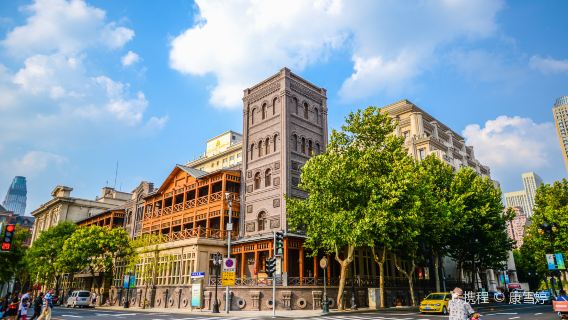
4.8/5
· 54 reviews· 266 bookedFree cancellation
Instant confirmation
Book now for tomorrow
92.6% of travelers recommend
FromINR 8,506.11
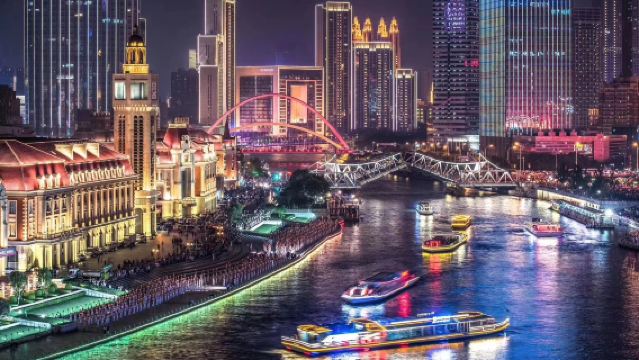
4.3/5
· 14 reviews· 200 bookedFree cancellation
Instant confirmation
137 travellers saved
FromINR 9,926.16
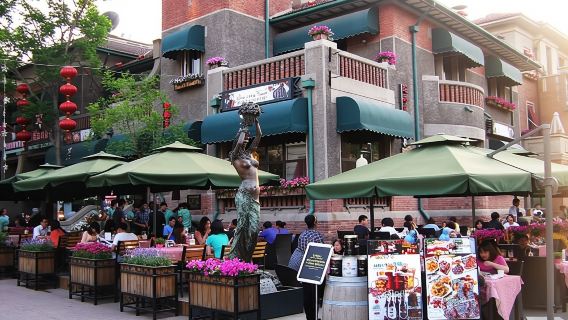
4.8/5
· 19 reviews· 34 bookedFree cancellation
Instant confirmation
Book now for tomorrow
FromINR 7,086.06
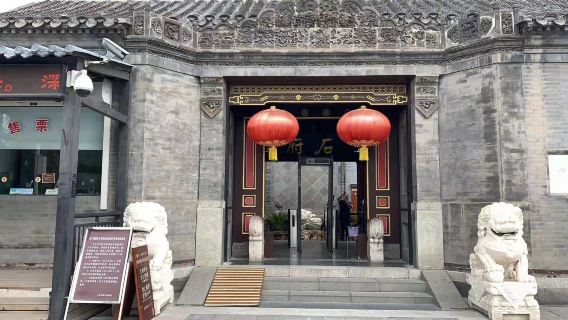
5.0/5
· 7 reviews· 24 bookedFree cancellation
Instant confirmation
Book now for tomorrow
78 travellers saved
FromINR 8,506.11
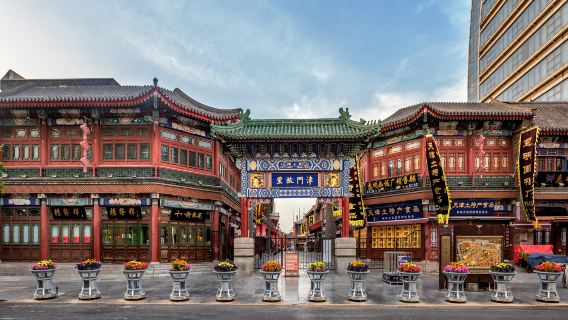
4.7/5
· 11 reviews· 36 bookedFree cancellation
Instant confirmation
Book now for tomorrow
241 travellers saved
FromINR 14,030.11
![[Must-Visit] Tianjin Eye, Porcelain House, Zhang Xueliang, 5 Avenues, Tianjin Ancient Culture Street One-Day Group Tour](https://ak-d.tripcdn.com/images/0354712000sgn0vwdFE03_C_568_320.jpg?_fr=wc)
5.0/5
· 1 reviewFree cancellation
Instant confirmation
Book now for tomorrow
Save INR 33.89
FromINR 3,354.87INR 3,388.76
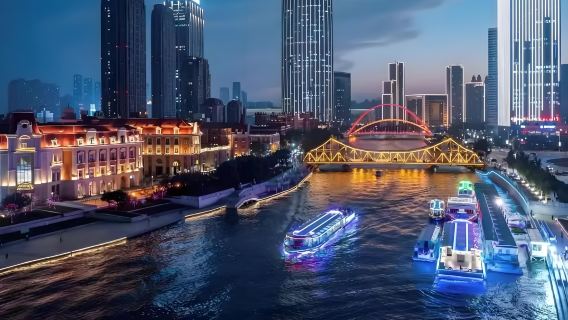
4.9/5
· 21 reviews· 110 bookedFree cancellation
Instant confirmation
Book now for tomorrow
21 consecutive positive reviews
FromINR 9,940.36
Featured Cultural experiences in Cangzhou
View all Cultural experiences
5.0/5
· 1 reviewFree cancellation
Book now for tomorrow
FromINR 568.03
Free cancellation
Book now for tomorrow
FromINR 2,002.28
Free cancellation
Instant confirmation
Book now for tomorrow
FromINR 9,793.46
Free cancellation
Book now for today
FromINR 4,245.96

FromINR 12,307.12
![Tianjin poetic and picturesque China experience ticket [Nanjing Road branch] (experience floating motion + immersive new experience)](https://ak-d.tripcdn.com/images//0580312000qoqgdmx126E_C_568_320.jpg?_fr=wc)
Free cancellation
Instant confirmation
Book now for tomorrow
FromINR 568.03

Free cancellation
Instant confirmation
Book now for tomorrow
FromINR 568.03
Free things to do in Cangzhou
China Grand Canal Intangible Cultural Heritage Exhibition Hall
Cangzhou · 3.9km from downtownNanchuan Old Street
Cangzhou · 1.4km from downtownCangzhou Museum
Cangzhou · 3.6km from downtownQingfeng Tower
Cangzhou · 1.3km from downtownTiefo Temple
Dongguang · 1.4km from downtownShicheng Park
Cangzhou · 2.5km from downtownNational Museum of China
China · BeijingCangzhou Confucian Temple
Cangzhou · 1.7km from downtownDaming Lake Scenic Area
China · JinanAncient Town of Qingzhou
China · QingzhouImmediate access, Book now for today, Cancel anytime
What travellers say about Cangzhou

M23***9619 September 2026
5.0
It's a worthwhile exhibition hall to visit; you can make a reservation directly. The main attraction is the hall on the first floor, which showcases the unique culture of the areas along the Grand Canal. It features many interactive experiences, is highly engaging, and allows you to learn about the distinctive culture of Cangzhou.
China Grand Canal Intangible Cultural Heritage Exhibition Hall

冰咖啡彩虹糖23 August 2026
5.0
The Grand Canal, flowing gently for millennia, has nourished Cangzhou, Hebei Province. A vital node city along the Grand Canal, the canal flows through eight counties (cities and districts) within Cangzhou, stretching 216 kilometers. This ancient canal, flowing for millennia, has nurtured the unique character of Nanchuan Old Street in Cangzhou. This ancient street, thriving along the river, carries the memories of a century of canal commerce and embodies the authentic, vibrant life of Cangzhou. Today, this old street transcends its outdated framework, blending its ancient charm with modern business models, cultural trends, and consumer experiences, becoming a vivid microcosm of the coexistence of old and new, and the enduring vitality of Cangzhou.
Nanchuan Old Street

被驯服的熊孩纸22 February 2026
5.0
A Hundred Lions Offering Auspiciousness: Encountering a Thousand Years of Stone Carving Art at the Cangzhou Museum 🐯
Stepping into the "A Hundred Lions Offering Auspiciousness—Exhibition of Chinese Stone Carving Art Through the Ages" at the Cangzhou Museum is like opening a door to a thousand years of history. In the exhibition hall, stone lions, some majestic, some endearing, some lively, stand quietly. They are not merely works of stone art, but also a condensed history of the integration and aesthetic evolution of Chinese culture.
I. First Impression: A Hundred Lions Opening with Impressive Power
Upon entering the exhibition hall, the four large characters "A Hundred Lions Offering Auspiciousness" on a huge red backdrop immediately catch the eye. The accompanying preface eloquently explains: "Lions are not native to China. Introduced to China from the Western Regions during the Han Dynasty, their image has been continuously reshaped by art over the past two thousand years..."
This immediately made me understand that each stone lion before me is not merely a symbol of protection, but a living fossil of the fusion of Chinese and foreign cultures.
II. Across a Millennium: The Unique Spirit of Stone Lions from Different Dynasties
1. Eastern Han Dynasty Bai Ze: Simple and Unadorned, the First Appearance of an Auspicious Beast
On the left side of the exhibition hall, the Eastern Han Dynasty stone beast "Bai Ze," with its simple lines and unadorned shape, laid the foundation for early auspicious beasts. Its body is sturdy, and its facial lines are refined. Although lacking the complexity of later stone lions, it exudes a primal sense of power, as if telling ancient myths and legends.
2. Sui Dynasty Lion: Majestic and Solemn, Connecting the Past and the Future
The Sui Dynasty stone lion blends majesty and agility. It is generally in a crouching position, with its forelimbs upright, five distinct claws, and an open mouth revealing teeth, appearing majestic and solemn. The broad, raised neck and chest, along with the shallowly carved spiral curls of mane, highlight its fluffy texture, inheriting the grandeur of the Northern Dynasties while also ushering in the splendor of the Tang Dynasty.
3. Tang Dynasty Lion: Powerful and Unrestrained, the Grandeur of a Prosperous Era
The Tang Dynasty represents the pinnacle of stone lion art. The Tang Dynasty lions in the display case, with their full, powerful muscles, stand tall and proud, exuding confidence and strength. As the description states, lions, as an introduced species, were thoroughly deified in the Tang Dynasty, becoming a symbol of imperial majesty and openness. Every muscle seems to speak of the grandeur of the Tang Dynasty, as depicted in the poem, "The palace gates open to the heavens, and all nations pay homage to the emperor."
4. Song Dynasty Lions: Gentle and Graceful, Embracing the Warmth of Everyday Life
Song Dynasty stone lions shed the domineering air of the Tang Dynasty, becoming more diverse and relatable. I saw a Song Dynasty stone sculpture depicting a female lion with three cubs, symbolizing "Grand Tutor and Junior Tutor," "May all your wishes come true," and "May your offspring prosper." Their forms are no longer aloof guardians, but rather embody the people's prayers for a better life, full of everyday life.
5. Yuan Dynasty Lions: Strength with Grace, the Majesty of the Grasslands
Yuan Dynasty stone lions possess a balance of strength and grace. The proportions of their bodies are harmonious, and the undulating muscles are prominently displayed. The flowing, wavy mane and five curls on each cheek showcase the unique style of Yuan Dynasty stone carving. The Yuan lion from Fujian, with Arabic inscriptions on its back, is a direct testament to the cultural exchange between East and West along the Maritime Silk Road.
6. Ming Dynasty Lions: Standardized Form, Imperial Grandeur
Ming Dynasty stone lions, especially the white marble lions unearthed in Xingji Town, Cangzhou, with their heads held high and noses curled, crouching on rectangular bases, are characterized by their standardized forms and exquisite craftsmanship, representing the highest level of Ming Dynasty stone carving. Their image has become highly stylized, a clear symbol of power and hierarchy.
7. Qing Dynasty Lions: Large Head, Small Body, Endearingly Cumbersome
By the Qing Dynasty, the style of stone lions had largely settled: large heads, narrow chests, short limbs, and oval-shaped eyes, somewhat resembling "lions," giving them an endearingly cumbersome appearance. While their ornamentation is complex, the carving is somewhat rougher. They appeared more frequently in gardens, mansions, and folk places, becoming a widespread auspicious symbol.
III. The Finishing Touch: A Dialogue Between Calligraphy and Stone Carving
In the exhibition hall, a huge calligraphy work of the character "lion" hangs above a stone lion. The flowing strokes create a wonderful resonance with the powerful texture of the stone carving below. This dialogue between art and object elevates the artistic style of the entire exhibition and allows me to feel the profound heritage of Chinese art, where "calligraphy and painting share the same origin" and "literature carries the Way."
IV. Epilogue: A Hundred Lions Offering Auspiciousness, Blessings Fill Cangzhou
Wandering through the exhibition hall, from the simplicity of the Eastern Han Dynasty to the secularism of the Ming and Qing Dynasties, each stone lion silently tells its own story. They are witnesses to history, carriers of culture, and, more importantly, the eternal yearning of the Chinese people for a better life.
Leaving the exhibition hall, the lingering charm of "A Hundred Lions Offering Auspiciousness" still resonates in my heart. This exhibition was not only a visual feast but also a spiritual cleansing, allowing me to deeply realize that these silent stones, in fact, possess warmth and soul.
Cangzhou Museum

张毓轩13 November 2024
5.0
It should be a landmark building in Cangzhou. The light show at night is very beautiful and photogenic. It is also great to take pictures on the top of the building. You can overlook the whole old street, which is worth a visit!
Qingfeng Tower

M49***6630 December 2022
5.0
Dongguang Iron Buddha Temple is a famous scenic spot and historic site, known as "Cangzhou Lion, Jingzhou Tower, and Iron Bodhisattva of Dongguang County". According to the "Dongguang County Chronicles", the Iron Buddha Temple was originally named "Puzhao Temple" and was built in the fifth year of Kaibao in the Northern Song Dynasty (973 AD), with a history of more than a thousand years.
Tiefo Temple

果汁分你一半✔30 April 2023
5.0
Lion City Park is located in Yunhe District, Cangzhou City, Hebei Province. It is one of the landmark buildings planned for Cangzhou New City. It is about 600 meters long from north to south and about 300 meters long from east to west, covering an area of 251 acres, with a total investment of 130 million yuan.
Lion City Park was officially opened to Cangzhou citizens on September 30, 2009. A total of 165,800 trees and shrubs were planted in the park, and 55,000 square meters of lawns were sprayed and paved; the Citizen Activity Center was paved with 61,200 square meters of cherry red and Ruixue granite, 5 white marble bridges, 28,000 square meters of anti-seepage blankets, and a musical fountain; 18 landscape lights, a white marble landscape bridge, and the overall layout was designed with "spring, summer, autumn and winter" lighting effects.
Shicheng Park

E43***4413 October 2026
5.0
张洋导游讲解的非常好!All visitors should book the national Museum of China trip. It is not easy to book on your own, book through Trip.com and have a guide to share the history with you..
National Museum of China

老周就是不老29 August 2023
4.0
Cangzhou Confucian Temple, an ancient building from the Ming Dynasty, is home to Confucius, local celebrities, famous officials of all dynasties, and top scholars in civil and military affairs. It promotes Chinese studies and is open to the public for free. It combines education with entertainment, educates the Lion City, spreads the love of Fuyang, and loves China.
Cangzhou Confucian Temple is like a huge cultural ship, carrying the inheritance of Cangzhou Confucian civilization from generation to generation. The Confucian Temple is not only a place to worship sages.
Cangzhou Confucian Temple

Matthew 7528 September 2026
5.0
A beautiful place to visit, lots of photos opportunities and welcoming people.
Daming Lake Scenic Area

268***267 October 2026
5.0
When visiting Qingzhou Ancient City, the Fucai Gate Tower is a must-see, considered the heart of the ancient city. There aren't many other attractions within the ancient city, but the tower has a great location, with convenient access via sightseeing electric carts. There are also plenty of food stalls to explore nearby.
Ancient Town of Qingzhou


