
Things to do in Cairo
Explore top experiences
Top 10 attractions in Cairo


Khan el-Khalili
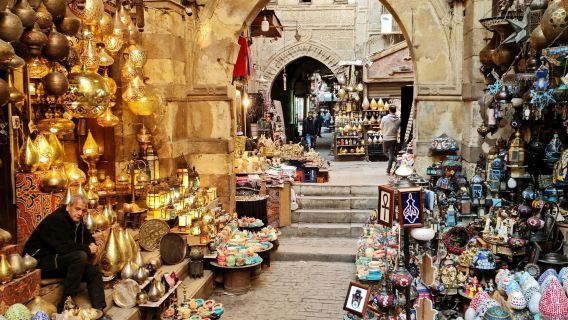
Khan el-Khalili is a famous open-air market in Cairo, dating back to the Mamluk era in the 14th century. It was built by the then-emir Djaharkas el-Khalili on the site of a Fatimid royal tomb, from which the market takes its name. Located in the heart of Islamic Cairo, it remains a popular shopping area for both locals and tourists from around the world. As you walk through the market, the narrow alleys are lined with shops selling gold and silver jewelry, copperware, spices, perfumes, and souvenirs. The market preserves stone gates left from the reconstruction by Sultan al-Ghuri in the early 16th century. The intricate Mamluk-style stone carvings on the gates are a direct testament to the market's historical heritage. Nobel laureate Naguib Mahfouz once used an alley in the market as the setting for his novel, adding a layer of literary depth to the place. Vendors enthusiastically solicit customers, and the sounds of trading fill the air. Even if you don't plan on shopping, wandering between the historic buildings and small shops, soaking in the aroma of spices and the buzz of voices, is a unique experience in itself.Cairo · 2.6km from downtown

Nile
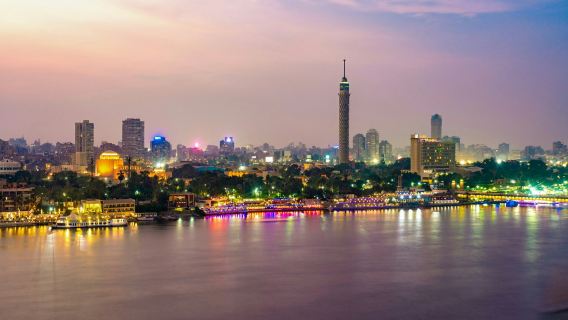
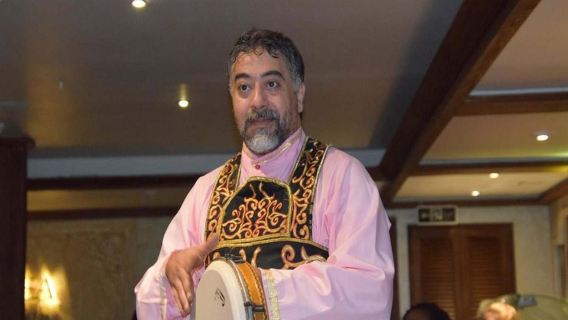
The Nile River is the mother river of Egypt. In the Cairo section, tourists usually choose to swim the Nile River at night, not only to enjoy the city night view of Cairo, but also to watch the wonderful belly dance or Sufi dance performance. There are many choices of cruise ships. At the docks on both sides of the Nile River in downtown Cairo, you can see a variety of cruise ships of different grades. The price ranges from 10 Egyptian pounds to one or two hundred Egyptian pounds. The more famous ones are Pharaoh Cruise and luxury dinner cruises ( MaximDinnerCruise), sailing cruise (FeluccaCruise), etc. Lively night cruises There are parades during the day and at night. Usually, there are belly dances, Sufi dances and other performances on board during night cruises, which are very lively. You can book night tours at your hotel and get lower group rates. The Pharaoh cruise ship's retro Pharaoh-style hull is very characteristic. There are four cruises a day at 14:30 (lunch cruise), 16:30, 20:00 (dinner cruise), and 22:00 (dinner cruise). Reservations are required. Accept credit card payment, the reference price is 200 Egyptian pounds per person. Tel: 02-35701000, 02-35702645 Address: 138ElNilSt.Giza, Giza official website: http://www.thepharaohs.com.egCairo · 614m from downtown

Hanging Church
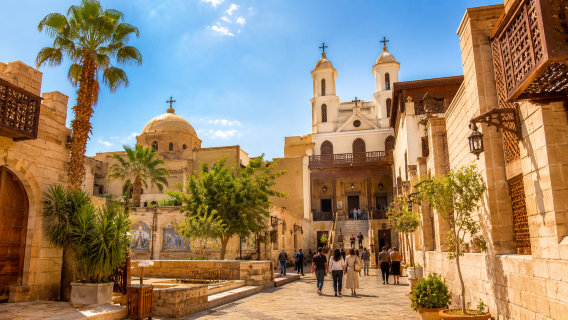
Hanging Church is a prominent Coptic Orthodox church in Coptic Cairo. It is believed to have been founded in the 3rd century and is dedicated to the Virgin Mary. The church is built on the site of the south gate of the ancient Roman Babylon Fortress, with its nave suspended above the fortress passageway, hence the name "Hanging." Ascending the steps from the street, passing through the pointed stone arch and iron gate, you will see the 19th-century twin-tower facade, with courtyard walls adorned with biblical motifs. The interior of the church has a rectangular basilica layout, with a wooden vaulted roof shaped like Noah's Ark. The sanctuary is divided into three parts, dedicated to the Virgin Mary, John the Baptist, and Saint George, respectively. The wooden iconostasis in front of the altar is inlaid with ebony and ivory, decorated with geometric patterns and cross motifs, and topped with a series of icons depicting Jesus, the Virgin Mary, angels, and the apostles. The marble pulpit is supported by several slender columns, which symbolize Jesus and the twelve apostles; one black basalt column represents Judas, who betrayed Jesus, a design feature that is quite unique among Coptic churches. The sanctuary features a glass floor, through which you can look down at the ruins of the Roman fortress beneath your feet, intuitively experiencing the unique nature of the church's suspended construction. Starting from the 11th century, the church served as the long-term residence of the Coptic Pope, holding an important place in the history of the Coptic Church.Cairo · 4.4km from downtown

Coptic Cairo
Coptic Cairo is situated on the ruins of the Babylon Fortress, built during the Roman period, and serves as the historical heart of Coptic Christianity in Egypt. Although the area is compact, it is densely packed with several ancient churches, a synagogue, and Coptic Museum, all of which can be easily visited on foot. The Hanging Church within the area is built above the gatehouse of the Babylon Fortress's south gate, with its nave suspended over the passageway, hence its name. The Church of St. Sergius and Bacchus (Abu Serga) is said to be built over the cave where the Holy Family took refuge when they fled to Egypt; visitors can descend into the crypt, which is an important site for Christian pilgrimage. The Church of St. Barbara is renowned for its ancient icons and the relics of Saint Barbara. In addition to the cluster of churches, the Ben Ezra Synagogue is also located here. It is one of the oldest surviving synagogues in Cairo and, together with the surrounding churches, bears witness to the unique history of religious coexistence in this area. Coptic Museum houses a vast collection of early Christian art treasures, including textiles, icons, manuscripts, and stone carvings, making it an essential place for understanding Coptic art. The area's deep, stone-paved alleyways are dotted with old book stalls and small souvenir shops, and strolling through them offers an atmosphere quite distinct from other parts of Cairo.Cairo · 4.4km from downtown

City Of The Dead Cairo Egypt(Northern Cemetery)
City Of The Dead Cairo Egypt(Northern Cemetery) is located at the foot of the Mokattam Hills, east of the old city of Cairo and north of the Cairo Citadel, across the street from Al-Azhar Park. It is the section of the sprawling, multi-km Islamic necropolis known as the City of the Dead that lies north of the citadel. It rose to prominence during the Mamluk period in the 14th and 15th centuries, when sultans and dignitaries built mausoleums here to escape the crowded city, leaving behind clusters of tomb complexes famous for their stone-carved domes and minarets. The Mosque-Madrasa of Sultan Qaitbay is a prime example and has even appeared on the Egyptian 1-pound banknote. The mausoleums of Barsbay and Faraj ibn Barquq, as well as the Qurqumas and Inal complexes further north, are also classic remnants of Mamluk architecture. Unlike typical cemeteries, most tombs here are built in the style of residential houses. A family's sarcophagi are enclosed within a tomb house featuring walls, a gate, and a courtyard, with rooms inside for mourning and for caretakers to stay. From a distance, it looks like a low-rise, gray residential neighborhood. Even more unique is that many residents still live in the cemetery area today. These include families who have been entrusted with guarding the tombs for generations, as well as residents who moved in due to the city's housing shortage. Small shops and schools are scattered throughout the alleys. During religious holidays, it is common to see Egyptian families bringing food to their family tomb houses to gather and pay their respects. This daily life of the living and the dead living in the same city is a rare sight elsewhere. When visiting, you can first get an aerial view from the Cairo Citadel or Al-Azhar Park to see this complex of tomb houses stretching to the foot of the Mokattam Hills. The cemetery area is large with intersecting alleys. For a walking tour, it is recommended to focus on the area around the Qaitbay complex or follow a guide who knows the route. Before entering the tomb house area to photograph residents or the interior of the tombs, it is advisable to obtain their consent first.Cairo · 3.6km from downtown

Islamic Cairo
Islamic Cairo is the medieval heart of Cairo. Since the Fatimid period, the area has been continuously built up through the Ayyubid, Mamluk, and Ottoman eras, with mosques, religious schools, caravanserais, and old residences lining the streets. Unlike many preserved historic districts, the monuments here remain interwoven with residents' daily lives—prayer, trade, and social visits all take place among buildings that are hundreds of years old. It is a genuinely living old city with a character completely different from modern Cairo nearby. Exploring centers on Al-Muizz Street, which runs through the old city. Walk from the northern Bab al-Futuh to the southern Bab Zuweila, passing Fatimid-era city gates, the Ottoman-style Suhaymi House, and stretches of Mamluk architecture. In the southern section, on one side the Al-Azhar Mosque was founded around 970 CE, and its affiliated institution remains one of the oldest centers of Islamic learning today. On the other side, the lanes of the Khan el-Khalili bazaar are densely packed with shops selling copper lamps, spices, perfumes, and shisha. The old city is mainly pedestrian, and the main street restricts motor vehicles during the day. Walking from the northern gate through the bazaar and then toward Al-Azhar, allow half a day to a full day to explore at a relaxed pace. You must remove your shoes to enter mosques, and clothing should cover shoulders and knees. Women should bring a headscarf. The market and narrow alleys are crowded, so keep an eye on your belongings. Look up for the honeycomb-like muqarnas and openwork stone carvings on the entrance portals, as these details are what make the old city's architecture so captivating.Cairo · 3.7km from downtown

The Cave Church
The Cave Church, also known as the Monastery of Saint Simon the Tanner, is located within the cliffs of Mokattam Mountain, southeast of Cairo, Egypt. At the foot of the mountain lies a settlement of Coptic Christians who make their living by recycling and sorting garbage, known as "Garbage City." Legend has it that in the 10th century, the Fatimid Caliph, citing the belief that "faith can move mountains," ordered the then-Coptic Pope to move Mokattam Mountain within a few days. While praying, the Pope received a revelation from the Virgin Mary and found the one-eyed tanner, Saint Simon. Under his leadership, the people prayed together, and the mountain rose in response. Saint Simon then disappeared without a trace, and later generations built the church here to commemorate him. Today, the church complex is carved directly into the natural caves of the mountain, with multiple chapels connected to each other, and its scale is quite notable in Cairo and even the entire Middle East. The Saint Simon Hall, built into the cave, features circular seating surrounding a central pulpit and can accommodate thousands of people at once. The cave walls and rock pillars are adorned with numerous reliefs depicting biblical stories; scenes such as the Nativity of Jesus, the resurrection of Lazarus, and Samson can all be found on the rock walls, creating a sharp contrast between the rough rock surface and the intricate carvings. The high, vast dome of the cave has natural acoustics, and if you encounter a choir service, the sound echoing off the rock walls makes for a particularly special experience. It is worth noting that the final stretch of the road to the church passes through the narrow streets of "Garbage City." The environment along the way is chaotic, which contrasts sharply with the openness and tranquility inside the church. Many travelers consider this part of the journey a memorable highlight of their entire itinerary, so it is recommended to reserve enough time to experience it slowly. Every year, a large number of Coptic pilgrims make a special trip here, and it is also a window to understanding Coptic Christian culture in Egypt.Cairo · 4.3km from downtown

Al-Azhar Mosque
Al-Azhar Mosque is located in the Islamic district of old Cairo and was founded around 970 CE, almost simultaneously with the founding of Cairo. The name "Al-Azhar" is said to derive from the title of Fatimah, the daughter of the Prophet of Islam, meaning "the radiant." In Egypt, when people speak of "Al-Azhar," they often refer to both the mosque and the institution: it is both a place of worship and a classroom for preaching and teaching, with a tradition of scholarship that has continued since the end of the 10th century. Today, Al-Azhar University operates independently, but while strolling through the mosque, you may still encounter scholars and students engaged in study circles. Highlights within the mosque can be explored starting from the courtyard: the marble-paved central courtyard, the keel arches on the arcades, and the carved stucco retain the appearance of the Fatimid period; the stone columns in the prayer hall were taken from old buildings dating from the Pharaonic to the Coptic eras, leveled at the base and reused by later generations; the multiple minarets surrounding the mosque belong to different eras, including the Mamluk and Ottoman periods. Among them, the twin-topped minaret built by Sultan al-Ghuri has a unique style and is a highly recognizable landmark on the old city skyline; several gates, such as the "Barbers' Gate," are also worth a closer look when entering or exiting. The mosque faces Al-Hussein Square and is within walking distance of the Khan el-Khalili bazaar, making it suitable to include in a walking tour of the old city. When entering, clothing must cover shoulders and arms, women are advised to bring their own headscarves, and shoes must be removed before entering the hall. If you visit during prayer times, especially the Friday congregational prayer, it is best to wait quietly outside or postpone your visit. Outside of prayer times, it is generally open to visitors from all countries.Cairo · 2.6km from downtown

Amr ibn al-As Mosque
Amr ibn al-As Mosque is located in the Fustat area of Old Cairo. It was founded in the mid-7th century by the Arab general Amr ibn al-As, who led the army into Egypt, and is considered the landmark beginning of the Islamic era in Egypt. When this mosque was built, the city was still called Fustat—the old capital of Islamic Egypt. In terms of age, it predates the Cairo of today by more than 300 years. Before the rise of the Al-Azhar Mosque, it was the center of Islamic education and scholarship in Egypt for hundreds of years. The original structure has been lost to centuries of war and reconstruction. The current mosque largely dates from multiple renovations since the late 18th century, but the layout of an open courtyard with arcaded colonnades still follows the form of early Islamic mosques: the central courtyard is spacious and airy, and the prayer hall features rows of stone columns supporting a wooden roof. Along the south wall, you can still see old wooden lintels said to date back to the 9th-century expansion, which are rare ancient relics within the mosque. The entire mosque has few decorations and emphasizes space, giving it a simple, austere character that is distinctly different from the later mosques in Cairo, which are filled with domes and tall minarets. It remains a place for daily worship for believers and is generally open to visitors outside of prayer times. You must remove your shoes to enter, clothing should cover shoulders and arms, women should generally bring their own headscarves, and it is best to avoid peak prayer times such as the Friday congregational prayer. Within walking distance outside the mosque are the Hanging Church in Coptic Cairo, the Babylon Fortress, and The National Museum of Egyptian Civilization. Many tourists combine this old city area, where various religious sites are adjacent, into a half-day or one-day walking tour. In the early morning or evening, when the light slants into the courtyard and the arcades cast layered shadows, it is also a great time for photography.Cairo · 3.8km from downtown

Synagogue Ben Ezra
Synagogue Ben Ezrais located in the Coptic area of Old Cairo and is one of the oldest synagogues in Egypt, now open to the public as a museum of Jewish history. Legend has it that its predecessor was the Coptic Church of St. Michael, which existed as early as the 9th century before being used by the local Jewish community. It has since undergone multiple destructions and reconstructions, and the current structure is a reconstruction from the late 19th century. The synagogue is named after the 12th-century Jewish scholar Abraham ben Ezra. The prominent medieval scholar Maimonides once lived nearby, worshipped here, and managed the affairs of the Jewish community in Egypt, adding a rich layer of history to the site. The exterior of the synagogue is simple and understated, but the interior is a hidden gem: golden geometric and floral patterns cover the ceiling, black and white striped arches support the hall, and chandeliers echo the galleries, creating a sharp contrast between the ornate, delicate decorations and the exterior. A well-known story about this place occurred in the late 19th century, when hundreds of thousands of documents in Hebrew and other languages, dating from the 6th–19th centuries, were discovered in the synagogue's genizah. Known in academia as the "Cairo Genizah," these documents record the trade and daily life of the medieval Mediterranean world. Most are now housed in the Cambridge University Library and are invaluable materials for studying medieval history. In the backyard of the synagogue, there is also the "Well of Moses," which is said to be associated with the story of the infant Moses. It is not far from the Hanging Church and other Coptic churches, making it suitable to include in the same walking route.Cairo · 4.3km from downtown
Experiences you can't miss in Cairo
Featured Day tours in Cairo
View all Day tours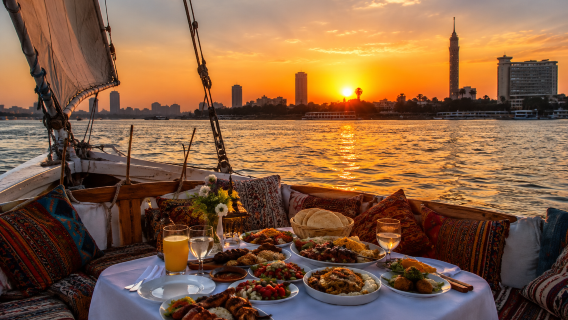
5.0/5
· 2 reviewsFree cancellation
Instant confirmation
Book now for tomorrow
FromMYR 272.03
4.9/5
· 66 reviews· 1.1k bookedFree cancellation
35 consecutive positive reviews
FromMYR 396.54
4.9/5
· 11 reviews· 67 bookedFree cancellation
Instant confirmation
Book now for tomorrow
10% off
Limited-time sale
FromMYR 436.09MYR 484.55
4.6/5
· 10 reviews· 82 bookedFree cancellation
FromMYR 396.54

Free cancellation
Instant confirmation
Book now for tomorrow
10% off
Limited-time sale
FromMYR 204.02MYR 226.69
3.5/5
· 2 reviewsFree cancellation
FromMYR 369.09

Free cancellation
Instant confirmation
Book now for tomorrow
10% off
Limited-time sale
FromMYR 212.18MYR 235.76
Featured Food & drink in Cairo
View all Food & drink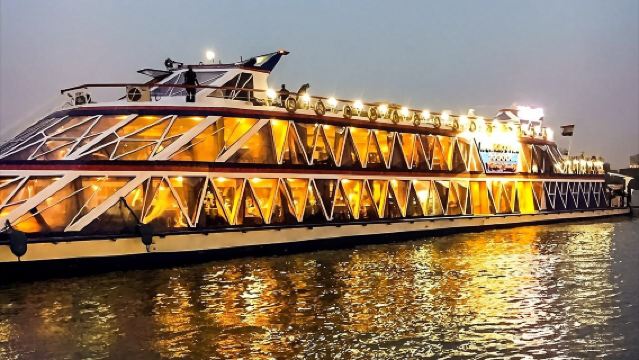
4.6/5
· 12 reviews· 136 bookedFree cancellation
Instant confirmation
Book now for tomorrow
FromMYR 141.93
Instant confirmation
Book now for tomorrow
FromMYR 188.31
Instant confirmation
Book now for tomorrow
FromMYR 1,038.24
Free cancellation
Book now for tomorrow
FromMYR 701.83
Free cancellation
Book now for tomorrow
FromMYR 507.20


Featured Cultural experiences in Cairo
View all Cultural experiences
4.0/5
· 3 reviews· 34 bookedBook now for tomorrow
FromMYR 51.33
5.0/5
· 1 reviewFree cancellation
Instant confirmation
Book now for tomorrow
FromMYR 328.21
Free cancellation
Instant confirmation
FromMYR 753.22
5.0/5
· 2 reviewsFree cancellation
Instant confirmation
FromMYR 213.09

FromMYR 61.01
Free cancellation
Instant confirmation
FromMYR 575.09

Instant confirmation
Book now for tomorrow
10% off
Limited-time sale
FromMYR 195.63MYR 217.37
Featured City sightseeing in Cairo
View all City sightseeing
Free cancellation
Book now for tomorrow
20% off
Limited-time sale
FromMYR 18.28MYR 22.86
Free cancellation
Instant confirmation
FromMYR 473.31
Free cancellation
Instant confirmation
FromMYR 427.50
FromMYR 204.03
Free cancellation
Instant confirmation
FromMYR 620.90
Free cancellation
Instant confirmation
FromMYR 732.86
Free cancellation
Instant confirmation
FromMYR 687.06
Free things to do in Cairo
Khan el-Khalili
Cairo · 2.6km from downtownNile
Cairo · 614m from downtownHanging Church
Cairo · 4.4km from downtownCoptic Cairo
Cairo · 4.4km from downtownCity Of The Dead Cairo Egypt(Northern Cemetery)
Cairo · 3.6km from downtownIslamic Cairo
Cairo · 3.7km from downtownThe Cave Church
Cairo · 4.3km from downtownAl-Azhar Mosque
Cairo · 2.6km from downtownAmr ibn al-As Mosque
Cairo · 3.8km from downtownSynagogue Ben Ezra
Cairo · 4.3km from downtown
More ways to travel from Cairo
Private Tours in Cairo
View More Private Tours in Cairo



Group Tours in Cairo
View More Group Tours in Cairo

What travellers say about Cairo

YoYo_0T9A3B0L13 June 2025
5.0
哈利利市场是开罗最具传奇色彩的阿拉伯传统集市,14世纪起便是丝绸之路的重要贸易中心。迷宫般的狭窄巷道两侧密布金银器店、香料摊、手工艺品作坊,铜灯、纸莎草画等特色商品琳琅满目。核心区的费沙维咖啡馆(成立于1773年)仍保留着阿拉伯文学家的聚会传统,而市场穹顶下闪烁的彩色玻璃与清真寺尖塔构成独特的伊斯兰风情画卷。尽管商业化明显且需警惕高价陷阱,但喧闹的讨价还价声、空气中弥漫的薄荷茶与香料气息,仍使之成为体验埃及市井文化的必访之地
Khan el-Khalili

863386331 February 2025
5.0
At that time, on the way from Luxor to Hurghada, I began to miss the Nile River infinitely. Every time I saw the river, I couldn't help but marvel in my heart. It was just a natural scenery, but it had an unreal beauty, flat and vast. I always lived in southern China and always thought that rivers came from valleys, magnificent or winding, with mountains on both sides, but the Nile River was still flat on both sides. I think there would be no Egypt without the Nile River. In such a hot and dry place that is not suitable for living, it should be this river that can pass through thousands of years without changing and keep people.
Now, I have been away from Egypt for more than ten days. The most frequent flash in my memory is still the Nile River. Its beauty seems to allow anything to happen. I suddenly understand Agatha very much. If you face such a miracle every day, it is not surprising that you can write any story.
Finally, I actually want to say that the Old Falls Hotel is worth staying (if the budget allows, but the afternoon tea is very bad, so be careful.
Nile

yangduoduo174 January 2021
4.0
The oldest church in Egypt. Very important church, related to the history of the Christian faith in Egypt. The original foundations are from the Babylonian era. There is a glass floor that allows you to see the underside of the church floor. There are beautiful wooden window and door frames. Beautiful staircase. Worth going in and seeing it!
Hanging Church

Lavender and Sun11 August 2023
5.0
In Cairo, mosques and minarets are ubiquitous buildings. In Arabic, minarets are called "minars," which refer to the place where the muezzin stands to call people to prayer. Since the 7th century, with the widespread spread of Islam in West Asia and North Africa, the art of mosque architecture has continued to develop, and minarets have evolved into various styles, becoming an indispensable part of mosque architecture and a highlight of Cairo.
Coptic Cairo

子华20 April 2025
5.0
Cairo's "City of the Dead" where countless people live | Kalafah Cemetery.
This is a unique cemetery area, officially known as the "Kalafah Cemetery". As early as the Fatimid period, this area was used as a cemetery, and over time it gradually expanded into a "city".
Many families built mausoleums with courtyards and rooms for their deceased relatives to live in during memorial services. These buildings are of various styles.
However, with the rapid growth of Cairo's population, the housing shortage problem has become increasingly serious. Since the middle of the last century, some poor families have begun to move into the "City of the Dead" and transform mausoleums into residences. Today, it is both a cemetery and a home for thousands of people, forming a unique scene of coexistence of life and death. Despite the simple conditions, the residents work hard to make a living, making this area a concrete embodiment of the overlap of Cairo's history and reality.
City Of The Dead Cairo Egypt(Northern Cemetery)


sophia帅帅16 September 2025
5.0
After passing through the garbage city and arriving at this ancient church, I marveled at human wisdom and awe of faith. You can take a taxi online and ask the driver to wait. It is not easy to take a taxi back. The ceiling of the church has no colorful glass and gorgeous decorations, but it is extremely sacred and quiet.
The Cave Church

D了个Y9 March 2026
5.0
Al-Azhar Mosque, located near the Hariri Market in Cairo's Old City, Egypt, was begun in 970 by Fatimid general Zahir. Spanning 12,000 square meters, it is one of the oldest surviving mosques in the Islamic world.
Named after Fatima, the daughter of the Prophet Muhammad, the mosque was initially a religious site. In 988, Caliph Aziz established a school within its annex, becoming the precursor to Al-Azhar University.
The complex includes courtyards, 13 platforms, 9 gates, and 6 minarets, exhibiting North African and ancient Spanish Islamic styles. During the Fatimid dynasty, it served as a center for the dissemination of Shia Islam. After being closed by Saladin of the Ayyubid dynasty in 1171, it was reopened by Baibars I of the Mamluk dynasty in the 13th century and transformed into a Sunni academic center.
In 1930, according to Egyptian law, the mosque and university were formally separated.
In 1961, Al-Azhar University added modern disciplines such as engineering and medicine and established branch campuses both domestically and internationally. The Imam is appointed by the President and is responsible for managing religious affairs and adjudicating disputes. The modern Al-Azhar education system covers primary school to university and accepts only Muslim students.
Al-Azhar Mosque

目指せ1187 October 2023
5.0
An old mosque located in Old Cairo. It looks new as it was recently renovated.
Amr ibn al-As Mosque

多多5 January 2021
4.0
One of the most beautiful ancient synagogues in the world. Learn about Judaism in Egypt. No longer open for prayer or worship. Just as a tourist attraction. Beautifully restored building. But not enough information about the history and building function. Pity: no photography allowed!
Synagogue Ben Ezra
Popular cities near Cairo


Frequently asked questions
What are the must-do things in Cairo?
Don't miss these attractions in Cairo: Khan el-Khalili, Nile, and Hanging Church. If you like Day tours, try Private Felucca Ride on the Nile with Egyptian Dinner & Sunset Views. If you enjoy Food & drink, try 5-Star Luxury Dinner Cruise on the Nile in Cairo with Live Belly Dancer.
What are the must-try foods and restaurants in Cairo?
You can give 5-Star Luxury Dinner Cruise on the Nile in Cairo with Live Belly Dancer and Cairo: 2-Hour Nile Dinner Cruise with Buffet, Belly Dance & Tanoura Show a try. Before you go, please check their opening hours and menus online. Reservations are recommended, especially during peak hours.
What are the recommended tours and excursions in Cairo?
When choosing a tour, start with how much time you have and the kind of experience you're looking for. Trending options right now include Private Felucca Ride on the Nile with Egyptian Dinner & Sunset Views, Egyptian pyramids + Grand Museum/old museum + English/Chinese guide private tour private car, and Cairo Giza Pyramids, Sphinx, and Grand Egyptian Museum Tour. Check the real-time availability and itinerary before you book.
What's the typical cost of day tours and activities in Cairo?
As of 17 October 2026, the reference price for day tours and activities in Cairo is around MYR 204.02 – MYR 436.09. Rates vary by duration, group size, transport, tickets, meals, and any special admission requirements. Before you book, please confirm the billing currency and whether the price is quoted per person or per group.
How can I contact Trip.com customer support?
Get help anytime, anywhere within 30 secondsContact customer support
Can I change or cancel my booking?
Change and cancellation policies vary by attractions and tours. Please check the product details page for more information.
How can I get discounted prices?
Ticket prices may vary between weekdays and weekends, as well as during peak and off-peak seasons. When booking with Trip.com, you can also use Trip Coins to get extra savings. For more tips on booking discounted tickets, please visit Trip.com for the latest information.
Trip.com picks
Popular Cairo Tours
Best Cairo Experiences
Recommended Car Rentals in Egypt
Popular Airport Transfers
Private Felucca Ride on the Nile with Egyptian Dinner & Sunset ViewsCairo, Egypt: Pyramid complex + Grand Egyptian Museum + Khan el-Khalili private charter 1-day tourCairo + Giza Necropolis + Grand Egyptian Museum + Nile Night Cruise Private Charter 1-day TourCairo: Ain Sokhna Semi-Submarine with optional TransferSaqqara with Serapeum, Memphis and Dahshur private quality tour with & without ticketsEgypt · Cairo | Giza pyramids + Grand Egyptian MuseumGiza Pyramid Complex - Half-day tourCairo Aerial Sightseeing TourMedieval Cairo: Pyramids of Giza, Ibn Tulun Mosque & Gayer Anderson Museum from AlexandriaPyramids + Grand Egyptian Museum + Cairo Citadel + Khan el-Khalili Giza Pyramids & The Egyptian Museum in Cairo private tour with and without tickets optionsPyramids + Sphinx + Grand Egyptian Museum + Private Transfers + Local 30-Year Travel AgencyCairo: Pub Crawl and Speakeasy Bar Tour with 2 Free DrinksRoyal Pyramids Helicopter Landing | Private VIP Tour with Luxury Transfers
Cairo Connectivity SolutionsCairo Day ToursCairo Boat TicketsCairo ActivitiesCairo Bus TicketsCairo Airport ServicesCairo Cultural ExperienceCairo SIM CardCairo Travel ServicesCairo City PassCairo Travel EssentialsCairo Yacht CharterCairo TransportationCairo Group ToursCar rentals in AlexandriaCar rentals in CairoCairo airport transfersCairo International Airport transfersCapital International Airport transfersSharm El Sheikh International Airport transfersHurghada International Airport transfersLuxor International Airport transfersMarsa Alam International Airport transfersAswan International Airport transfers